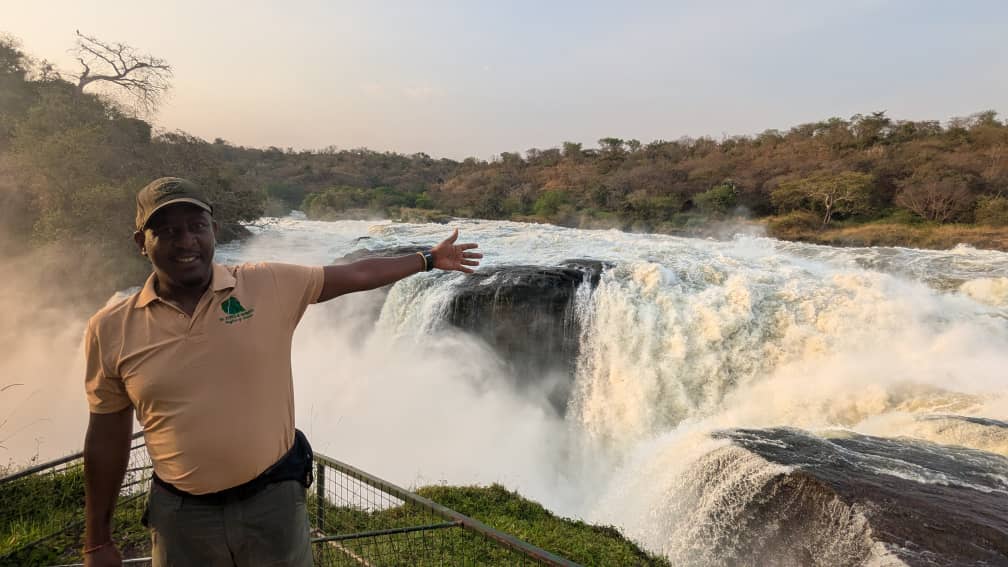
Uganda's premier savanna park, set against the Rwenzori Mountains and bisected by the hippo-rich Kazinga Channel.
Queen Elizabeth National Park is one of Uganda’s most captivating safari destinations, a place where vast African savannahs meet shimmering lakes, ancient forests, volcanic craters, and wildlife-rich waterways. Located in western Uganda, this remarkable protected area offers an extraordinary variety of experiences within a single journey, from tracking elephants across open grasslands and watching hippos along the Kazinga Channel to searching for the famous tree-climbing lions of Ishasha and venturing into the forested depths of Kyambura Gorge in search of chimpanzees.
For travellers seeking an authentic African safari, Queen Elizabeth National Park presents a compelling combination of wildlife encounters, dramatic scenery, cultural heritage, and opportunities to connect with nature. Its changing landscapes create a sense of discovery at every turn. One moment, the horizon opens into golden grasslands dotted with antelope; the next, the road winds past volcanic crater lakes, wooded hillsides, and wetlands alive with bird calls. Along the lakeshores, elephants and buffaloes may gather to drink, while crocodiles rest along muddy banks and hippos surface in the shallows.
At JM Jungle Safaris, we invite travellers to experience Queen Elizabeth National Park beyond the ordinary game drive. Our approach brings together the excitement of wildlife viewing, the tranquillity of scenic landscapes, meaningful encounters with local communities, and carefully planned activities that reveal the park's many dimensions. Whether you are planning a private luxury safari, a romantic escape, a family adventure, a birdwatching holiday, or an extended Uganda wildlife expedition, Queen Elizabeth National Park offers the setting for a journey shaped by discovery, comfort, and the natural rhythm of Africa.
Discovering Queen Elizabeth National Park
Established in 1952 as Kazinga National Park and later renamed in honour of Queen Elizabeth II following her visit to Uganda in 1954, Queen Elizabeth National Park has become one of the country's best-known protected areas. Covering approximately 1,978 square kilometres, the park stretches across the western Rift Valley, with landscapes shaped by volcanic activity, ancient geological processes, freshwater systems, and seasonal rainfall. Its position between Lake Edward and Lake George gives it a distinctive geographical character, while the Kazinga Channel connects these two lakes and creates one of East Africa's most rewarding settings for aquatic wildlife viewing.
The park forms part of a wider conservation landscape in western Uganda, close to the Rwenzori Mountains and within reach of other important safari destinations, including Kibale Forest National Park and Bwindi Impenetrable National Park. This location makes it an excellent centrepiece for a multi-destination Uganda safari, allowing visitors to combine classic savannah wildlife experiences with chimpanzee tracking, mountain gorilla trekking, forest exploration, and cultural encounters.
Queen Elizabeth National Park is celebrated for its exceptional habitat diversity. Open grasslands provide grazing grounds for antelope and buffaloes, while woodland patches offer shade and cover for mammals and birds. Tropical forest habitats shelter primates and forest-dependent species, while papyrus wetlands and freshwater shores support a remarkable variety of aquatic life. The volcanic crater landscapes add another dimension, providing dramatic viewpoints and a glimpse into the geological history of the Rift Valley.
This diversity is central to the park's appeal. Rather than offering only one type of safari experience, Queen Elizabeth National Park brings together several distinct environments, each with its own atmosphere, wildlife, and opportunities for exploration. With JM Jungle Safaris, travellers can discover these contrasts through thoughtfully coordinated game drives, boat cruises, guided walks where available, birdwatching excursions, and encounters with communities around the protected area.
The landscapes of Queen Elizabeth National Park
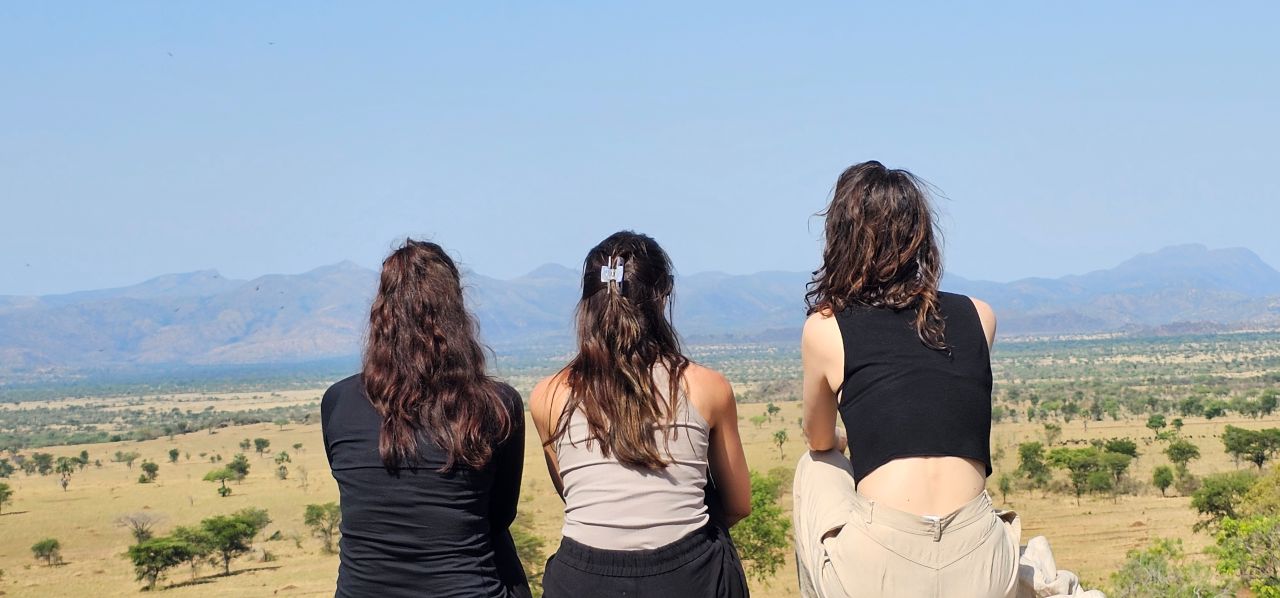
One of the most memorable aspects of Queen Elizabeth National Park is the remarkable variety of scenery encountered while travelling through it. The landscape is never entirely the same, and each section of the park reveals a different expression of western Uganda's natural beauty. Open plains stretch towards distant horizons, volcanic formations rise above the surrounding countryside, forests fill sheltered valleys, and wetlands shimmer beneath the changing light of the day.
The savannah plains create the classic African safari atmosphere many visitors imagine before arriving in Uganda. Tall grasses move with the breeze, scattered acacia trees provide shade, and wildlife trails weave through the vegetation. During the early morning, a delicate mist may linger above low-lying areas as the sun gradually illuminates the grasslands. By afternoon, the landscape takes on warmer colours, with animals gathering around feeding grounds and water sources. These changing conditions give every game drive its own character, making the experience as much about the scenery as the wildlife itself.
Elsewhere, the park's volcanic crater landscapes provide a dramatic contrast to the open savannah. The Katwe and Bunyaruguru crater regions contain depressions and lakes formed through ancient geological processes. Some crater lakes appear vividly blue or green, while others have different colours and characteristics depending on their water chemistry, vegetation, and surrounding soils. The winding roads and elevated viewpoints offer opportunities to appreciate the scale of the Rift Valley and photograph the unusual shapes of the land.
The views around Lake Edward and Lake George add another layer of beauty. Their broad expanses of water, bordered by vegetation and distant hills, attract birds and other wildlife while creating peaceful settings for photography. On clear days, the meeting of water, grassland, and sky creates sweeping panoramas that are particularly rewarding for travellers who enjoy landscape photography.
With JM Jungle Safaris, the journey between wildlife encounters becomes part of the adventure. Our safari philosophy encourages guests to appreciate the changing scenery, observe the smaller details of the natural world, and enjoy the unhurried moments that make an African safari genuinely memorable.
Wildlife in Queen Elizabeth National Park
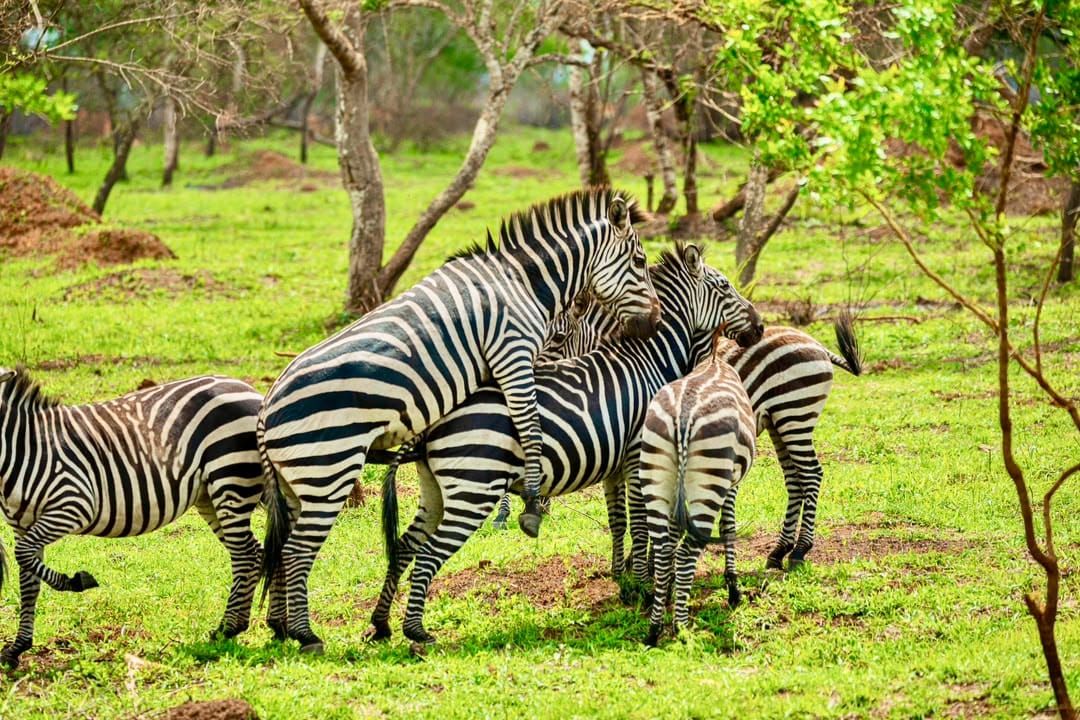
Queen Elizabeth National Park is a rewarding destination for travellers interested in African wildlife. Its combination of grasslands, woodland, forests, lakeshores, and wetlands supports a rich variety of mammals, making game drives an essential part of the safari experience. The park is particularly known for elephants, buffaloes, Uganda kob, waterbuck, warthogs, hippos, and several carnivore species, with sightings varying according to habitat, season, and the movement of animals.
African elephants are among the most impressive animals to encounter here. A herd moving across the plains or emerging from woodland creates a powerful safari moment, especially when young calves remain close to their mothers. Elephants may feed on grasses, browse branches, or travel towards water, using their trunks to investigate their surroundings. Observing them at a respectful distance provides insight into their social behaviour and the important role they play in shaping vegetation.
Cape buffaloes are another familiar presence. They often gather in substantial herds, grazing across open grassland or resting in the shade during warmer hours. Their powerful build and collective behaviour make them particularly striking when seen against the open plains. Uganda kob, meanwhile, are among the park's most characteristic antelopes. Males may establish territories in suitable grasslands, while groups of females move through the surrounding areas in search of fresh grazing.
Warthogs can frequently be seen feeding with their heads lowered towards the ground, sometimes dropping onto their front knees to reach short grasses. Waterbuck favour suitable grassy habitats near water, while other antelope species occupy different sections of the park. These herbivores form an important part of the food web, supporting predators and contributing to the natural movement of energy through the ecosystem.
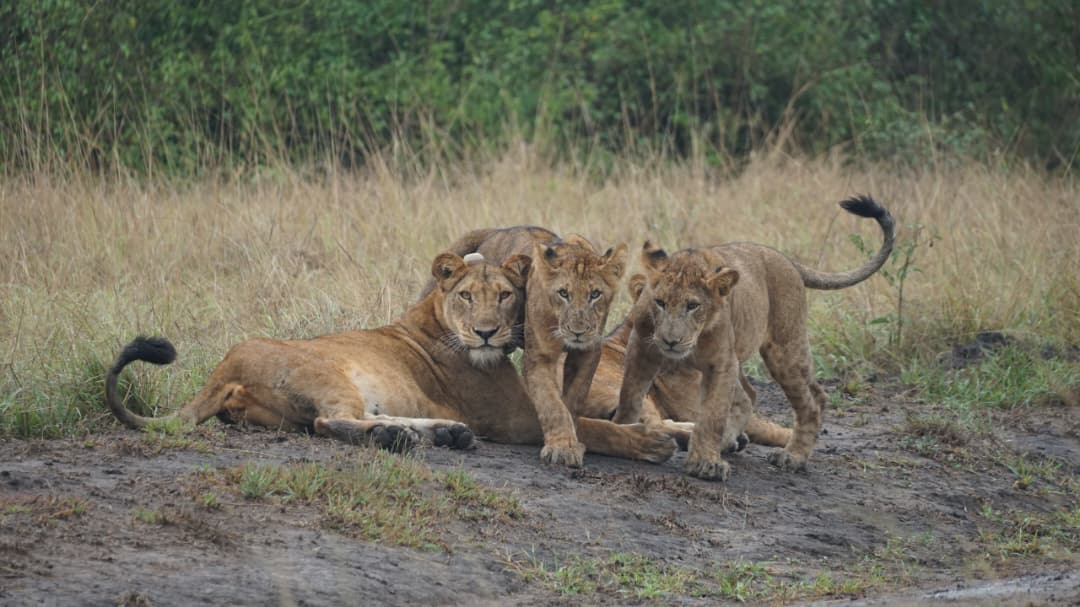
The park is also home to predators, including lions, leopards, and spotted hyenas. Lions may be found resting in shade during the heat of the day or becoming more active as temperatures fall. Leopards are generally more elusive, relying on camouflage and cover, while hyenas are both capable hunters and scavengers. Their presence adds anticipation to game drives, although no particular animal encounter can be guaranteed.
Beyond the larger mammals, Queen Elizabeth National Park supports smaller animals, reptiles, amphibians, and a remarkable variety of insects. These less conspicuous forms of life are also important to the park's ecological balance. A knowledgeable guide can help guests recognise tracks, feeding signs, calls, and other clues that reveal which animals have recently passed through an area.
For JM Jungle Safaris, wildlife viewing is about more than taking photographs of individual species. It is about experiencing animals in their natural surroundings, learning to appreciate their behaviour, and understanding how the landscape influences their daily lives.
The famous tree-climbing lions of Ishasha
One of the most distinctive attractions of Queen Elizabeth National Park is the opportunity to search for the famous tree-climbing lions of the Ishasha sector. Situated in the southern part of the park, Ishasha is characterised by broad grasslands, woodland patches, and mature fig trees whose spreading branches create natural resting places above the ground.
Lions are usually associated with resting in the shade of trees or among grass and bushes, but some lions in Ishasha are known for climbing and spending time in large trees. The exact reasons for this behaviour can vary, and researchers have explored possible explanations such as avoiding ground-level insects, enjoying cooler breezes, or gaining a comfortable resting position with a view of the surrounding plains. The behaviour should not be assumed to occur every day, but it has helped make Ishasha a celebrated destination for wildlife enthusiasts.
An Ishasha game drive involves exploring suitable tracks and scanning the branches of prominent trees as well as the surrounding grasslands. Your guide may look for lions resting on thick limbs, watch for movement beneath the canopy, or investigate other signs of recent activity. If lions are located in a tree, the sight of a powerful cat stretched along a branch is both surprising and unforgettable.
The surrounding habitat is equally interesting. Uganda kob and other grazing animals may feed across the open ground, while buffaloes move through woodland and grassland. Elephants can also be encountered in the wider sector. The combination of open savannah and mature trees creates a distinctive setting that differs from the more open Kasenyi Plains.
Ishasha is often included in itineraries travelling between Queen Elizabeth National Park and Bwindi Impenetrable National Park. This makes it possible to combine savannah wildlife viewing with the extraordinary experience of mountain gorilla trekking, subject to the chosen route, travel time, and available permits.
With JM Jungle Safaris, a visit to Ishasha is planned around the wider journey rather than treated as an isolated attraction. We allow time to explore the landscape, search for wildlife, and appreciate one of Uganda's most unusual safari experiences without promising sightings that depend on nature.
Game drives across the Kasenyi Plains
The Kasenyi Plains are among the most popular areas for game drives in Queen Elizabeth National Park. Their open grasslands provide excellent visibility in many places, making them a rewarding environment for searching for antelope, buffaloes, elephants, and predators. The landscape also creates a classic safari atmosphere, with distant horizons, scattered trees, and wildlife moving freely across the plains.
An early-morning game drive is particularly atmospheric. The air is often cooler, and the first light gradually reveals the contours of the grassland. Birds call from nearby vegetation, while herds of Uganda kob begin their daily grazing. Your driver-guide follows the park's established tracks, observing the terrain and looking for animal movement, fresh tracks, and other clues that may indicate nearby wildlife.
Predator sightings are among the most anticipated possibilities. Lions may be encountered resting in the grass or beneath trees, and their presence can sometimes be suggested by concentrations of prey animals or other signs. However, the plains are not simply a stage for predator encounters. Watching a buffalo herd cross the track, observing antelope feeding, or seeing elephants moving through the distance can be equally rewarding.
Afternoon game drives offer a different atmosphere as the sun moves lower and the light becomes warmer. Animals may return to open feeding areas or approach water, and the long shadows create beautiful photographic conditions. The precise timing of wildlife activity varies with weather and other natural factors, so flexibility is important.
A private game drive with JM Jungle Safaris allows travellers to explore at a pace suited to their interests. Photographers may wish to spend longer observing a particular animal, while first-time safari visitors may enjoy learning to identify species and understand their behaviour. Our aim is to make the drive engaging and informative, while respecting wildlife and park regulations.
Kazinga Channel boat cruise: wildlife from the water
The Kazinga Channel boat cruise is one of the signature experiences of Queen Elizabeth National Park. Connecting Lake Edward and Lake George, this natural waterway supports abundant aquatic wildlife and attracts animals from the surrounding grasslands. From the boat, visitors gain a different perspective on the park, observing animals along the shoreline and watching their interactions in and around the water.
Hippos are among the most memorable sights. They spend much of the day submerged or partially submerged, emerging to breathe, vocalise, and interact with others nearby. Their broad heads and rounded backs may appear at the water's surface, sometimes close enough for visitors to appreciate their size and distinctive behaviour. Although they may appear calm, hippos are powerful wild animals, and the boat should maintain a safe distance.
Nile crocodiles may be seen resting along suitable banks or lying motionless near the water's edge. Their camouflage can make them difficult to distinguish from the surrounding mud and vegetation. Elephants and buffaloes sometimes approach the shoreline to drink or cool themselves, creating rewarding opportunities for observation and photography from the water.
Birdlife is another major attraction. African fish eagles may sit prominently in trees or swoop towards the water, while kingfishers search for fish from exposed branches. Pelicans, cormorants, herons, egrets, and other waterbirds may be seen feeding, resting, or moving in groups along the channel. The variety of birdlife makes the cruise particularly appealing to photographers and birdwatchers.
The boat journey also reveals the relationships between the channel and the surrounding environment. Tracks leading to the water, patches of grazing ground, and the distribution of birds and mammals illustrate how water influences the movement of wildlife. Depending on the time of day and conditions, the channel may appear calm and reflective or lively with animal activity.
JM Jungle Safaris recommends the Kazinga Channel boat cruise as a complement to a game drive. Together, the two experiences reveal different aspects of Queen Elizabeth National Park, allowing travellers to explore both the terrestrial and aquatic sides of its wildlife.
Chimpanzee trekking in Kyambura Gorge
Beyond its famous savannah wildlife, Queen Elizabeth National Park offers a remarkable primate experience in Kyambura Gorge, a forested valley often referred to as the Valley of Apes. Set within the broader grassland landscape, the gorge forms a striking green corridor where dense vegetation, steep slopes, and a river create a distinctive habitat for forest wildlife.
Chimpanzee trekking here provides an opportunity to learn about one of humanity's closest living relatives in their natural environment. Chimpanzees live in complex social communities and communicate through vocalisations, gestures, facial expressions, and physical interactions. When encountered, they may be seen feeding on fruit, grooming one another, moving through the canopy, or travelling across the forest floor. Their behaviour changes throughout the day, and the experience is different each time.
The trek begins with guidance from the authorised tracking team, who explain the forest environment, trail conditions, and the rules for observing chimpanzees responsibly. As you enter the gorge, the atmosphere changes from open savannah to a cooler world of shaded pathways, towering vegetation, tangled roots, and the sounds of the forest. Calls may echo through the trees, birds move between branches, and sunlight filters through gaps in the canopy.
The terrain can be uneven, muddy, steep, and physically demanding in places. Travellers should wear sturdy walking shoes or waterproof hiking boots and carry drinking water, appropriate clothing, and any other recommended essentials. A reasonable level of fitness is helpful, and trekking times vary according to the chimpanzees' movements and the conditions on the day.
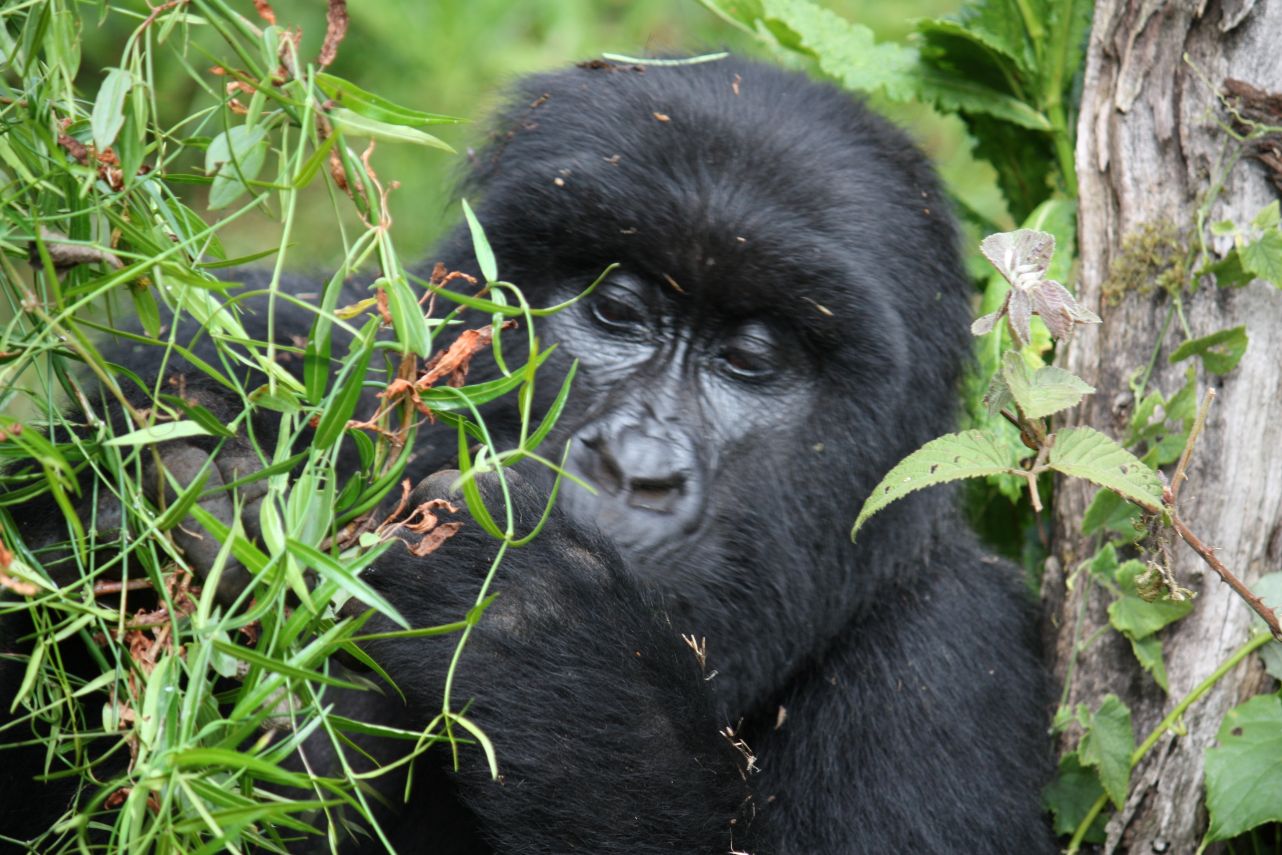
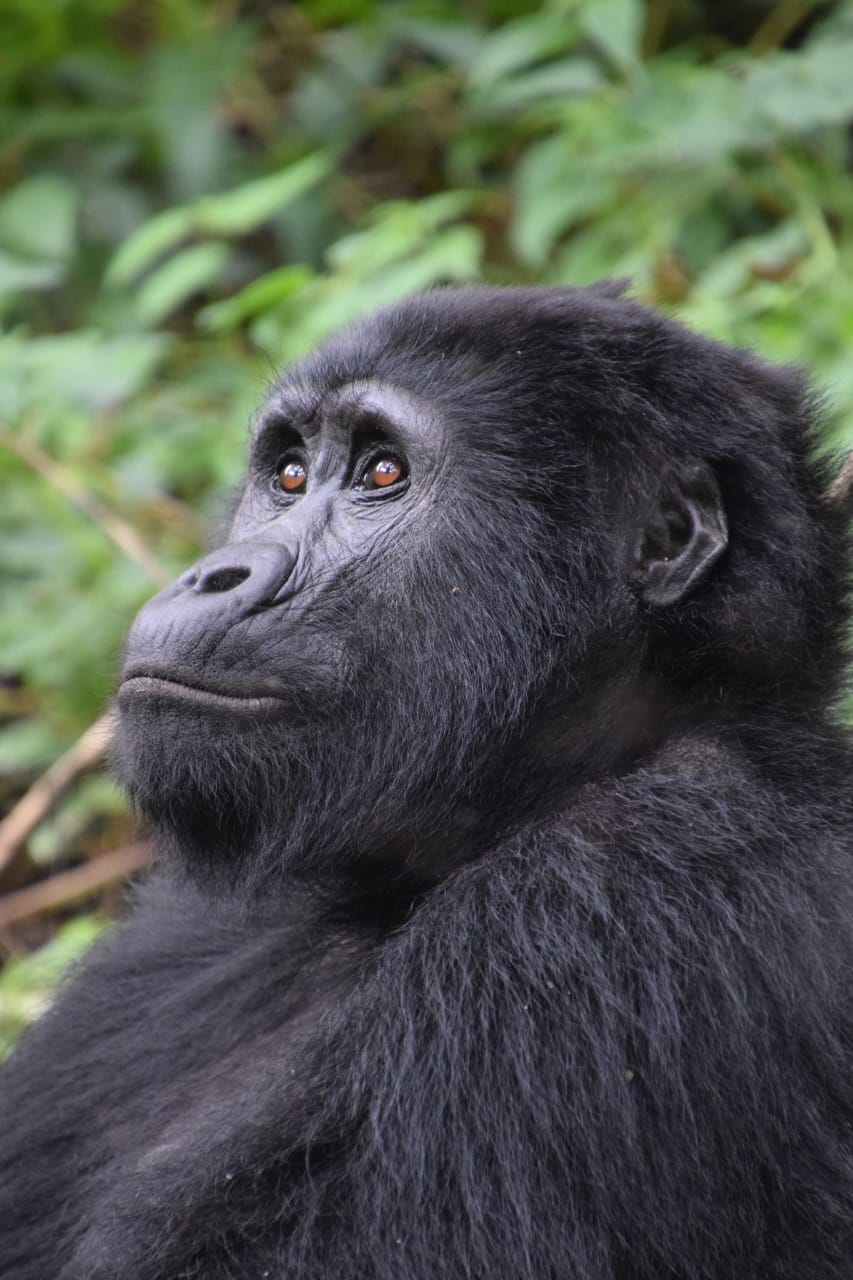
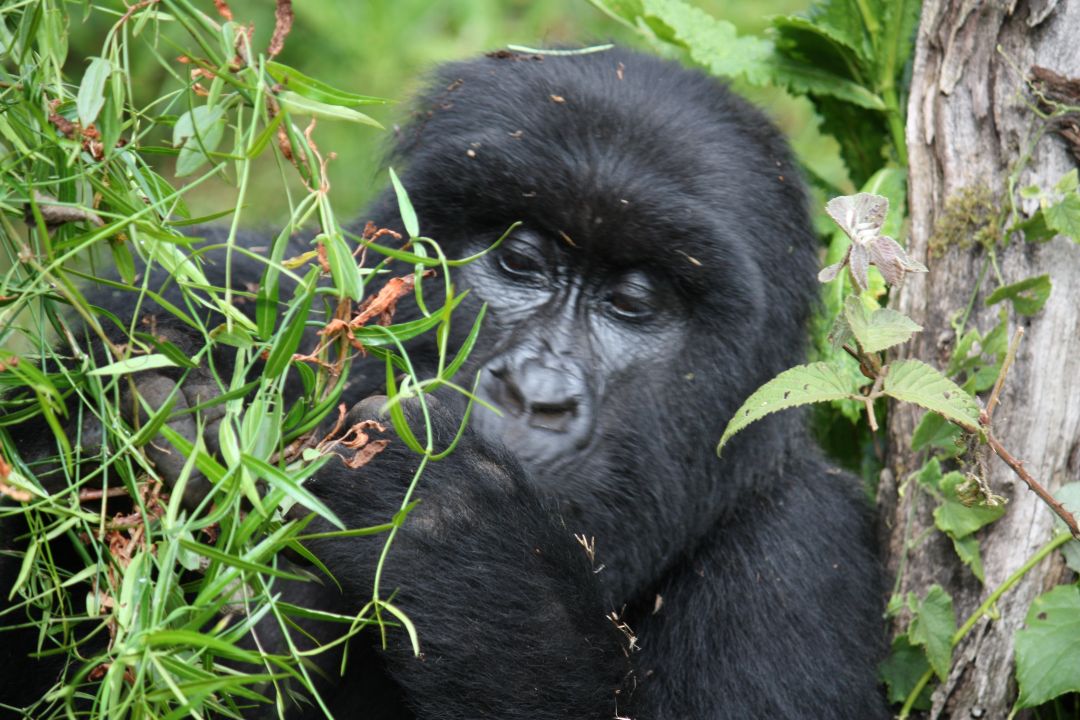
Chimpanzee sightings are not guaranteed, and visitors must follow the guidance of their trackers and the applicable wildlife-viewing rules. The experience nevertheless offers much more than a chance to see primates. It introduces visitors to a forest habitat that differs dramatically from the open plains and helps illustrate the diversity of wildlife experiences available in Queen Elizabeth National Park.
At JM Jungle Safaris, we can incorporate Kyambura Gorge chimpanzee trekking into a wider itinerary that includes game drives and the Kazinga Channel boat cruise. For travellers who wish to explore Uganda's primates further, the journey can also be extended to Kibale Forest National Park, subject to available permits and travel arrangements.
Exploring Maramagambo Forest
Maramagambo Forest offers another perspective on Queen Elizabeth National Park, inviting travellers into a landscape of mature trees, shaded paths, dense undergrowth, and forest-dependent wildlife. Situated within the park's southern area, this extensive forest habitat contrasts with the open savannah and provides important shelter and feeding grounds for a range of birds, primates, and smaller animals.
A guided forest excursion can reveal details that might otherwise be missed during a conventional game drive. Butterflies move through shafts of sunlight, insects occupy the leaf litter, and birds call from different levels of the canopy. Monkeys may be observed in the trees or along the forest edge, while fallen branches, decomposing leaves, and fungi illustrate the continuous process through which organic material returns nutrients to the soil.
The forest is also associated with caves and other distinctive natural features that contribute to its appeal. Where visits are permitted and appropriately arranged, these features offer opportunities to learn about the relationships between wildlife, geology, and forest habitats. Visitors should follow their guide's instructions and any restrictions intended to protect sensitive areas and wildlife.
Maramagambo is especially rewarding for travellers interested in birdwatching, nature photography, and the quieter side of a Uganda safari. Unlike the broad visibility of the Kasenyi Plains, forest exploration often requires patience and careful observation. The rewards may come through a fleeting view of a bird in the canopy, the sound of monkeys moving overhead, or the discovery of an unusual plant along the trail.
JM Jungle Safaris can help travellers combine forest exploration with other park experiences, depending on the itinerary and the activities available. This creates a more complete understanding of Queen Elizabeth National Park as a destination with multiple landscapes and wildlife encounters.
Birdwatching in Queen Elizabeth National Park
Queen Elizabeth National Park is one of Uganda's outstanding birdwatching destinations, with more than 600 bird species recorded across its diverse habitats. Its combination of savannah, woodland, forest, crater lakes, freshwater shores, and papyrus wetlands provides opportunities to observe birds with very different feeding strategies and ecological requirements.
In the open grasslands, birdwatchers may encounter ground-feeding species, grassland specialists, and birds of prey scanning the terrain for food. Woodland areas offer opportunities to look for species feeding among branches and foliage, while the lakeshores and Kazinga Channel attract waterbirds that depend on fish, aquatic invertebrates, and other wetland resources.
The channel is particularly rewarding for observing African fish eagles, kingfishers, herons, egrets, cormorants, and pelicans. In suitable wetland habitats, visitors may also search for storks and other wetland-associated birds. Forest habitats, including Kyambura Gorge and Maramagambo Forest, provide a different selection of species, often requiring careful listening and patient observation.
Birdwatching is especially enjoyable when the guide helps explain the differences between calls, plumage, flight patterns, feeding behaviour, and habitat preferences. Even familiar-looking birds can reveal fascinating adaptations when observed closely. Seasonal changes may also influence which species are present, particularly where migratory birds are concerned.
For dedicated birders, JM Jungle Safaris can help organise a journey with more time allocated to particular habitats and species groups. For general safari travellers, birdwatching can be incorporated naturally into game drives, boat cruises, and scenic stops. Either way, it adds depth to the experience by revealing the extraordinary variety of life beyond the park's larger mammals.
The crater lakes and the Katwe salt-mining experience
The crater lakes of Queen Elizabeth National Park are among the region's most distinctive geographical features. Created through ancient volcanic processes, these depressions and lakes punctuate the surrounding countryside, providing dramatic scenery and a fascinating connection to the geological history of the western Rift Valley.
The Katwe crater-lake area is especially notable because of its long association with traditional salt extraction. For generations, local communities have harvested salt from the lake using knowledge and practices adapted to its unusual conditions. A guided visit, where arranged, provides an opportunity to learn about the salt-making process, the challenges of working in this environment, and the importance of the activity to local livelihoods.
The landscape around Katwe differs from the park's wildlife-rich grasslands. The exposed shores, crater formations, and broad views create a more geological and cultural experience, illustrating how natural conditions can shape human activity. Visitors can gain an appreciation of the relationship between the environment and traditional livelihoods without treating the community's work merely as a tourist spectacle.
The wider crater-lake regions also provide rewarding opportunities for photography. Their elevated viewpoints reveal patterns in the terrain, while the colours of the water and surrounding vegetation can change with weather, light, and season. Some crater lakes are saline, while others have different water characteristics; each should be understood on its own terms.
For travellers with JM Jungle Safaris, a crater-lake excursion can provide a welcome contrast to game drives and boat cruises. It adds scenery, geological interest, and cultural understanding to the broader Queen Elizabeth National Park experience.
Cultural encounters around Queen Elizabeth National Park
Queen Elizabeth National Park is part of a wider landscape in which communities, livelihoods, and natural resources are closely connected. People living around the protected area have developed different relationships with the surrounding lakes, farmland, forests, and wildlife. Their stories and traditions provide a valuable cultural dimension to a safari that might otherwise focus only on animals and scenery.
Fishing communities around the lakes and channel have long depended on aquatic resources for food and income. Agricultural communities cultivate crops and raise livestock in suitable areas outside the protected boundaries, while local guides, craftspeople, hospitality workers, and other tourism providers contribute to the visitor experience. These different livelihoods help illustrate the social importance of the wider landscape.
A thoughtfully arranged cultural visit may introduce travellers to local traditions, crafts, food, community initiatives, or aspects of daily life. The nature of the experience depends on the host community and the activity selected. Respectful visits should be organised with appropriate local participation, transparent arrangements, and consideration for privacy and cultural practices.
Community experiences can also help visitors understand some of the challenges associated with living alongside wildlife, including crop damage, risks to livestock, and the need to balance conservation with economic security. Responsible tourism can support livelihoods while encouraging a deeper appreciation of the importance of protecting the park.
At JM Jungle Safaris, we see cultural encounters as an opportunity to create meaningful connections rather than brief performances for visitors. When incorporated into an itinerary, they can help travellers understand that Queen Elizabeth National Park is not isolated from human life; it is part of a wider region whose long-term conservation depends on both ecological protection and community well-being.
Bush breakfasts and sundowners in the African wilderness
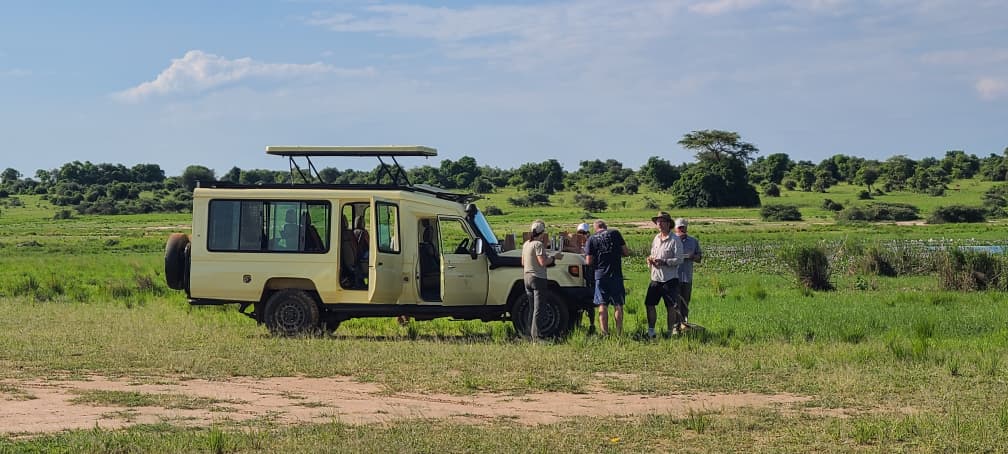
Some of the most memorable safari moments happen when travellers pause to enjoy the landscape rather than move continually in search of wildlife. A bush breakfast or sundowner can bring this sense of occasion to a Queen Elizabeth National Park itinerary, allowing guests to appreciate the setting, changing light, and sounds of the wilderness in a relaxed atmosphere.
A bush breakfast may be arranged as part of an early-morning safari, subject to the permitted location and the arrangements made in advance. As the sun rises over the grasslands, guests can enjoy a freshly prepared meal and hot drinks in a suitable outdoor setting. The experience creates time to reflect on the morning's wildlife encounters and appreciate the beauty of the park before continuing the day's activities.
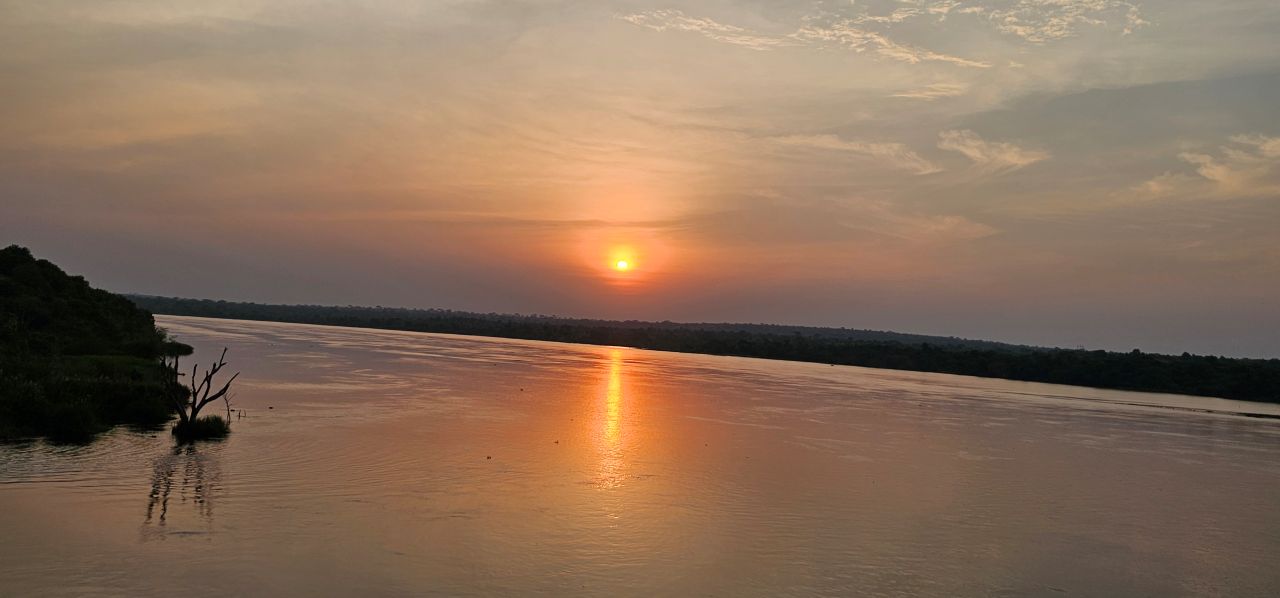
A sundowner offers a different atmosphere. As the afternoon light turns golden, guests can pause at an authorised location to enjoy their preferred drinks and refreshments while watching the colours of the landscape change. Depending on the setting, the view may include open grasslands, distant hills, or a lakeside panorama. Birds may be returning to roost, and the silhouettes of wildlife may appear across the horizon.
These experiences are especially appealing to couples, photographers, families, and travellers who value thoughtful details in their safari. They can also complement a private itinerary by creating space for conversation, relaxation, and memorable photographs.
JM Jungle Safaris can help arrange these experiences according to the chosen itinerary, package inclusions, and applicable park rules. Locations, menus, drinks, and setup vary, and all arrangements must respect wildlife safety and conservation requirements.
Best time to visit Queen Elizabeth National Park
Queen Elizabeth National Park can be visited throughout the year, with each season offering a slightly different safari experience. The most suitable time depends on your priorities, whether you are interested in classic wildlife viewing, chimpanzee trekking, birdwatching, photography, or combining the park with other destinations in Uganda.
The relatively drier periods, commonly from June to August and December to February, are popular for game drives. During these months, some tracks may be easier to navigate, and shorter vegetation in certain areas can improve visibility. Wildlife may also gather around dependable water sources, creating opportunities for observation. However, conditions vary from year to year, and animals move naturally across their habitats, so a dry-season visit does not guarantee particular sightings.
The wetter periods, often occurring around March to May and September to November, can bring fresh vegetation, greener scenery, and rewarding birdwatching. Migratory birds may be present during parts of the year, and the landscape can be especially attractive for photography. Rain can make some tracks muddy or more challenging, and dense vegetation may reduce visibility in certain locations.
Chimpanzee trekking in Kyambura Gorge is possible subject to the relevant arrangements and access conditions, but forest trails can become slippery after rainfall. Travellers should be prepared for changing conditions in any season. A flexible itinerary and suitable footwear can make the experience more comfortable.
For visitors combining Queen Elizabeth National Park with Bwindi Impenetrable National Park, Kibale Forest National Park, or other destinations, the best travel period should be considered across the entire route. JM Jungle Safaris can help select suitable dates, coordinate activities, and recommend accommodation according to your interests and travel style.
Where to stay during your Queen Elizabeth National Park safari
Accommodation is an important part of planning a Queen Elizabeth National Park safari because the park covers a large area and its different sectors are separated by considerable driving distances. Choosing where to stay according to the planned activities can reduce unnecessary travel and allow more time for wildlife viewing and relaxation.
The Mweya area is a convenient base for travellers interested in the Kazinga Channel, nearby game-drive routes, and access to several of the park's central attractions. Accommodation in and around this area ranges from established safari lodges to more modest options, with views that may overlook the channel, surrounding plains, or nearby landscapes.
For travellers prioritising the Kasenyi Plains, accommodation selected for access to the northern and central wildlife-viewing areas can make early-morning game drives easier to arrange. Staying within a reasonable distance of the planned activity allows guests to spend more time exploring the savannah rather than travelling to reach it.
The Ishasha sector is especially suitable for visitors hoping to explore the southern part of the park and search for its famous tree-climbing lions. A stay in this area can also be useful when travelling between Queen Elizabeth National Park and Bwindi Impenetrable National Park for mountain gorilla trekking.
Travellers seeking a more intimate experience may prefer a small lodge or tented camp, while those looking for additional facilities and panoramic views may favour a full-service safari lodge. The right choice depends on budget, preferred comfort level, room configuration, dining arrangements, and the location of planned activities.
JM Jungle Safaris can recommend accommodation ranging from budget-friendly stays to midrange lodges and luxury safari retreats. We consider the overall route, desired experience, and available facilities so that your accommodation supports the safari rather than simply providing somewhere to sleep.
How to reach Queen Elizabeth National Park
Queen Elizabeth National Park is accessible by road from several parts of Uganda, and it can be incorporated into a broader western Uganda itinerary. Many travellers begin in Entebbe or Kampala and travel west towards the park, passing through changing landscapes, towns, and rural communities along the way.
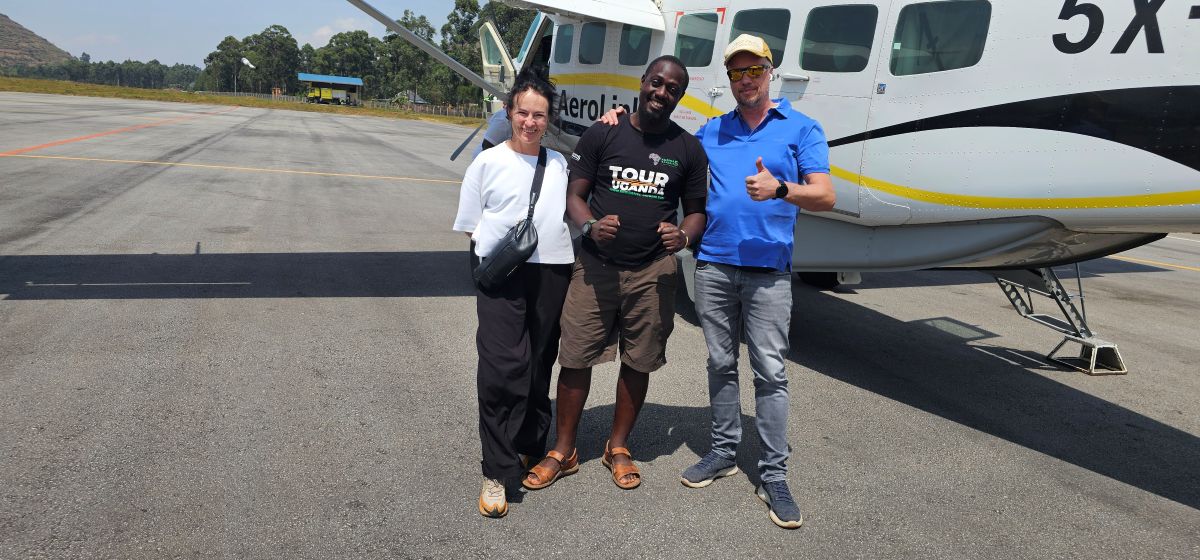
The road journey offers an introduction to Uganda beyond its wildlife destinations, although driving times depend on the departure point, route, traffic, road conditions, and stops along the way. Travellers with limited time may prefer a more carefully coordinated itinerary or consider available domestic flight options to suitable nearby airstrips, followed by a road transfer to their accommodation.
Queen Elizabeth National Park is often combined with Kibale Forest National Park for chimpanzee tracking or Bwindi Impenetrable National Park for mountain gorilla trekking. It can also be incorporated into longer journeys that include Lake Bunyonyi, Lake Mburo National Park, or other destinations, depending on the available days and preferred pace.
At JM Jungle Safaris, we plan transfers around the activities and accommodation selected for each trip. This helps minimise avoidable backtracking and ensures that game drives, boat cruises, forest activities, and onward journeys fit together logically. For travellers who value a relaxed safari, we recommend allowing enough time to enjoy the park rather than attempting to cover every attraction in a single day.
Combining Queen Elizabeth National Park with other Uganda safari destinations
Queen Elizabeth National Park is particularly rewarding when combined with other destinations, allowing visitors to experience the contrasts that make Uganda such a distinctive safari country.
A journey combining Queen Elizabeth National Park with Kibale Forest National Park introduces travellers to two different wildlife environments. In Queen Elizabeth, the focus may be on savannah game drives, hippos, and the Kazinga Channel boat cruise. In Kibale, the experience shifts towards tropical forest and chimpanzee tracking, offering an opportunity to learn about primate behaviour and forest ecology.
For travellers interested in mountain gorillas, Queen Elizabeth National Park can be combined with Bwindi Impenetrable National Park. The Ishasha sector may fit naturally into the route, depending on the chosen accommodation and travel schedule. The contrast between searching for lions in open woodland and trekking through montane forest in search of gorillas makes this combination particularly memorable.
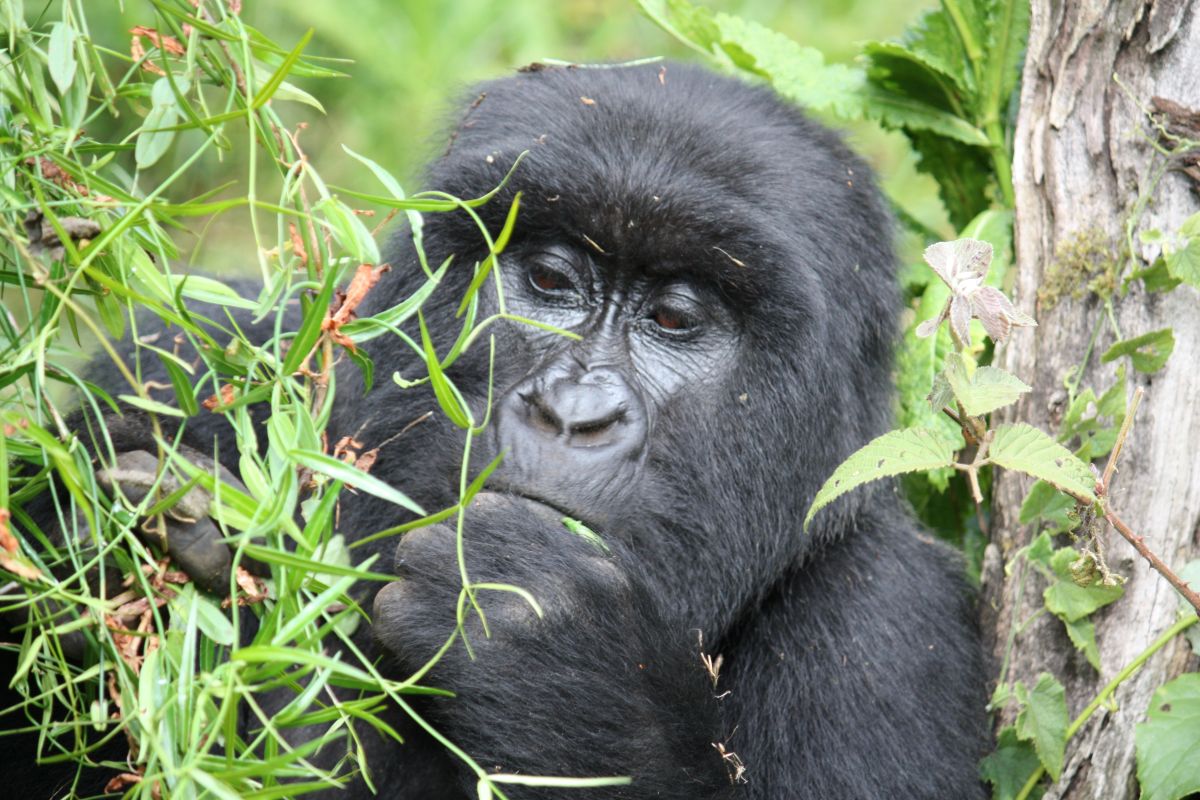
Lake Bunyonyi can provide a peaceful interlude after demanding wildlife activities, with scenic views, boat excursions, and opportunities to appreciate the surrounding highland landscape. Lake Mburo National Park may also be included in a wider itinerary, offering further wildlife viewing and activities such as guided nature walks where available.
JM Jungle Safaris creates tailor-made Uganda itineraries that connect these destinations according to each traveller's interests, time, and budget. Rather than treating every park as a separate stop, we design journeys that build naturally from one experience to the next, balancing wildlife viewing, travel time, accommodation, and opportunities for relaxation.
Why explore Queen Elizabeth National Park with JM Jungle Safaris?
A safari is shaped not only by the destination, but also by how the journey is planned and experienced. At JM Jungle Safaris Uganda Ltd, we believe a memorable journey should combine careful organisation, knowledgeable guiding, authentic encounters, and respect for the natural and cultural environments that make Uganda special.
As a locally owned Ugandan destination management company, JM Jungle Safaris creates personalised journeys across Uganda and selected East African destinations. Our knowledge of local routes, activities, accommodation options, and safari logistics helps us design experiences suited to different travel styles, from budget-conscious adventures to comfortable midrange holidays and luxury safaris.
For Queen Elizabeth National Park, we can bring together the experiences that best reflect your interests. Wildlife enthusiasts may prioritise game drives in Kasenyi and Ishasha, while birdwatchers may prefer additional time around the channel, wetlands, and forest habitats. Travellers interested in primates can include chimpanzee trekking in Kyambura Gorge, while couples and private groups may appreciate a carefully arranged sundowner or bush breakfast where permitted.
We also recognise the importance of practical details. The sequence of activities, accommodation location, road transfers, park entry arrangements, permits, and the amount of time allocated to each experience all influence the quality of a safari. Our planning process considers these factors so that the itinerary feels coherent rather than rushed.
Our philosophy is rooted in the belief that responsible travel should deepen appreciation for wildlife, landscapes, and local communities. We encourage guests to follow conservation guidance, observe animals respectfully, and approach cultural experiences with curiosity and consideration.
With JM Jungle Safaris, Queen Elizabeth National Park becomes more than a destination on the map. It becomes a journey through Uganda's wildlife, landscapes, and living heritage, experienced in the spirit of our brand promise: Rhythm of Nature.
Experience the wonders of Queen Elizabeth National Park
From elephants crossing the savannah to hippos surfacing along the Kazinga Channel, from the remarkable tree-climbing lions of Ishasha to the forest trails of Kyambura Gorge, Queen Elizabeth National Park offers a wealth of experiences for travellers seeking an authentic African safari. Its varied scenery, abundant birdlife, distinctive geological features, and connections with surrounding communities make it a destination that rewards both first-time visitors and seasoned safari enthusiasts.
Whether you are planning a short wildlife escape or a longer Uganda adventure, JM Jungle Safaris can help you create an itinerary that reflects your interests, preferred accommodation, and available travel time. With thoughtful planning and an appreciation for the natural world, your visit can become a meaningful encounter with one of Uganda's most celebrated national parks.