
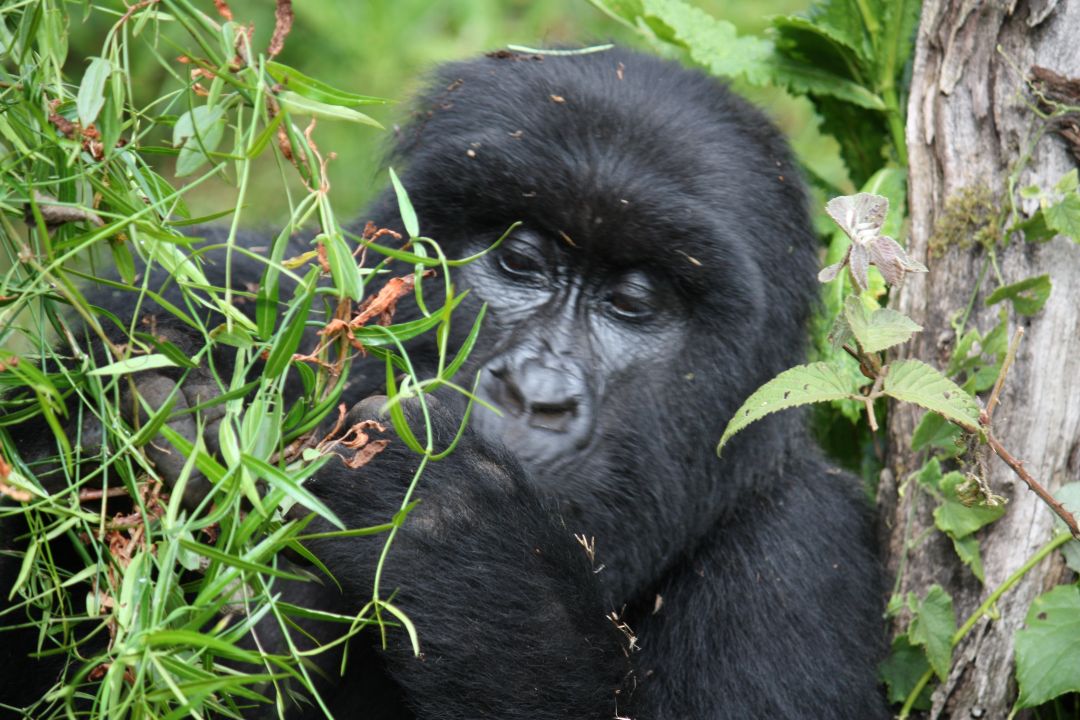
Kibale National Park
The primate capital of the world, sheltering 1,500+ wild chimpanzees beneath a lush equatorial canopy.
Wilderness Overview
Kibale Forest National Park is one of Uganda’s richest tropical forest ecosystems and is internationally celebrated for its extraordinary concentration of primates, particularly chimpanzees. Covering about 795 km², the park forms an important ecological link with Queen Elizabeth National Park and protects a diverse landscape of moist evergreen and semi-deciduous forest, grassland, woodland, wetlands, and streams. The Tropical Forest At the heart of Kibale is an expansive, mature tropical forest with trees rising more than 50 metres above the forest floor. The vegetation changes with elevation and location, creating a mosaic of evergreen, semi-deciduous, secondary forest, grassland, and woodland habitats. The northern and central sections are predominantly forested, while the landscape gradually becomes more open toward the south. This transition from dense forest toward the Rift Valley grasslands creates an ecological gradient supporting different plant and animal communities. More than 350 tree species have been recorded in the park. Towering trees form a layered canopy, while palms, ferns, shrubs, vines, herbs, fungi, and seedlings occupy the lower levels. Fallen leaves, fruits, branches, and animal remains are continuously broken down by fungi, insects, and microorganisms, returning nutrients to the forest. The Primate Capital of Uganda Kibale's defining ecological characteristic is its extraordinary primate diversity. The park supports 13 species of non-human primates, making it one of Africa's most important primate ecosystems. These include chimpanzees, red colobus, L'Hoest's monkeys, black-and-white colobus, blue monkeys, red-tailed monkeys, olive baboons, mangabeys, and bushbabies. The forest canopy provides food, nesting sites, movement corridors, and protection for these species. Different primates occupy different ecological niches, with some feeding primarily on fruits and leaves while others supplement their diets with insects and other small organisms. The Chimpanzee Ecosystem Chimpanzees are the park's most famous inhabitants and an important indicator of the health and continuity of its forest habitat. The latest Uganda Wildlife Authority reporting records 1,415 chimpanzees in Kibale from a 2025 survey, up from 1,001 recorded in the 2019 census. Chimpanzees move through the forest in complex social communities, travelling between feeding areas, resting sites, and nesting locations. Their diet includes fruits, leaves, flowers, seeds, and insects, while their movement through the forest contributes to seed dispersal and regeneration. Kibale's long-running chimpanzee research has also made it one of Africa's most important sites for understanding primate behaviour and forest ecology. Research at Ngogo, for example, has examined chimpanzee social organisation and interactions between neighbouring communities for more than three decades. Forest Elephants & Other Mammals Kibale also supports a remarkable range of larger mammals, although dense vegetation makes many of them difficult to observe. Species include: Forest elephants Buffaloes Bushbucks Bushpigs Giant forest hogs Warthogs Duikers Sitatungas Leopards African golden cats Servals Mongooses Otters Forest elephants are particularly important to the ecosystem because their movement and feeding can influence vegetation structure and help disperse seeds. Unlike the open savannahs of Murchison Falls or Queen Elizabeth, Kibale's dense vegetation means that wildlife encounters are often intimate and unpredictable. Sometimes the clearest evidence of a large animal is a footprint, broken vegetation, feeding sign, or distant sound. A Bird-Rich Forest Kibale is also an exceptional birding ecosystem, with more than 370 recorded bird species. Its forest canopy, woodland, wetlands, grasslands, and streams create habitats for a wide variety of species. Notable species include: Great Blue Turaco Green-breasted Pitta African Grey Parrot Nahan's Francolin Blue-headed Bee-eater Cassin's Spinetail Masked Apalis Western Tinkerbird Crowned Eagle Various sunbirds, barbets and cuckoos The Green-breasted Pitta is particularly sought after by birdwatchers and is one of the park's signature species. Wetlands, Rivers & Water Catchment Kibale is not simply a forest ecosystem. Its network of streams, rivers, valley swamps, and wetlands forms an essential part of the wider landscape. The Dura and Mpanga rivers, together with numerous smaller streams, drain the forest and ultimately contribute water toward Lake George. The park therefore functions as an important water catchment and filtration system, helping regulate water flows and protect downstream ecosystems. Papyrus-dominated valley swamps provide additional habitat for birds, amphibians, insects, and wetland vegetation. These aquatic environments also help slow water movement, retain sediments, and maintain ecological processes during periods of changing rainfall. The Forest Floor While the canopy receives most of the attention, the forest floor is an ecosystem in its own right. Fallen fruits attract mammals and birds, while decaying leaves create a rich layer of organic matter. Beetles, termites, ants, fungi, worms, and microorganisms break down this material, returning nutrients to the soil. Small reptiles, amphibians, rodents, insects, and other organisms occupy this often-overlooked ecological layer. This continuous process of growth, feeding, decay, and regeneration keeps the forest functioning. Butterflies & Invertebrates Kibale's biodiversity extends far beyond its famous mammals. The forest supports an exceptional variety of butterflies and other invertebrates, which play crucial roles as pollinators, decomposers, herbivores, and prey. More than 45 species of forest swallowtail and Charaxes butterflies have been documented, while numerous other insects contribute to the complex food web. The Kibale–Queen Elizabeth Ecological Connection One of Kibale's most important ecological characteristics is its relationship with Queen Elizabeth National Park to the south. Together, the protected areas create a much larger connected landscape in which wildlife can move between forest and savannah environments. This connection is particularly important for species such as elephants and other large mammals that require different habitats at different times. The transition from Kibale's forested highlands toward the grasslands of Queen Elizabeth creates one of western Uganda's most interesting ecological gradients. Crater Lakes & Surrounding Landscape The wider Kibale landscape is also characterized by numerous volcanic crater lakes, rolling hills, tea plantations, farmland, and forest. These surrounding habitats add another dimension to the ecosystem, supporting birds, butterflies, amphibians, agricultural biodiversity, and communities living around the protected area. The landscape demonstrates that conservation does not stop at the park boundary; ecological processes continue through surrounding forests, wetlands, farms, rivers, and community lands. Conservation & Research Kibale is one of Africa's most important locations for tropical forest research. Its long history of ecological and primate research has generated valuable knowledge about chimpanzee behaviour, forest regeneration, biodiversity, and human–wildlife relationships. The park also provides important ecosystem services, including carbon storage, water regulation, soil protection, biodiversity conservation, and tourism revenue. Communities surrounding Kibale depend heavily on agriculture and other natural-resource-based livelihoods, making community engagement an important component of long-term conservation. The Essence of Kibale Kibale is best understood as a living forest network, where towering trees, wetlands, rivers, grasslands, insects, birds, elephants, monkeys, and chimpanzees are interconnected. Its greatest ecological treasure is not simply its famous chimpanzees, but the entire web of life that makes their survival possible. From the fungi recycling nutrients beneath the forest floor to chimpanzees dispersing seeds through the canopy, every organism contributes to the forest's continuing regeneration. For travellers, Kibale offers far more than chimpanzee trekking. It is an opportunity to enter one of Uganda's most vibrant ecosystems—a forest alive with calls, movement, waterfalls, streams, primates, birds, butterflies, towering trees, and centuries-old ecological relationships.
Visual Atmosphere
Sanctuary Details
Signature Experiences in Kibale National Park
Chimpanzee Habituation Experience
A Chimpanzee Habituation Experience (CHE) in Uganda offers a deeper and more immersive way to experience chimpanzees in the wild. Rather than simply following a habituated community for a limited viewing period, the experience allows you to spend substantially more time observing chimpanzees as they go about their natural lives, accompanied by experienced trackers, researchers and guides. It is an intimate opportunity to understand the behaviour, relationships and daily rhythms of these remarkable primates. The experience takes place in the magnificent rainforest of Kibale National Park, often regarded as one of Africa's finest destinations for primate encounters. The forest rises around you in layers of enormous trees, climbing vines, dense undergrowth and broad-leaved vegetation. Above, the canopy forms a living highway for chimpanzees and other primates, while birds call from hidden branches and insects hum beneath the forest floor. Your day begins early, when the forest is particularly alive with activity. Accompanied by your guide and trackers, you enter the rainforest in search of the chimpanzee community. Instead of simply looking for the animals, you begin learning how to read the forest—following footprints, feeding remains, discarded fruit, broken branches and vocalisations that reveal where the chimpanzees have been moving. Then comes the moment when the forest gives away its secret. A distant pant-hoot may echo through the trees. Leaves begin shaking high in the canopy. A branch bends under the weight of a moving chimpanzee. Your trackers quietly lead you toward the sounds until the first individual comes into view. With habituation, you have the privilege of spending extended time observing the community, allowing behaviours that might be missed during a shorter trekking encounter to emerge naturally. You may watch chimpanzees travel through the canopy, feed on seasonal fruits, groom one another, rest beneath the trees or interact with members of their social group. Chimpanzee society is remarkably complex. Adults maintain strong social relationships through grooming and communication, while youngsters learn by constantly watching and imitating older individuals. Infants remain close to their mothers, and adolescents can be especially energetic, engaging in playful wrestling, chasing and climbing. One of the most fascinating aspects of the habituation experience is witnessing chimpanzee communication. Pant-hoots can suddenly fill the forest as individuals announce their presence and communicate across considerable distances. Excited calls, screams, drumming and other vocalisations can transform an otherwise quiet section of forest into a dramatic display of chimpanzee social life. Because you have more time with the community, you can also appreciate the individuality of different chimpanzees. Some may be bold and inquisitive, others relaxed and indifferent to your presence. You might observe an experienced adult moving confidently through the canopy, a mother carefully caring for her infant, or young chimpanzees testing their strength and coordination through play. The experience is equally about understanding the forest ecosystem. While following the chimpanzees, you may encounter red-tailed monkeys, black-and-white colobus monkeys, blue monkeys and other forest species. Your guide can explain the relationships between the chimpanzees, fruiting trees and wider rainforest ecosystem, giving you a much richer understanding of what makes Kibale such an important primate habitat. As the hours pass, the encounter becomes less about searching and more about observing. You begin to settle into the rhythm of the forest—walking when the chimpanzees move, pausing when they rest, looking upward when they climb and remaining still when they approach. This slower pace creates an unusually intimate wildlife experience. For photographers, wildlife enthusiasts, conservationists and travellers with a particular fascination for primates, the Chimpanzee Habituation Experience provides an exceptional opportunity to observe behaviour over time. Rather than collecting a series of quick sightings, you have the chance to watch the unfolding story of a chimpanzee community. The experience may reveal moments of extraordinary tenderness and energy: a mother carrying her infant through the forest, adults grooming beneath the canopy, juveniles tumbling through the vegetation, or a powerful chorus of pant-hoots spreading across the rainforest. Eventually, the day draws to a close. The chimpanzees continue with their lives as you begin the journey back through the forest. Their calls gradually fade into the sounds of birds, insects and moving leaves, but the experience remains vivid. Chimpanzee habituation is more than a wildlife encounter—it is an opportunity to slow down, observe and understand. It brings you closer to the natural rhythms of one of Africa's most fascinating primates while supporting the continued understanding and conservation of chimpanzees in Uganda.
Chimpanzee Trekking at Kibale National Park
Your chimpanzee trekking adventure with JM Jungle Safaris begins as you enter the lush tropical rainforest of Kibale National Park, one of Uganda’s most remarkable destinations for encountering wild chimpanzees. Accompanied by experienced park rangers, you follow winding forest trails beneath towering trees, through tangled vines and dense undergrowth, listening to the enchanting calls of tropical birds and the distant cries of primates echoing through the canopy. As you venture deeper into the forest, the excitement builds with every rustle of leaves and sudden movement among the branches. Soon, the unmistakable calls of chimpanzees signal that you are approaching a troop. You may find them swinging effortlessly between trees, grooming one another, feeding on seasonal fruits, playing energetically, or moving across the forest floor in search of food. Watching these intelligent and highly social primates in their natural habitat offers a fascinating glimpse into their complex family bonds, expressive behaviours, and striking similarities to humans. Once the chimpanzees are located, you will spend a designated period observing and photographing their daily activities while maintaining a respectful distance and following the ranger’s guidance. Every encounter is unique, shaped by the chimpanzees’ movements and the natural rhythm of the forest, making each moment feel spontaneous and extraordinary. With JM Jungle Safaris, chimpanzee trekking in Kibale National Park becomes more than a wildlife activity; it is an immersive journey into the heart of Uganda’s biodiversity, leaving you with unforgettable memories of one of Africa’s most captivating primate encounters.
Nature walk in Kibale National Park
Your guided nature walk in Kibale National Park with JM Jungle Safaris invites you to experience the extraordinary beauty of Uganda’s tropical rainforest at a gentle, unhurried pace. Accompanied by a knowledgeable local guide, you venture along forest trails beneath towering trees, through tangled vines, lush ferns, and dense undergrowth, discovering the remarkable ecological richness of one of East Africa’s most captivating forest ecosystems. As you walk deeper into the forest, the atmosphere comes alive with the soothing sounds of nature. The melodic calls of forest birds echo through the canopy, leaves rustle overhead, and occasional movements among the branches reveal the presence of monkeys and other forest inhabitants. With a little patience and a keen eye, you may encounter red-tailed monkeys, L’Hoest’s monkeys, grey-cheeked mangabeys, and other fascinating primates that inhabit this remarkable wilderness. Kibale is also renowned for its exceptional birdlife, colourful butterflies, diverse plant species, and ancient trees that provide food and shelter for countless forest creatures. Your guide brings the rainforest to life by explaining the intricate relationships between plants, animals, and their environment. You discover how different tree species support wildlife, how medicinal plants have traditionally been used by local communities, and how the forest contributes to biodiversity conservation. Every turn along the trail offers an opportunity to appreciate the delicate balance of this living ecosystem and the importance of protecting Uganda’s natural heritage. Unlike the excitement of chimpanzee trekking, a nature walk allows you to slow down, observe subtle details, and connect more deeply with the surrounding environment. The soft forest light filtering through the canopy, the earthy fragrance of damp vegetation, and the chorus of birds create a peaceful atmosphere that encourages exploration and reflection. With JM Jungle Safaris, a nature walk in Kibale National Park becomes more than an ordinary forest stroll; it is an immersive journey into the sights, sounds, and hidden wonders of Uganda’s wilderness, offering a memorable experience for nature lovers, birdwatchers, photographers, and travellers seeking a deeper connection with the natural world.
Bigodi Swamp walk
Your Bigodi Wetland walk with JM Jungle Safaris takes you into one of Uganda’s most captivating community conservation areas, where lush papyrus swamps, winding nature trails, and thriving wildlife create an unforgettable encounter with nature. Located near Kibale National Park, the Bigodi Wetland Sanctuary is a remarkable haven for birdwatchers, nature enthusiasts, photographers, and travellers seeking to experience the rich biodiversity of Uganda beyond the rainforest. Accompanied by a knowledgeable local guide, you follow well-established trails and wooden boardwalks through a mosaic of wetlands, grasslands, and forest-edge vegetation. The walk unfolds at a relaxed pace, allowing you to absorb the sights and sounds of this vibrant ecosystem. The air carries the calls of tropical birds, the gentle rustling of papyrus reeds, and the occasional movement of wildlife hidden among the vegetation, creating a peaceful atmosphere that draws you closer to the natural world. Bigodi is particularly celebrated for its exceptional birdlife, with opportunities to spot colourful species such as the great blue turaco, papyrus gonolek, African jacana, and various kingfishers, depending on the season and local conditions. As you explore, your guide helps identify different bird calls, explain feeding behaviours, and reveal the ecological importance of the wetland as a habitat for numerous resident and migratory species. The sanctuary is also home to several primates, including red-tailed monkeys, black-and-white colobus monkeys, and grey-cheeked mangabeys. Watching these animals move through the trees or forage along the forest edges adds an exciting dimension to the walk. You may also encounter butterflies, unique wetland plants, and other small creatures that contribute to the sanctuary’s rich biodiversity. Beyond wildlife, the Bigodi Wetland walk offers a meaningful opportunity to discover the relationship between local communities and their natural environment. Through your guide’s explanations, you gain insights into community-led conservation, traditional plant uses, and the importance of protecting wetlands for wildlife, water resources, and local livelihoods. The experience highlights how responsible tourism can support conservation initiatives while creating opportunities for the surrounding communities. With JM Jungle Safaris, every step through Bigodi becomes an opportunity to discover something remarkable, whether it is the flash of a colourful bird, the movement of a monkey in the canopy, or the quiet beauty of papyrus reeds reflected in the wetlands. This enriching excursion perfectly complements chimpanzee trekking in Kibale National Park, offering a slower, more intimate exploration of Uganda’s extraordinary natural heritage.
Birding in Bigodi wetland
Your birding adventure in Bigodi Wetland Sanctuary with JM Jungle Safaris takes you into one of Uganda’s most rewarding birdwatching destinations, where rich wetland habitats, lush vegetation, and vibrant birdlife create an unforgettable experience for nature enthusiasts and photography lovers. Located near Kibale National Park, this remarkable community-managed sanctuary offers an excellent opportunity to discover the extraordinary diversity of Uganda’s birds while appreciating the delicate beauty of a thriving tropical wetland ecosystem. Accompanied by a knowledgeable local birding guide, you begin your exploration along winding nature trails and wooden boardwalks that pass through papyrus swamps, marshland, forest edges, and areas of dense vegetation. As the morning unfolds, the wetland gradually comes alive with melodious bird calls, fluttering wings, and colourful movements among the reeds and tree branches. Each stop presents an opportunity to listen carefully, observe patiently, and discover species that might otherwise remain hidden within the vegetation. One of the most memorable highlights is the opportunity to encounter the magnificent great blue turaco, renowned for its striking blue plumage, crimson flight feathers, and distinctive appearance. Depending on the season and prevailing conditions, you may also spot the papyrus gonolek, African jacana, malachite kingfisher, pied kingfisher, African paradise flycatcher, and numerous other wetland and woodland species. Bigodi is particularly rewarding for birders interested in observing how different species adapt to their habitats, from birds feeding along shallow waterways to those searching for insects and fruits within the surrounding vegetation. As you continue along the trails, your guide helps identify species by their calls, plumage, flight patterns, and feeding behaviours, transforming each sighting into an opportunity to learn. You discover how the wetland provides essential feeding, breeding, and sheltering grounds for birds while supporting an interconnected community of plants, insects, amphibians, and other wildlife. The experience is especially rewarding for photographers, with opportunities to capture birds perched among papyrus reeds, moving through sunlit branches, or flying across the wetland landscape whenever conditions allow. Beyond the excitement of spotting new species, birding in Bigodi offers a peaceful connection with nature. The gentle movement of the wetland grasses, the reflections across the water, and the continuous chorus of birds create a tranquil atmosphere in which every moment encourages patience, curiosity, and appreciation for Uganda’s natural heritage. With JM Jungle Safaris, birding in Bigodi Wetland Sanctuary becomes more than a checklist of sightings; it is an enriching journey into Uganda’s remarkable avian diversity, guided by local knowledge and a commitment to responsible tourism. Whether you are an experienced birder seeking special sightings or a first-time enthusiast discovering the joy of birdwatching, this experience provides a memorable complement to chimpanzee trekking and nature walks in Kibale National Park.
Village walk in Kibale National Park
Your village walk with JM Jungle Safaris offers a wonderful opportunity to discover the authentic cultural heritage of the communities surrounding Kibale National Park, where traditional Ugandan lifestyles, warm hospitality, and everyday village activities reveal a deeper side of life beyond the rainforest. This immersive experience brings you closer to the people whose lives, traditions, and livelihoods are closely connected to the surrounding natural environment. Accompanied by a knowledgeable local guide, you stroll along village pathways, passing family homesteads, small farms, local gardens, and community gathering places. Along the way, you witness the rhythm of everyday rural life, from farmers tending their crops to residents carrying out household activities and exchanging friendly greetings with neighbours. The welcoming atmosphere creates opportunities to interact with local people, learn about their customs, and appreciate the simplicity and richness of community life in western Uganda. As your walk continues, you gain insights into traditional farming practices, locally grown foods, medicinal plants, and the importance of agriculture to household livelihoods. Depending on the community and activities available during your visit, you may see banana plantations, coffee gardens, or other small-scale farms that support local families. Your guide explains how these agricultural activities contribute to the local economy and how communities balance their livelihoods with the need to protect the neighbouring forest and its wildlife. The experience may also introduce you to traditional food preparation, local crafts, cultural storytelling, and customs passed down through generations. Through conversations with residents, you discover the values, beliefs, and traditions that shape community life. These personal encounters provide a meaningful opportunity to learn directly from local people rather than simply observing their culture from a distance. One of the most rewarding aspects of the village walk is understanding the relationship between the communities and Kibale National Park. You learn how tourism can support local livelihoods, encourage conservation awareness, and create opportunities for residents to benefit from protecting the natural environment. This connection adds depth to your safari, showing how cultural heritage and environmental conservation can complement one another. With JM Jungle Safaris, your village walk becomes more than a sightseeing excursion; it is an opportunity to build genuine cultural connections, appreciate local traditions, and experience the welcoming spirit of Uganda. By the end of your visit, you leave with a richer understanding of the people who call this beautiful region home and a deeper appreciation of the human stories that make a Kibale safari truly memorable.
Sanctuary Accommodations
Isunga Lodge
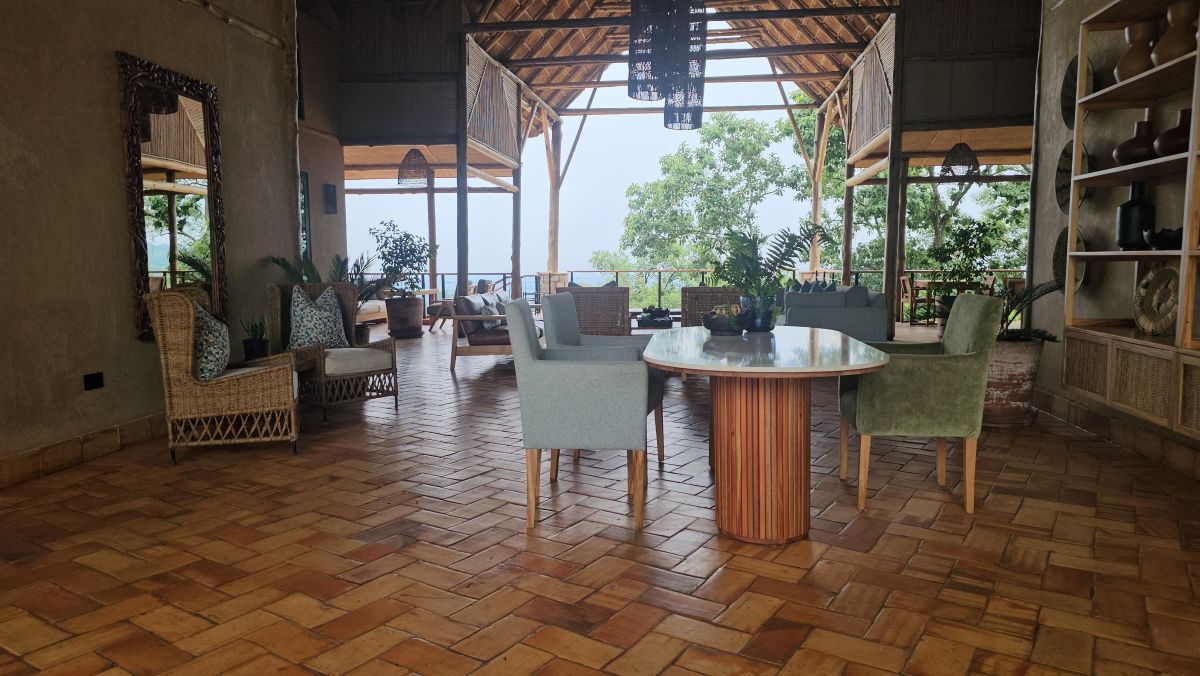
Isunga Lodge – Full Description & Atmosphere Isunga Lodge is a relaxed, owner-managed eco-lodge set on an elevated hillside overlooking the magnificent Kibale Forest National Park in western Uganda. Its exceptional position provides sweeping views across the rainforest canopy, with vistas extending toward the Rwenzori Mountains, Lake George and the savannahs of Queen Elizabeth National Park on clear days. The lodge features eight private, stylish cottages thoughtfully scattered across spacious natural gardens, giving guests a strong sense of privacy and tranquillity. Each cottage has a private terrace where visitors can sit back, enjoy the forest scenery and watch the abundant birdlife around the property. The accommodation combines simple comfort with a natural, understated safari character, including comfortable beds, mosquito nets, flush toilets and hot showers. The main restaurant and lounge form the social heart of the lodge, with panoramic views over Kibale Forest. Meals are prepared using fresh local ingredients, organic herbs and vegetables grown in the lodge's own garden. Guests can enjoy breakfast, lunch and dinner in a relaxed setting, with the kitchen able to accommodate special dietary requirements and prepare local Ugandan dishes on request. A refreshing salt-water swimming pool offers a peaceful place to cool down after chimpanzee trekking or exploring the surrounding crater lakes. The lodge's hillside gardens, terraces and open spaces encourage guests to slow down, reconnect with nature and enjoy the spectacular landscape rather than simply use the property as a place to sleep. Atmosphere The atmosphere at Isunga Lodge is peaceful, intimate, natural and unhurried. Mornings are accompanied by forest sounds and bird calls, while the elevated position creates spectacular sunrise and daytime views across the surrounding wilderness. After a day of chimpanzee trekking or exploring Kibale, guests can relax by the pool, enjoy a sundowner while watching the sunset over the Rwenzori Mountains, and gather around the campfire beneath the stars, sometimes listening for the sounds of elephants and chimpanzees from the forest below. Overall, Isunga Lodge delivers an authentic forest-and-crater-lake retreat, combining warm personal hospitality, beautiful scenery, comfortable accommodation and a genuine connection with the natural environment—an excellent base for travellers exploring Kibale and its famous chimpanzee experiences.
Expeditions Journeying Through Kibale National Park
2 DAYS Murchison Falls National Park
Your 2-day Murchison Falls National Park adventure with JM Jungle Safaris combines exciting game drives across wildlife-rich savannahs, a scenic boat cruise along the Nile, and breathtaking views of the mighty Murchison Falls for an unforgettable taste of Uganda’s wilderness.
3 Days Gorilla Fly in Tour
Your 3-day flying gorilla safari with JM Jungle Safaris takes you from Entebbe to Bwindi Impenetrable National Park by scenic flight, where you’ll enjoy breathtaking forest landscapes, an unforgettable mountain gorilla trekking experience, and a relaxing wilderness retreat before flying back to Entebbe.
5 Days Gorillas and Chimpanzee Trekking Safari
Discover Uganda’s extraordinary primate world on a 5-day safari with JM Jungle Safaris, combining thrilling chimpanzee tracking in Kibale Forest with an unforgettable mountain gorilla trekking experience in Bwindi Impenetrable National Park, surrounded by breathtaking landscapes and rich biodiversity.
9-Day Mount Kenya & Samburu Wilderness Safari
Traverse the finest wildlife frontiers of Kenya on this 9-day luxury safari. Begin with scenic highland views beneath Mount Kenya, journey north to the rugged wilderness of Samburu to encounter the rare Special Five, and culminate on the sweeping golden plains of the Masai Mara for world-class big cat tracking and safari game drives.
14 DAYS magic of UGANDA Safari
Embark on a spectacular 14-day journey through Uganda, the Pearl of Africa, exploring its diverse landscapes, rich cultures and extraordinary wildlife. From the shores of Lake Victoria and the powerful Nile to the savannahs of Murchison Falls and Queen Elizabeth National Parks, continue into the ancient forests of Kibale and Bwindi for unforgettable chimpanzee and gorilla encounters. Cruise the Kazinga Channel, discover crater lakes and mountain scenery, meet local communities, and experience Uganda's remarkable wilderness at an unhurried pace—creating a safari filled with adventure, connection and lasting memories.
Journey Into Kibale National Park
Our safari specialists craft seamless private journeys combining Kibale National Park with East Africa's most breathtaking wild landscapes.
Design Your Expedition