Primate in forest canopy
Rare Wildlife & Alpine Journeys

Immersion In The Wild

From mountain gorilla habituation in Bwindi and Volcanoes to Great Migration river crossings in the Mara and Serengeti, and navigating the Nile's thunderous rapids.

Curated 30 Guided Encounters

All primate and big-game tracking escorted by official national park rangers and certified wildlife guides
Mountain Gorilla Trekking
primate
Bwindi Impenetrable National Park 6.0 Hours

Mountain Gorilla Trekking

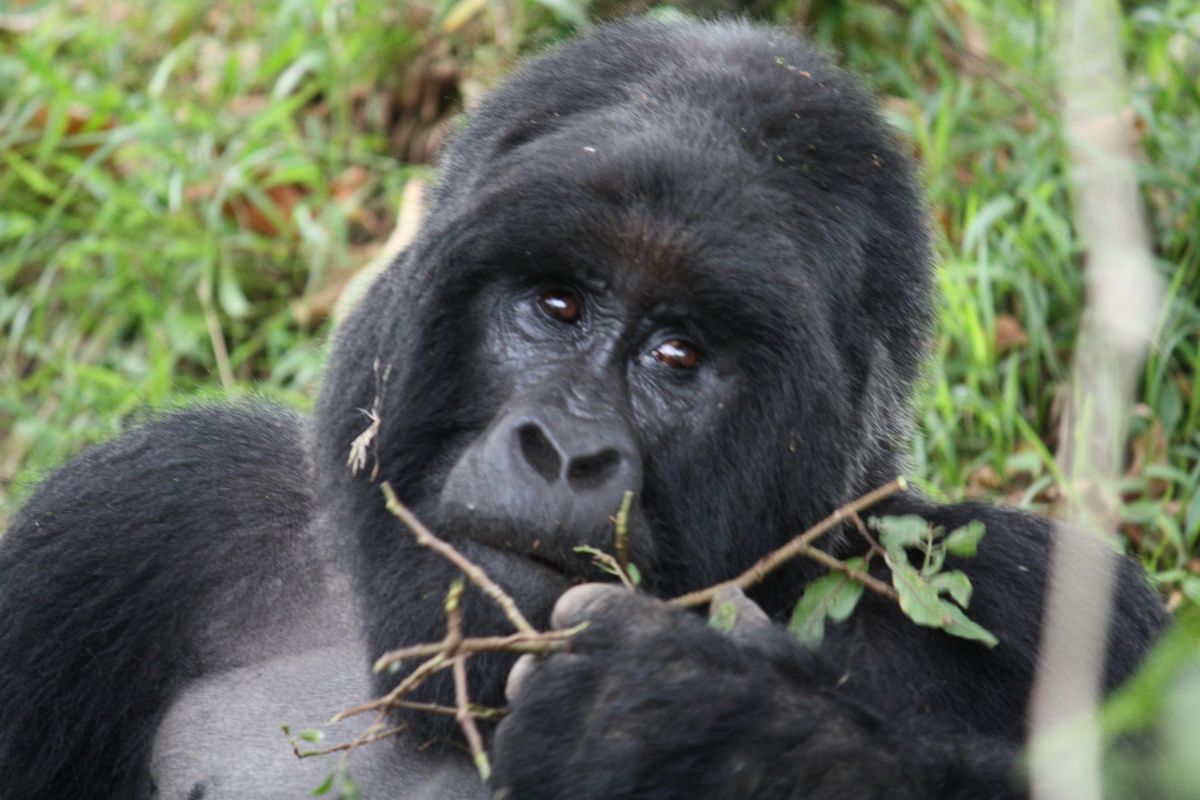
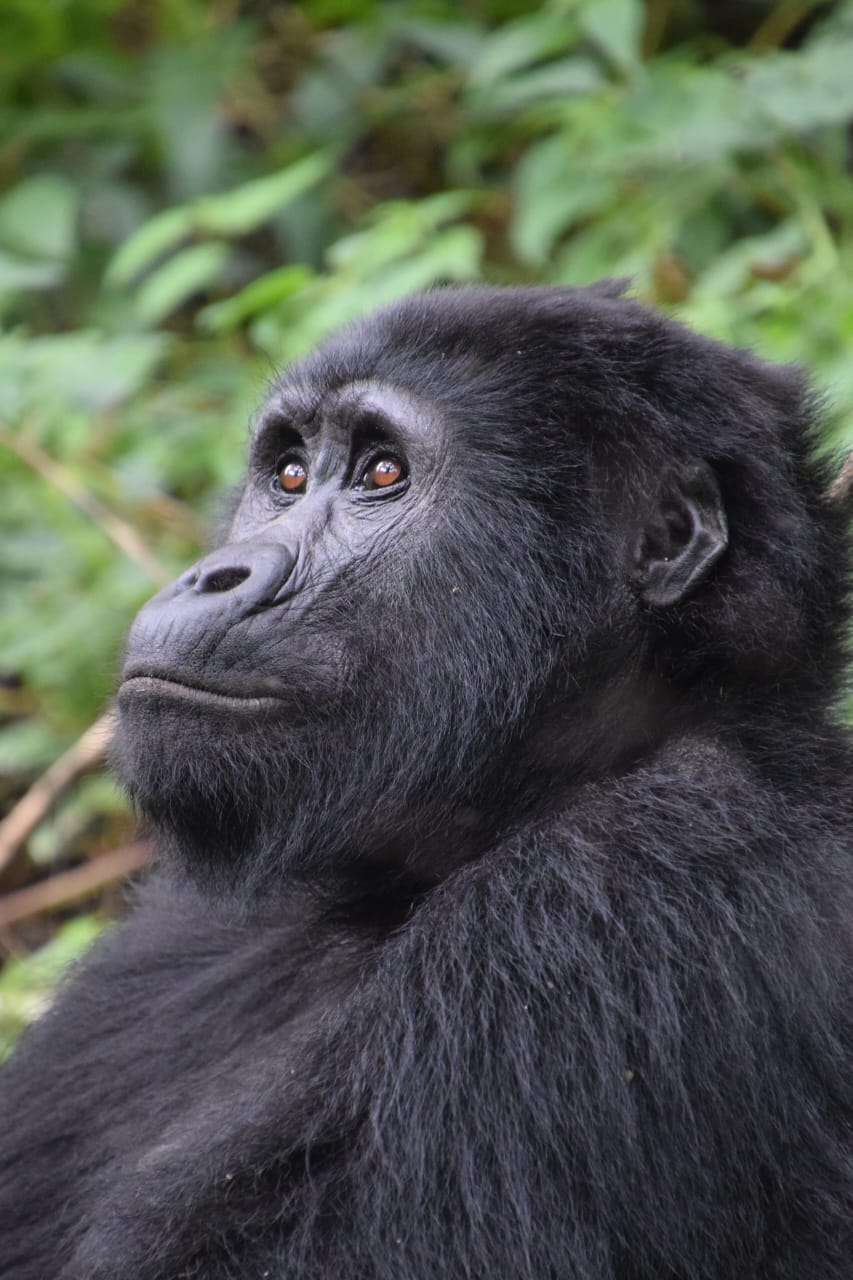
Encounter wild mountain gorillas in Bwindi Impenetrable Forest alongside official UWA rangers.

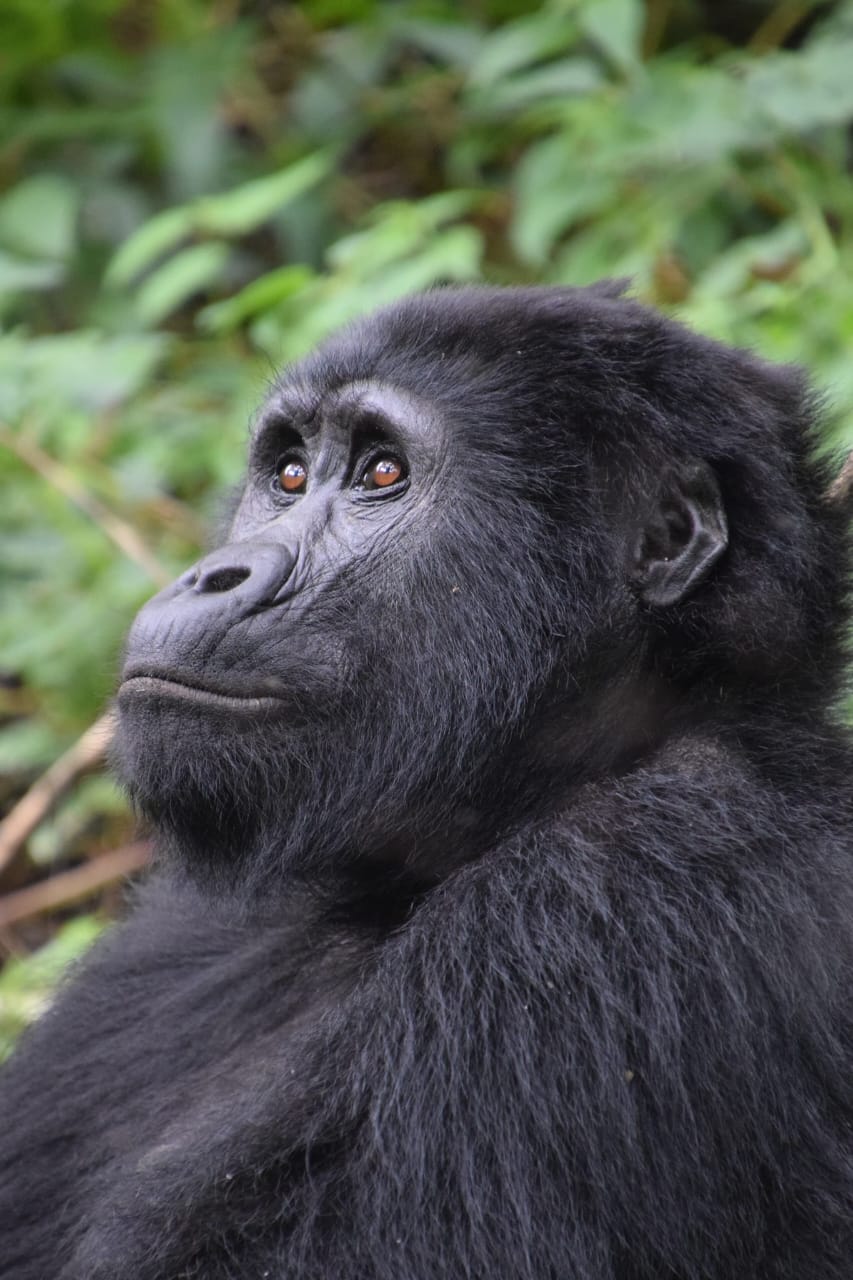
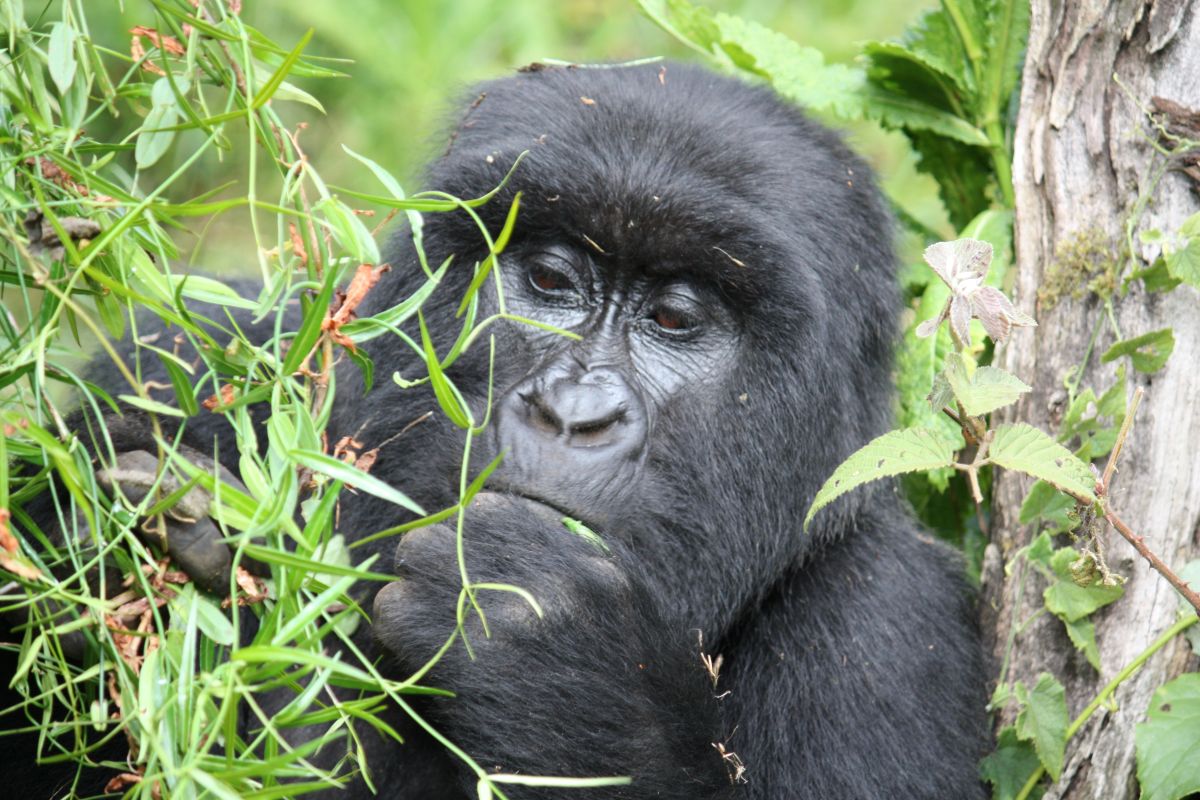
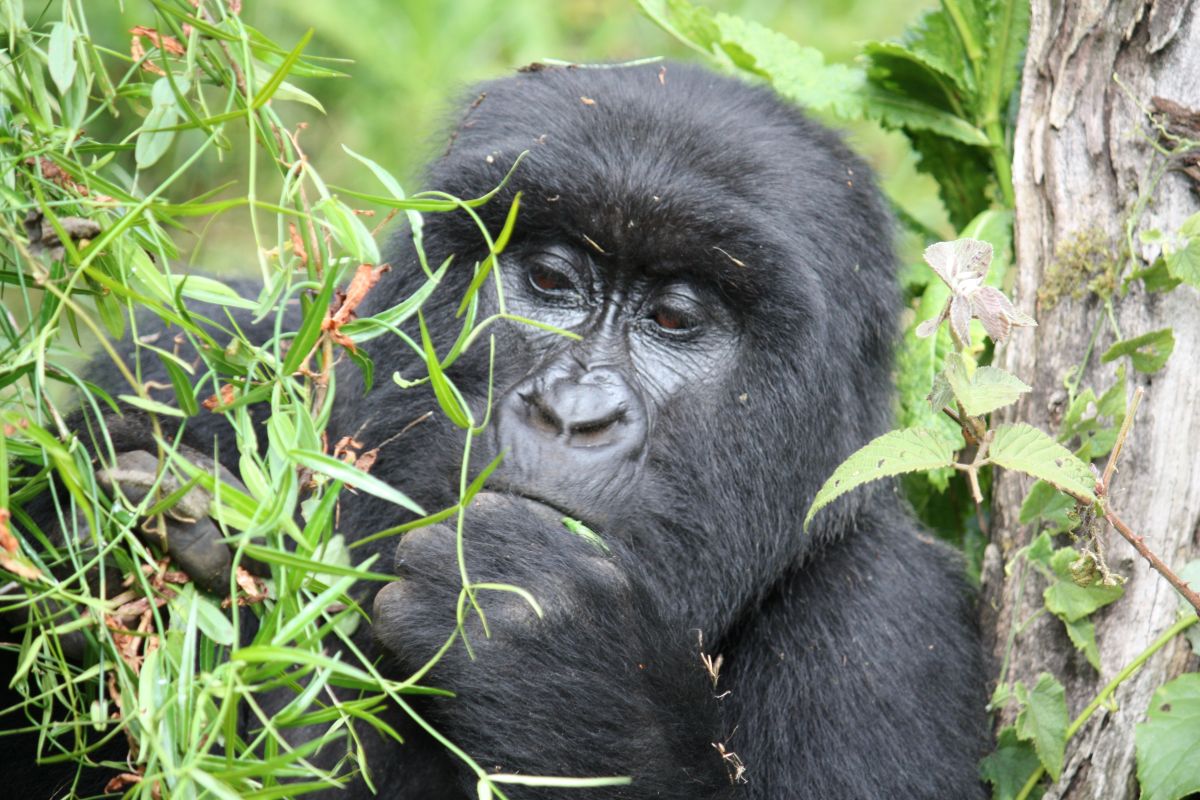
A gorilla encounter in Uganda is an intimate journey into the heart of the rainforest, where the sounds of the forest gradually give way to the rustling of leaves, snapping branches, and the deep, resonant calls of a mountain gorilla family. After trekking through the ancient vegetation of Bwindi Impenetrable National Park, your first glimpse of the gorillas can feel almost surreal—a powerful silverback emerging through the foliage, a mother carefully tending to her infant, or playful youngsters tumbling through the undergrowth. As you approach the habituated family, the atmosphere becomes remarkably quiet and personal. The dominant silverback may sit calmly among the vegetation, watching your group with an impressive mixture of authority and curiosity. His broad shoulders, expressive eyes and distinctive silver saddle create an unforgettable image against the deep green of the forest. Around him, females feed on leaves and shoots, mothers cradle their young, while energetic juveniles climb, wrestle and chase one another through the vegetation. The encounter reveals a world of remarkable family bonds and individual personalities. Some gorillas may appear completely absorbed in feeding, while others pause to observe visitors. A curious youngster might move closer before being called back by its mother, while another may swing from vines or disappear into the thick foliage. Every moment is different, making each gorilla trek a genuinely unscripted wildlife experience. The surrounding forest becomes part of the encounter itself. Giant trees rise above tangled vines and ferns, shafts of sunlight filter through the canopy, and the air carries the earthy fragrance of wet vegetation. Bird calls echo overhead while distant insects hum beneath the canopy. Standing quietly in this ancient ecosystem, just metres from a wild gorilla family, creates a profound sense of connection with nature. Your guide helps interpret the gorillas' behaviour, explaining their social hierarchy, feeding habits, communication and individual characteristics while ensuring that the encounter remains respectful and responsible. Photography becomes more than simply taking pictures—it becomes a way of preserving fleeting moments: a silverback staring directly toward the group, a mother embracing her infant, or two young gorillas playfully wrestling beneath the trees. The gorilla encounter is not simply about seeing gorillas; it is about sharing a brief moment in their world. For approximately the permitted viewing period, you become a quiet observer of one of the world's most fascinating primate societies. When it is finally time to leave, the forest slowly closes around the family again, leaving you with memories of penetrating eyes, powerful silhouettes, playful youngsters and the extraordinary privilege of having encountered mountain gorillas in their natural habitat.

Chimpanzee Habituation Experience
primate
Kibale National Park 10.0 Hours

Chimpanzee Habituation Experience

Spend an entire day shadowing wild chimpanzee communities in Kibale Rainforest alongside primatologists.

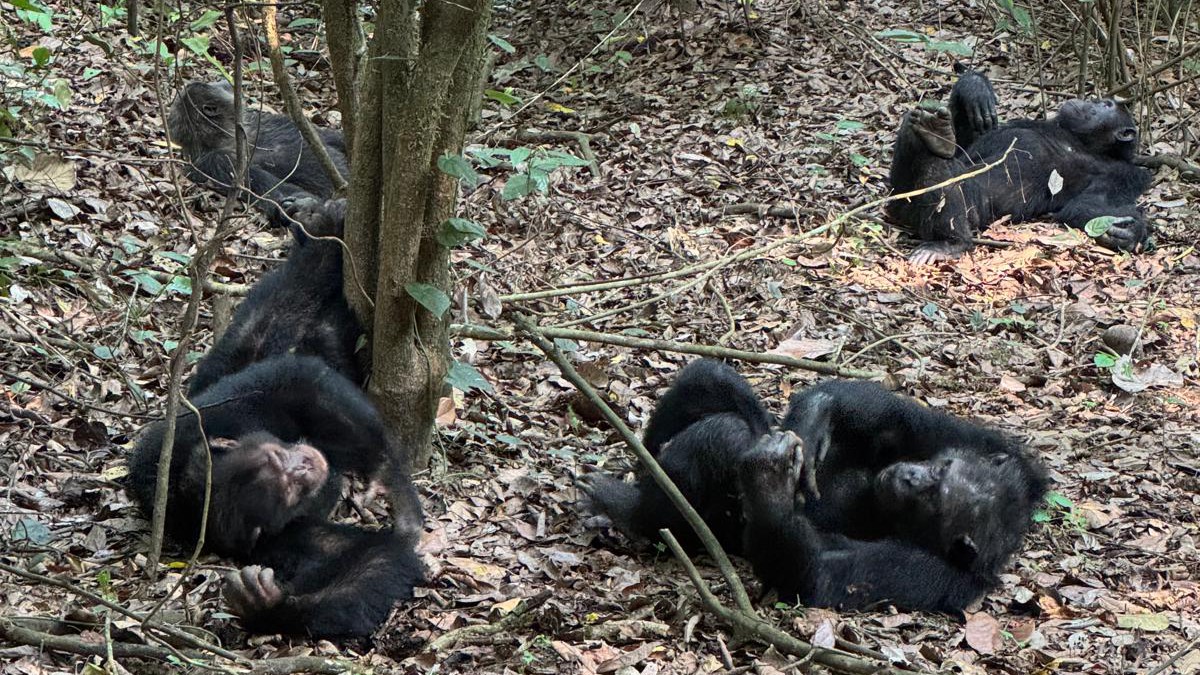
A Chimpanzee Habituation Experience (CHE) in Uganda offers a deeper and more immersive way to experience chimpanzees in the wild. Rather than simply following a habituated community for a limited viewing period, the experience allows you to spend substantially more time observing chimpanzees as they go about their natural lives, accompanied by experienced trackers, researchers and guides. It is an intimate opportunity to understand the behaviour, relationships and daily rhythms of these remarkable primates. The experience takes place in the magnificent rainforest of Kibale National Park, often regarded as one of Africa's finest destinations for primate encounters. The forest rises around you in layers of enormous trees, climbing vines, dense undergrowth and broad-leaved vegetation. Above, the canopy forms a living highway for chimpanzees and other primates, while birds call from hidden branches and insects hum beneath the forest floor. Your day begins early, when the forest is particularly alive with activity. Accompanied by your guide and trackers, you enter the rainforest in search of the chimpanzee community. Instead of simply looking for the animals, you begin learning how to read the forest—following footprints, feeding remains, discarded fruit, broken branches and vocalisations that reveal where the chimpanzees have been moving. Then comes the moment when the forest gives away its secret. A distant pant-hoot may echo through the trees. Leaves begin shaking high in the canopy. A branch bends under the weight of a moving chimpanzee. Your trackers quietly lead you toward the sounds until the first individual comes into view. With habituation, you have the privilege of spending extended time observing the community, allowing behaviours that might be missed during a shorter trekking encounter to emerge naturally. You may watch chimpanzees travel through the canopy, feed on seasonal fruits, groom one another, rest beneath the trees or interact with members of their social group. Chimpanzee society is remarkably complex. Adults maintain strong social relationships through grooming and communication, while youngsters learn by constantly watching and imitating older individuals. Infants remain close to their mothers, and adolescents can be especially energetic, engaging in playful wrestling, chasing and climbing. One of the most fascinating aspects of the habituation experience is witnessing chimpanzee communication. Pant-hoots can suddenly fill the forest as individuals announce their presence and communicate across considerable distances. Excited calls, screams, drumming and other vocalisations can transform an otherwise quiet section of forest into a dramatic display of chimpanzee social life. Because you have more time with the community, you can also appreciate the individuality of different chimpanzees. Some may be bold and inquisitive, others relaxed and indifferent to your presence. You might observe an experienced adult moving confidently through the canopy, a mother carefully caring for her infant, or young chimpanzees testing their strength and coordination through play. The experience is equally about understanding the forest ecosystem. While following the chimpanzees, you may encounter red-tailed monkeys, black-and-white colobus monkeys, blue monkeys and other forest species. Your guide can explain the relationships between the chimpanzees, fruiting trees and wider rainforest ecosystem, giving you a much richer understanding of what makes Kibale such an important primate habitat. As the hours pass, the encounter becomes less about searching and more about observing. You begin to settle into the rhythm of the forest—walking when the chimpanzees move, pausing when they rest, looking upward when they climb and remaining still when they approach. This slower pace creates an unusually intimate wildlife experience. For photographers, wildlife enthusiasts, conservationists and travellers with a particular fascination for primates, the Chimpanzee Habituation Experience provides an exceptional opportunity to observe behaviour over time. Rather than collecting a series of quick sightings, you have the chance to watch the unfolding story of a chimpanzee community. The experience may reveal moments of extraordinary tenderness and energy: a mother carrying her infant through the forest, adults grooming beneath the canopy, juveniles tumbling through the vegetation, or a powerful chorus of pant-hoots spreading across the rainforest. Eventually, the day draws to a close. The chimpanzees continue with their lives as you begin the journey back through the forest. Their calls gradually fade into the sounds of birds, insects and moving leaves, but the experience remains vivid. Chimpanzee habituation is more than a wildlife encounter—it is an opportunity to slow down, observe and understand. It brings you closer to the natural rhythms of one of Africa's most fascinating primates while supporting the continued understanding and conservation of chimpanzees in Uganda.

Kazinga Channel Private Boat Cruise
wildlife
Queen Elizabeth National Park 2.5 Hours

Kazinga Channel Private Boat Cruise

Navigate the natural waterway between Lake Edward and Lake George among massive hippo pods and basking crocodiles.

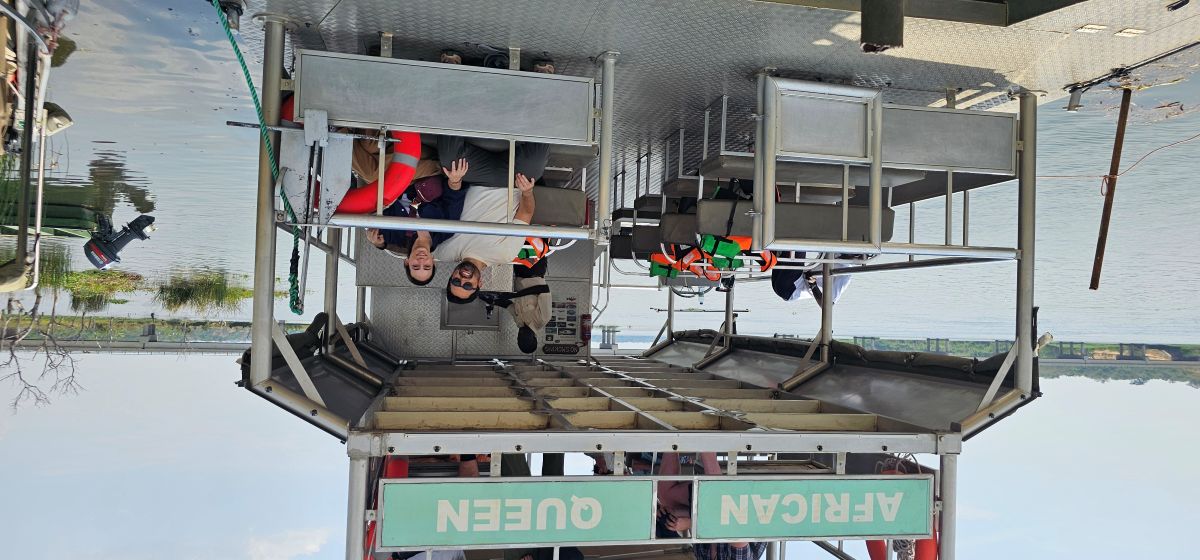
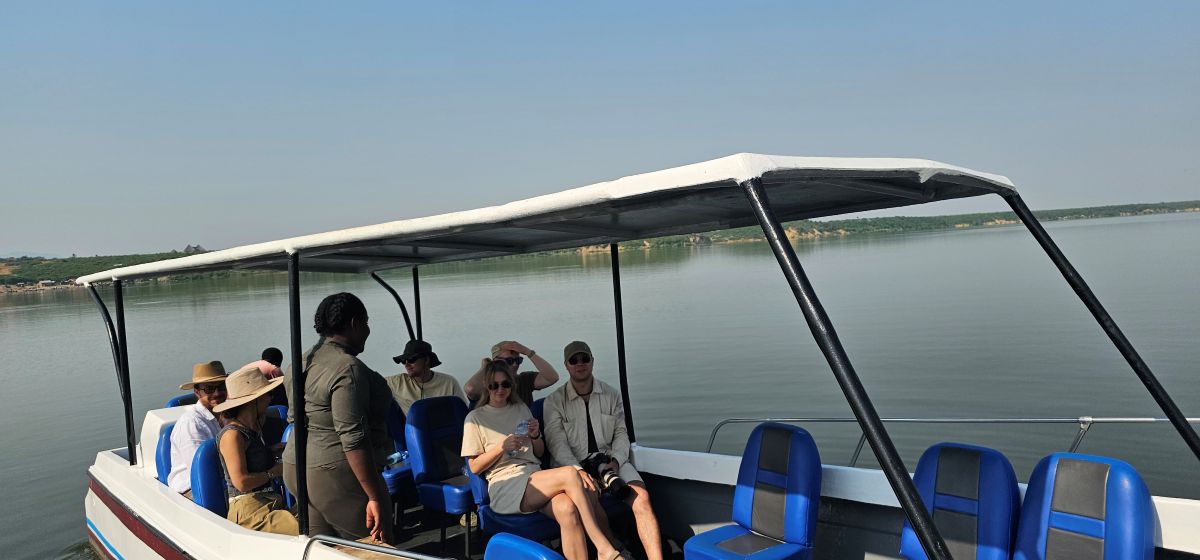
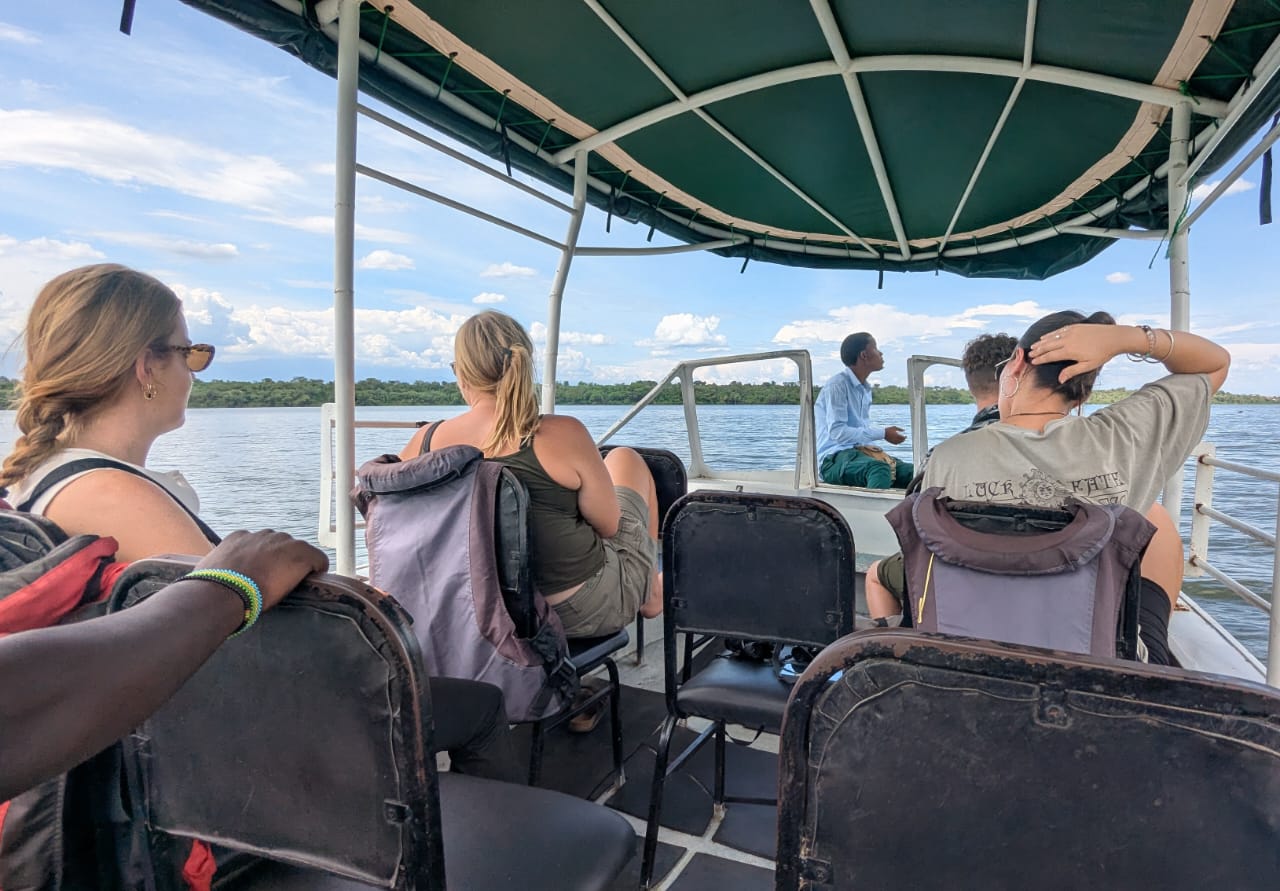
A Kazinga Channel boat cruise is one of Uganda's most captivating wildlife experiences, offering a front-row perspective on the extraordinary concentration of wildlife along the shores of the channel in Queen Elizabeth National Park. Connecting Lake Edward and Lake George, the channel forms a spectacular aquatic corridor where elephants, hippos, buffaloes, crocodiles and an incredible diversity of waterbirds gather around the water. As your boat leaves the jetty, the landscape immediately opens into an expansive wilderness. The gentle movement of the boat across the water creates a wonderfully relaxed contrast to the excitement of a traditional game drive. With the engine moving steadily through the channel, you can settle back, scan the shoreline and watch wildlife reveal itself naturally from the water. The first encounters may come almost immediately. Along muddy banks and shallow waters, large pods of hippos lie partially submerged, their rounded backs breaking the surface as they grunt, snort and yawn. Some rest almost motionless in the water, while others jostle for space or emerge onto exposed sandbanks. Their calls carry across the channel, creating an unmistakable soundtrack to the cruise. As the boat approaches the shoreline, African elephants may appear among the vegetation. Families often come down to drink, bathe and cool themselves in the channel. You may watch a mother carefully guide her calf toward the water, an elephant spraying itself with its trunk, or a herd quietly crossing the shallows. From the boat, these enormous animals can be observed without disturbing their natural movements. The channel's shores are also a magnet for African buffaloes. Large herds gather close to the water, sometimes standing shoulder-to-shoulder along the shoreline. Their dark silhouettes contrast beautifully with the open water and surrounding savanna, while their watchful behaviour reflects the constant need to remain alert in the wild. Near the water's edge, Nile crocodiles may lie almost motionless on exposed banks, blending remarkably well with the muddy shoreline. Their prehistoric appearance adds another dimension to the cruise, particularly when one quietly slips into the water as the boat approaches. The real spectacle, however, is the sheer variety of birdlife. The channel is an exceptional birdwatching destination, with birds lining the shores, resting on exposed branches and flying across the water. Depending on the season and location, you may encounter African fish eagles, pied kingfishers, malachite kingfishers, herons, egrets, cormorants, pelicans, storks and numerous other water-associated species. The experience is highly sensory. You hear hippos grunting from the water, fish eagles calling from distant trees and kingfishers breaking the silence as they plunge toward the surface. The scent of fresh water and wet earth mixes with the warm African air, while the reflections of clouds and surrounding vegetation shimmer across the channel. Your guide brings the landscape to life, identifying wildlife, explaining animal behaviour and pointing out details that might otherwise be missed. From the elevated position of the boat, you gain a different perspective of the ecosystem—one where wildlife movements, waterways and shoreline vegetation become part of a single living landscape. As the cruise continues, the scenery changes subtly. Open stretches of water give way to densely vegetated banks, small coves and broad muddy beaches occupied by resting hippos and crocodiles. Occasionally, the boat slows almost to a standstill so that you can quietly observe an animal or capture photographs without rushing the moment. One of the most memorable aspects of the Kazinga Channel experience is its sense of calm. There is no need to chase wildlife. The boat simply moves through the ecosystem while animals gather naturally along the water. This makes the cruise particularly rewarding for photographers, birdwatchers, families and travellers seeking a slower, more immersive safari experience. As the afternoon light begins to soften, the channel can take on an entirely different character. Golden light catches the backs of hippos, elephants emerge against the shoreline and birds cross the glowing sky. The distant Rwenzori Mountains may form a dramatic backdrop on clear days, adding another layer to the already remarkable scenery. Eventually, the boat turns back toward the jetty. Behind you, the channel continues its timeless rhythm—hippos calling from the water, elephants moving through the vegetation and birds circling above. The Kazinga Channel boat cruise is more than a sightseeing excursion; it is a journey into one of East Africa's richest wildlife waterways. It combines close wildlife encounters, spectacular scenery, birdwatching and the peaceful rhythm of moving water into one unforgettable experience.

Top of the falls Hike
wildlife
Murchison Falls National Park 2.0 Hours

Top of the falls Hike

Experience the breathtaking power of Murchison Falls as the mighty Nile squeezes through a narrow gorge, creating roaring cascades, refreshing mist and spectacular panoramic views from the top.

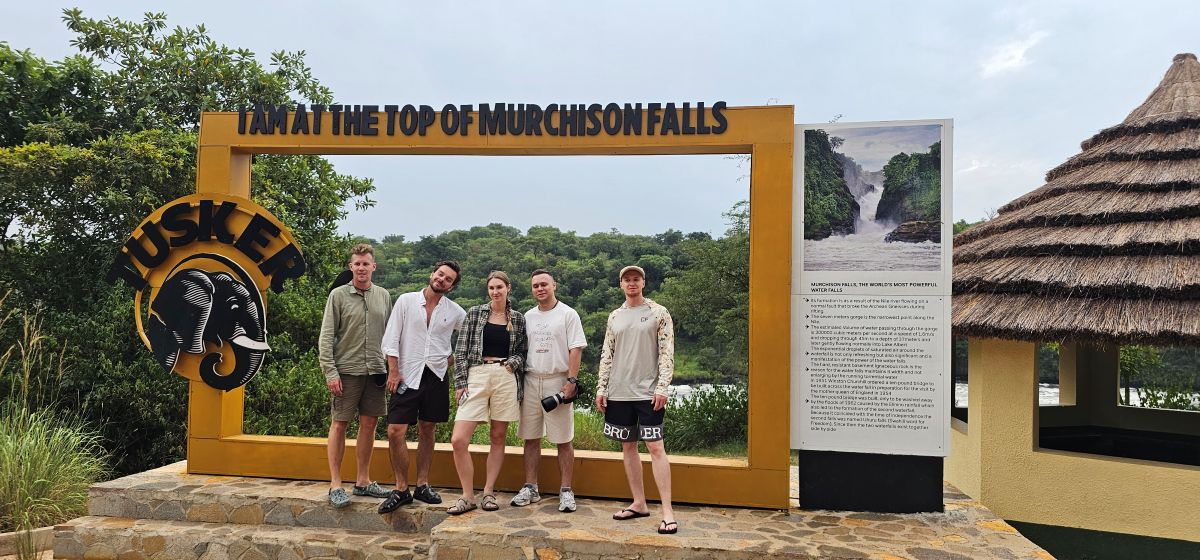
The Top of the Falls Hike is an exhilarating encounter with the raw power of the Nile, taking you to the dramatic point where the world's longest river is forced through a narrow rocky gorge before plunging into the depths below. Located within Murchison Falls National Park, the experience combines spectacular scenery, powerful natural sounds and a close-up encounter with one of Uganda's most iconic landscapes. As you begin the hike, the sound of rushing water gradually becomes louder. The surrounding landscape is alive with the sights and sounds of the African wilderness, while the trail leads toward the dramatic gorge. With every step, anticipation builds as the river reveals glimpses of its extraordinary journey through the rocks. Eventually, you reach the viewpoint at the top of Murchison Falls, where the scale and force of the river become immediately apparent. The enormous volume of Nile water is compressed into a gorge barely a few metres wide, creating a spectacular torrent of white water as it surges through the rocks. Standing beside the falls, you can feel the vibration of the rushing water beneath your feet and experience the fine spray rising into the air. The roar is almost overwhelming, creating a powerful sensory experience that makes it clear why this place has captivated travellers for generations. From different viewpoints, the river reveals contrasting moods. Upstream, the Nile appears broad and relatively calm before suddenly being funnelled toward the gorge. At the edge, however, its character changes completely as enormous volumes of water accelerate through the narrow opening, exploding into foam and spray. The surrounding scenery adds to the drama. Rocky outcrops, green vegetation and the winding Nile create a striking natural composition, while rainbows may appear in the mist when sunlight catches the spray. The viewpoint provides excellent opportunities for photography, particularly when capturing the contrast between the calm river above the falls and the turbulent waters below. Your guide can explain the geological and ecological significance of the falls while pointing out the different viewpoints and helping you appreciate how the river has shaped the surrounding landscape. The hike also provides an opportunity to pause, breathe in the fresh air and simply absorb the extraordinary atmosphere. The experience is particularly memorable because it engages all the senses: the thunderous roar of the falls, the cool mist against your skin, the sight of the Nile compressed between ancient rocks and the feeling of standing beside one of Africa's most powerful waterways. After taking time to explore the viewpoints and capture photographs, you begin your return journey, carrying with you the memory of the Nile at its most dramatic.

Water Falls Boat Cruise
adventure
Murchison Falls National Park 3.0 Hours

Water Falls Boat Cruise

Cruise along the Nile toward the base of Murchison Falls, enjoying spectacular views of elephants, hippos, crocodiles and abundant birdlife before witnessing the mighty river explode through the dramatic gorge.

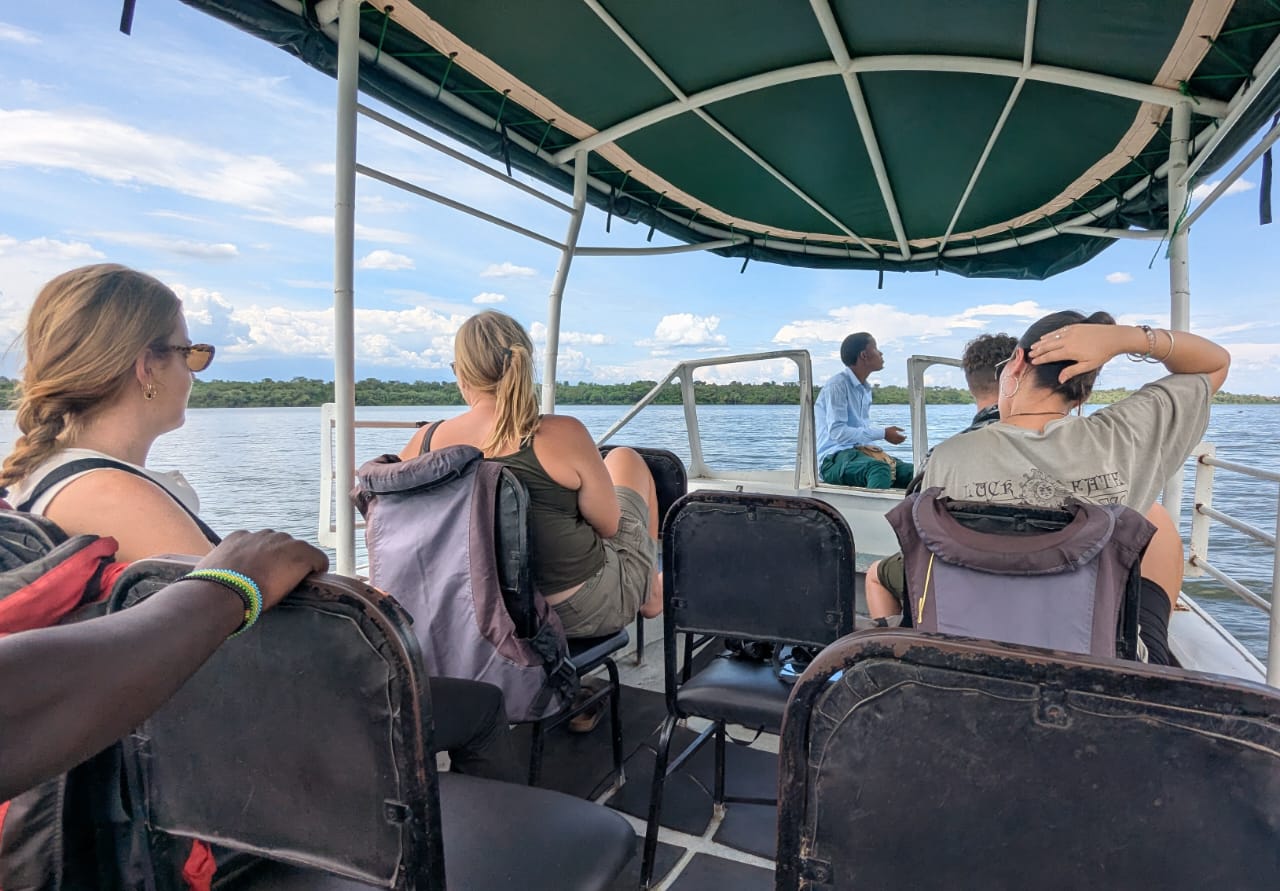
The Murchison Falls Waterfall Boat Cruise is a spectacular journey along the Victoria Nile toward the base of Murchison Falls, combining close wildlife encounters with the breathtaking power of one of Uganda's most iconic waterfalls. As the boat glides upstream, the surrounding wilderness gradually reveals itself, creating an immersive safari experience on the water. Leaving the riverbank behind, the calm waters of the Nile provide a peaceful setting for observing the wildlife gathered along its shores. Hippopotamuses are among the first animals you may encounter, often resting in large groups with only their eyes, ears and nostrils visible above the water. Their grunts, splashes and occasional territorial displays add a lively soundtrack to the cruise. Along the riverbanks, African elephants frequently come down to drink and bathe. You may see a herd emerging from the vegetation, mothers keeping their calves close, or elephants using their trunks to draw water into their mouths. Watching these magnificent animals from the boat offers a unique perspective while allowing them to continue their natural behaviour undisturbed. The shoreline also provides excellent opportunities to spot Nile crocodiles, often lying motionless on sandy banks or partially submerged in shallow water. Their prehistoric appearance contrasts dramatically with the peaceful river landscape. Buffaloes and other wildlife may also be seen grazing or resting close to the water. As the boat moves closer to the falls, the landscape becomes increasingly dramatic. The river narrows and the sound of rushing water grows louder. The anticipation builds as the distant roar of Murchison Falls becomes unmistakable. Then, rising ahead of you, the magnificent waterfall comes into view. The Nile is forced through a narrow gorge, creating an extraordinary display of rushing white water, spray and raw natural power. From the boat, you can appreciate the falls from a unique perspective, watching enormous volumes of water surge toward the narrow opening before plunging and continuing its journey downstream. The atmosphere becomes increasingly powerful as you approach the base. The roar of the waterfall dominates the surroundings, while mist rises from the turbulent water. On sunny days, the spray can create beautiful rainbows around the falls, adding another layer of magic to the encounter. Throughout the cruise, your guide helps identify wildlife and interpret the landscape, explaining the behaviour of animals along the river and the importance of the Nile to the park's ecosystem. The combination of wildlife, water and dramatic scenery makes this cruise one of the signature experiences of Murchison Falls National Park. Birdlife provides another highlight. The river supports a remarkable variety of species, and you may see African fish eagles, kingfishers, herons, egrets, cormorants and other water-associated birds perched along the shoreline or flying low over the water. The call of a fish eagle echoing across the Nile can become one of the defining sounds of the journey. The changing scenery keeps the experience engaging from beginning to end. Dense vegetation gives way to exposed riverbanks, rocky outcrops and increasingly dramatic views of the gorge. The gentle movement of the boat allows you to slow down and appreciate details that might easily be missed from a vehicle. As the boat eventually turns back downstream, the waterfall gradually recedes into the distance. The river becomes calmer again, and wildlife continues its daily routine along the banks—hippos resting in the shallows, elephants disappearing into the vegetation and birds circling overhead. The Murchison Falls Waterfall Boat Cruise is more than a journey to a waterfall; it is an immersive encounter with the Nile and the wildlife that depends upon it. It brings together close wildlife viewing, spectacular river scenery and the unforgettable power of Murchison Falls in one remarkable experience.

Ziwa Rhino Sanctuary Experience
wildlife
Murchison Falls National Park 3.0 Hours

Ziwa Rhino Sanctuary Experience

Experience an intimate walking safari at Ziwa Rhino Sanctuary, tracking Uganda’s endangered southern white rhinos on foot while discovering the sanctuary’s tranquil wetlands, woodlands and rich birdlife.

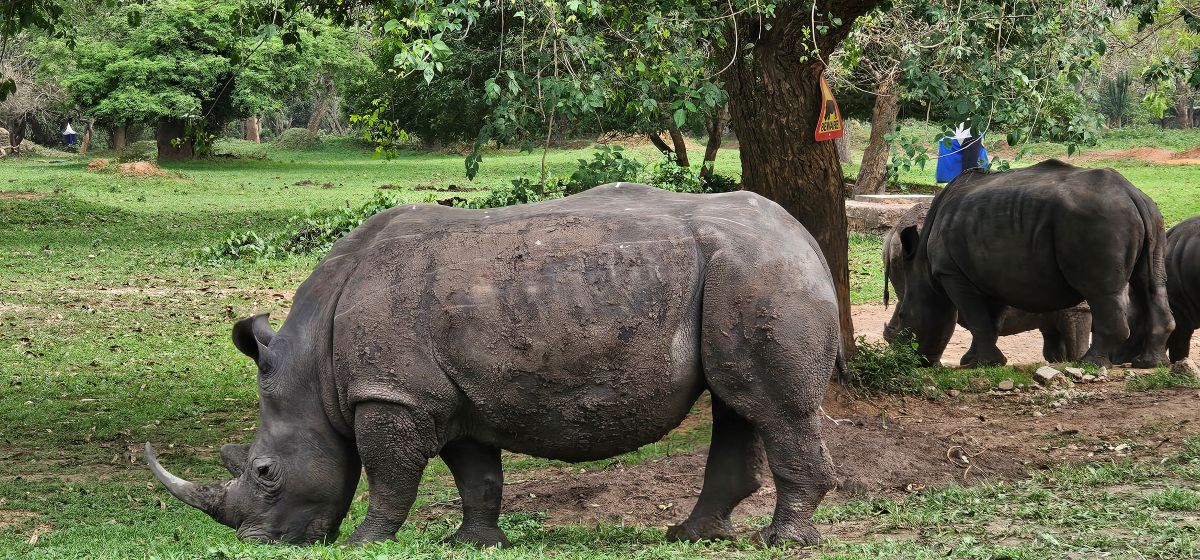
The Ziwa Rhino Sanctuary Experience offers an intimate opportunity to encounter Uganda's magnificent southern white rhinos in a natural environment, away from the confines of a traditional zoo setting. Located amid peaceful woodlands, open grasslands and wetlands, the sanctuary provides a unique introduction to rhino conservation and one of Africa's most impressive mammals. Your experience begins with a briefing from your ranger and guide before setting out on foot into the sanctuary. Rather than viewing wildlife from a safari vehicle, you walk into the wilderness in search of rhinos, following tracks, dung, feeding signs and other clues that reveal where the animals have been moving. As you move quietly through the landscape, anticipation builds. Your ranger explains how to approach the rhinos responsibly, interpret their behaviour and maintain a safe distance. The surroundings are often wonderfully peaceful, with birds calling from the trees and grasses moving gently in the breeze. Then, perhaps unexpectedly, the unmistakable form of a white rhino appears ahead. Seeing a rhino on foot is a powerful experience. Its immense body, thick folded skin and distinctive horns create an immediate sense of scale and presence. Despite their formidable appearance, white rhinos can often be observed calmly grazing, resting or slowly moving through the grassland. Your ranger helps you understand the individual animals and their behaviour. You may watch a rhino methodically cropping grass with its broad, square-shaped mouth, resting beneath a tree or slowly walking across the landscape. If a mother and calf are nearby, the encounter becomes even more memorable as the young rhino stays close to its mother while learning to navigate its surroundings. The beauty of the experience lies in the unhurried observation. There is no need to rush from one sighting to another. You can stand quietly and watch these ancient-looking animals going about their daily lives, while your guide explains their behaviour, feeding patterns and role within the ecosystem. The sanctuary itself adds another dimension to the encounter. Its mixture of grasslands, wetlands, thickets and woodland supports a variety of wildlife and bird species. As you walk, you may encounter monkeys, antelope and numerous birds, making the experience much more than simply a rhino-tracking excursion. Your ranger may also share the story of rhino conservation in Uganda, explaining the importance of protecting these animals and restoring their presence within the country's wildlife heritage. The sanctuary plays an important role in breeding, protecting and conserving rhinos while providing visitors with an opportunity to contribute to awareness and conservation through responsible tourism. Walking through the sanctuary gives you a different perspective from a conventional game drive. You become more aware of subtle details—the freshness of tracks in the soil, broken vegetation, animal calls and movement in the grass. The experience encourages you to slow down and observe the environment rather than simply searching for the next sighting. One of the most memorable moments may come when a rhino suddenly raises its head and looks in your direction. For a few quiet seconds, you share the same space, separated only by the respectful distance maintained by your ranger. The encounter feels personal, wild and deeply connected to the landscape. As the walk comes to an end, you gradually make your way back through the sanctuary, carrying with you a deeper appreciation of Uganda's conservation story and the remarkable resilience of the rhinoceros. The Ziwa Rhino Sanctuary experience is more than a wildlife sighting—it is a walking encounter with one of Africa's great mammals and an opportunity to understand the conservation efforts protecting its future.

Evening Game Drive at Murchison Falls National Park
wildlife
Murchison Falls National Park 4.0 Hours

Evening Game Drive at Murchison Falls National Park

Experience the magic of an evening game drive in Murchison Falls National Park, following wildlife as the golden sun descends over the savanna, with opportunities to encounter elephants, giraffes, lions, buffaloes and antelopes in the cool, atmospheric light.

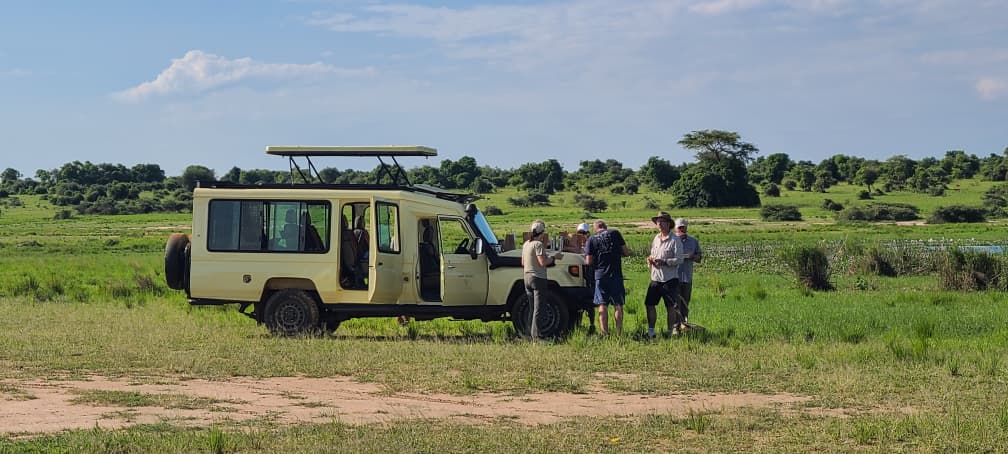
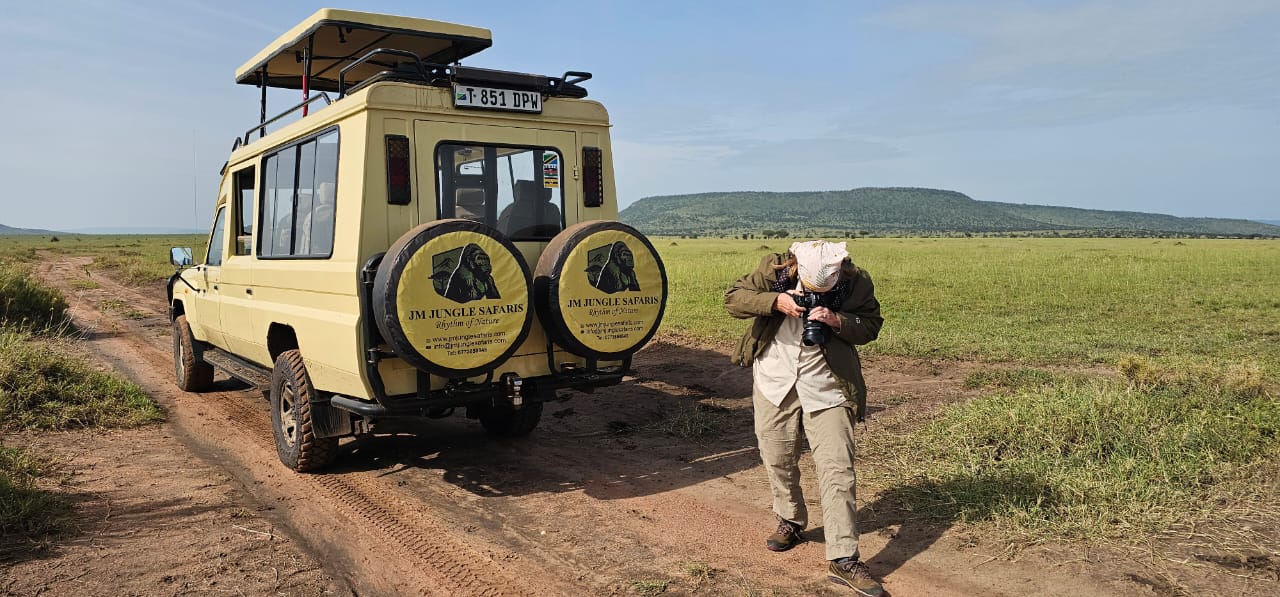
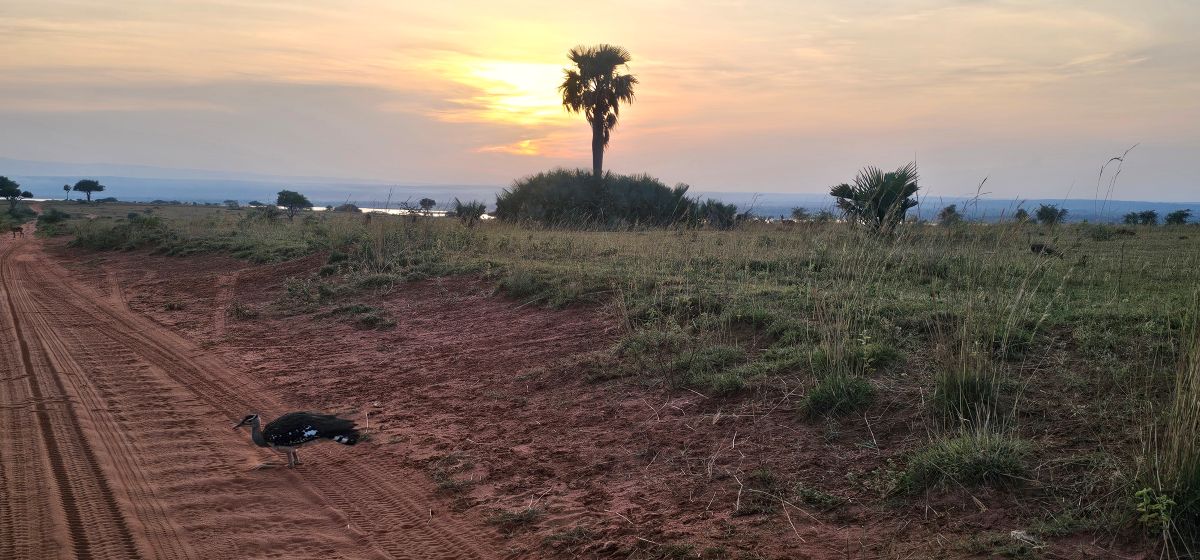
An evening game drive in Murchison Falls National Park offers a captivating journey into the African wilderness as the intense heat of the day begins to fade and the savanna takes on the warm glow of the setting sun. It is a beautiful time to explore the park, when wildlife becomes increasingly active and the landscape is transformed by golden evening light. Setting out with your experienced JM Jungle Safaris guide, you venture along the park's tracks as the afternoon slowly gives way to evening. The savanna feels different at this hour—cooler, quieter and filled with anticipation. Grasses shimmer in the breeze, birds call from scattered trees and herds of animals begin moving across the plains. The first encounters may be with Uganda kob, hartebeest, oribis and other antelopes grazing across the open grasslands. Some animals remain focused on feeding, while others pause and raise their heads, watching the approaching vehicle before calmly returning to their evening routine. As the drive continues, the larger residents of the savanna begin to appear. African elephants may emerge from woodland areas, moving slowly toward water or feeding on vegetation. Watching a family herd travel together in the soft evening light can be particularly memorable, especially when young calves remain close to their mothers. Large herds of buffalo may also gather in open areas, their dark forms creating a striking contrast against the golden grass. Giraffes browse from acacia and other trees, occasionally silhouetted dramatically against the evening sky. The cooler conditions can also encourage predators to become more active. With patience and a little luck, you may encounter lions resting beneath trees, moving through the grassland or beginning their evening activities. The possibility of a predator sighting adds an element of suspense to the drive, as your guide carefully scans the surrounding plains for movement. The changing light is one of the defining features of the experience. As the sun drops toward the horizon, the landscape becomes increasingly atmospheric. Long shadows stretch across the savanna, golden light illuminates wildlife and the distant vegetation takes on rich silhouettes. Your guide reads the landscape and wildlife behaviour, sharing knowledge about the animals and helping you understand the interconnected ecosystem. The drive is not simply about ticking animals off a list—it is about observing how the wilderness changes as daylight fades. You may notice birds becoming quieter, antelopes becoming more alert and elephants beginning to move toward their evening feeding grounds. Occasionally, a sudden alarm call from an antelope or baboon can draw everyone's attention, hinting at a predator somewhere nearby. As darkness gradually approaches, the atmosphere becomes increasingly peaceful. The sounds of the savanna become more pronounced—the distant call of a bird, insects humming in the grass, the movement of animals nearby and perhaps the occasional low rumble of an elephant. Eventually, the sun disappears beyond the horizon, leaving the savanna beneath the soft colours of twilight. The final moments of the drive offer an opportunity to pause and appreciate the extraordinary landscape before returning toward your lodge or camp. An evening game drive in Murchison Falls is more than a wildlife search—it is an opportunity to experience the changing personality of the African savanna as day turns into night.

Morning Game Drive at Murchison Falls
wildlife
Murchison Falls National Park 4.0 Hours

Morning Game Drive at Murchison Falls

Experience an exhilarating morning game drive through Murchison Falls National Park, as the savanna awakens with golden sunlight and active wildlife, offering opportunities to encounter elephants, lions, giraffes, buffaloes, Uganda kob and abundant birdlife.

A morning game drive in Murchison Falls National Park is an exhilarating journey into the African wilderness at one of the most rewarding times of day for wildlife viewing. As the first rays of sunlight spread across the savanna, the park awakens with movement, birdsong and the sounds of animals beginning their morning routines. Your adventure begins in the cool early hours, when your JM Jungle Safaris guide sets off along the park's game tracks. The fresh morning air and soft golden light create a beautiful atmosphere as the landscape gradually comes into view. Dew may glisten on the grasses, while mist and low sunlight can lend an almost dreamlike quality to the surrounding savanna. The early hours are particularly rewarding because many animals are actively feeding and moving before the day's heat intensifies. Herds of Uganda kob may be seen grazing across open plains, while hartebeest, oribi and other antelopes move between grasslands and woodland. As the drive continues, you may encounter African elephants moving through the savanna or emerging from woodland. Family groups often travel together, with calves protected in the centre of the herd. Watching elephants in the gentle morning light can be especially memorable as they feed, communicate and move naturally through the landscape. Large buffalo herds may also be encountered grazing on the plains. Their dark silhouettes stand out against the brightening grasslands, while giraffes browse among scattered trees, using their long necks to reach fresh leaves high above the ground. The morning also brings the possibility of encountering predators. Lions may still be resting after a night's activity, lying beneath trees or in tall grass, while others may be moving across the plains in search of opportunities. Your guide carefully scans the landscape for tracks, movement and other signs that can reveal where predators have passed. Every sighting is accompanied by the subtle details of the awakening ecosystem. Birds call from trees and shrubs, insects become increasingly active and distant animal sounds travel across the open plains. Your guide interprets these sounds and signs, helping you understand how different species interact within the ecosystem. The landscape itself is a major part of the experience. Murchison Falls National Park combines open savanna, woodland, riverine vegetation and the Nile, creating a varied habitat that supports an impressive diversity of wildlife. As the sun rises higher, the colours of the landscape shift from soft blues and silvers to warm golds and vibrant greens. Your guide may occasionally stop the vehicle so you can simply observe. These quiet moments allow you to appreciate the wilderness without rushing from one sighting to another. A herd of elephants disappearing into woodland, giraffes crossing the horizon or Uganda kob grazing beneath the morning sun can become as memorable as a major predator sighting. For photographers, the morning offers exceptional conditions. The low-angle sunlight creates soft illumination, long shadows and dramatic silhouettes, while active wildlife provides opportunities for natural and expressive photographs. As the morning progresses and temperatures rise, wildlife activity gradually changes. Some animals retreat toward shade, while others remain near water or continue grazing. Eventually, the game drive begins to wind down, but the memories of the morning remain vivid—the first light over the savanna, the distant calls of birds, elephants moving through the grass and perhaps the unforgettable sight of a lion resting beneath an acacia. A morning game drive in Murchison Falls National Park is more than a search for wildlife; it is an opportunity to witness the African wilderness awakening.

Spot Fishing at Murchison Falls
adventure
Murchison Falls National Park 4.0 Hours

Spot Fishing at Murchison Falls

Experience an exhilarating sport fishing adventure on the Nile at Murchison Falls National Park, casting into powerful waters for the legendary Nile perch while surrounded by dramatic scenery and the untamed beauty of Uganda’s wilderness.

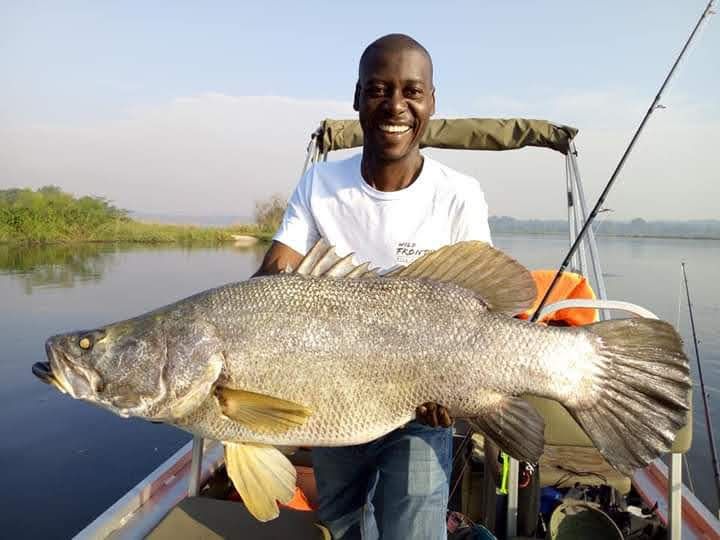
A sport fishing experience at Murchison Falls National Park is an exhilarating adventure on the mighty Nile, combining the challenge of catching the legendary Nile perch with the raw beauty of one of Uganda's most spectacular wilderness landscapes. Set against the dramatic scenery of the Nile as it races through rocky channels below Murchison Falls, the experience offers an exciting contrast to traditional game viewing. Your adventure begins with an experienced fishing guide who prepares the equipment and explains the day's techniques, safety considerations and fishing conditions. Depending on the chosen fishing location and conditions, you may fish from a boat or from carefully selected positions along the river, where the powerful currents create ideal habitats for large predatory fish. As you settle into position, the atmosphere becomes remarkably peaceful. The roar of the falls can be heard in the distance, while the river moves around rocky outcrops and islands. Birds call from the riverbanks, crocodiles may bask on exposed rocks and hippos can sometimes be seen in quieter sections of the water. The primary target is the Nile perch, one of Africa's most famous freshwater sport fish. These powerful predators can grow to impressive sizes and are renowned for their strength and determined runs when hooked. The anticipation builds with every cast as your lure moves through the deeper pools and turbulent waters. When a fish strikes, the peaceful atmosphere changes instantly. The rod bends under the pressure, the line cuts through the water and the battle begins. A powerful Nile perch can make sudden runs, forcing you to remain focused as you work with your guide to control the fish and bring it closer. The encounter is as much about patience and technique as it is about the catch. Your guide can help you understand how to read the water, identify promising fishing spots, select appropriate tackle and respond when a fish takes the lure. Every cast brings another moment of anticipation. Beyond the excitement of fishing, the surroundings create an extraordinary backdrop. The Nile River cuts through the wilderness, with rugged cliffs, lush vegetation and powerful rapids creating a dramatic landscape. The sound of rushing water provides a constant soundtrack, while the surrounding national park may reveal unexpected wildlife encounters. The river is also part of a much larger ecosystem. While waiting for the next strike, you can observe African fish eagles, kingfishers, crocodiles, hippos and other wildlife that depend upon the Nile. These encounters make the experience feel less like a conventional fishing trip and more like an immersive wilderness adventure. For dedicated anglers, the experience can be particularly rewarding because the unpredictable nature of wild fishing means that every outing is different. Some moments are quiet and contemplative, while others are filled with sudden excitement when a powerful fish takes the lure. Photography also becomes an important part of the experience. A successful catch provides a memorable opportunity for photographs against the spectacular Nile landscape, while the surrounding wilderness offers countless additional moments worth capturing. Depending on local regulations and the fishing arrangement, responsible catch-and-release practices may form part of the experience, helping protect the river's fish populations and preserve the quality of the fishery for future generations. Your fishing guide will advise on the applicable rules and best practices. As your fishing adventure comes to an end, the memories extend beyond the fish you may have caught—the powerful Nile, dramatic gorge, surrounding wilderness and anticipation of every cast all become part of the story. Sport fishing at Murchison Falls is more than simply catching a fish; it is an encounter with the Nile's wild energy and one of Africa's most iconic freshwater predators. For JM Jungle Safaris, the experience reflects our “Rhythm of Nature” philosophy—immersive, adventurous and intentionally paced, giving you the opportunity to connect with Uganda's wilderness while experiencing the thrill of fishing in the legendary waters of the Nile.

Delta Boat Cruise in Murchison Falls
adventure
Murchison Falls National Park 5.0 Hours

Delta Boat Cruise in Murchison Falls

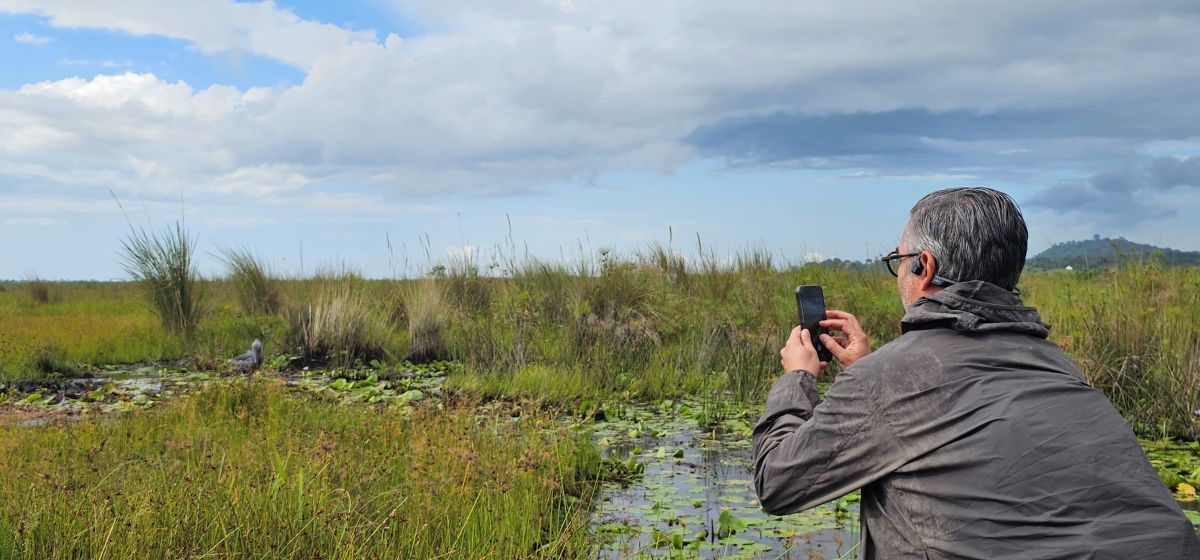
Enjoy a serene Delta Boat Cruise through the Nile Delta in Murchison Falls National Park, exploring tranquil channels, lush wetlands and abundant birdlife while searching for hippos, crocodiles, elephants and the elusive shoebill.

The Delta Boat Cruise at Murchison Falls National Park offers a peaceful and immersive journey into the park's remarkable wetland ecosystem, where the Victoria Nile spreads into a network of tranquil channels and papyrus-fringed waterways before reaching the vast Lake Albert. Far removed from the excitement of the main river, the delta provides a slower, quieter safari experience focused particularly on birdlife, wetlands and intimate wildlife encounters. As your boat leaves the landing point, the landscape gradually changes from open river scenery to lush wetlands and winding channels. Papyrus, reeds and aquatic vegetation line the waterways, creating a beautiful natural mosaic where the water reflects the surrounding vegetation and open sky. The gentle movement of the boat allows you to explore these waterways without disturbing the wildlife. Unlike a conventional game drive, the experience unfolds at water level, bringing you closer to the sights and sounds of the wetland. One of the major highlights is the opportunity to search for the elusive shoebill. With its enormous shoe-shaped bill, tall stature and prehistoric appearance, this remarkable bird is one of Uganda's most sought-after avian encounters. Your guide and boat captain carefully scan the papyrus edges and quieter channels, looking for the bird standing motionless among the vegetation. The moment a shoebill is spotted can be extraordinary. It may stand completely still, blending into the surrounding reeds, before suddenly turning its massive bill toward the boat. Your guide explains its behaviour, habitat and importance to the wetland ecosystem while allowing you time to observe and photograph this extraordinary bird. The delta is also alive with other birdlife. Depending on the season and conditions, you may encounter African fish eagles, kingfishers, herons, egrets, storks, cormorants, bee-eaters and other wetland species. Some birds perch quietly along the papyrus, while others skim across the water or take flight as the boat approaches. The soundscape is particularly captivating. Bird calls echo across the wetlands, fish splash beneath the surface and the gentle movement of the boat creates a soothing rhythm. Occasionally, the quiet is interrupted by the deep grunt of a hippopotamus hidden among the reeds. Hippos and crocodiles can also be encountered along the waterways. Hippos may emerge from the water or rest in shallow channels, while Nile crocodiles can be seen basking on muddy banks or lying almost motionless near the water's edge. Occasionally, elephants and other wildlife may appear near the wetlands, particularly where the delta meets surrounding grasslands. These sightings add an exciting element of unpredictability to the cruise, reminding you that this seemingly peaceful landscape is part of a much larger wilderness ecosystem. As the boat navigates deeper into the delta, the scenery becomes increasingly atmospheric. Narrow channels open into wider expanses of water, papyrus islands create natural corridors and distant views toward Lake Albert provide a spectacular sense of space. Your guide helps interpret the ecosystem throughout the journey, explaining how the delta provides feeding and breeding habitat for numerous bird and wildlife species. You gain a deeper appreciation of how wetlands support the wider Murchison Falls ecosystem by filtering water, providing shelter and creating productive feeding grounds. For photographers and birdwatchers, the delta is especially rewarding. The slower pace gives you time to observe subtle behaviours, wait patiently for birds to emerge from vegetation and capture reflections across the calm water. The combination of open skies, lush papyrus and abundant wildlife creates constantly changing photographic opportunities. As the cruise gradually comes to an end, the boat turns back through the quiet waterways. The papyrus sways gently in the breeze, birds continue their calls and the wilderness carries on around you. The Delta Boat Cruise is more than a boat trip—it is an intimate journey into the hidden wetland world of Murchison Falls National Park. It offers a peaceful contrast to the park's savanna game drives while revealing a remarkable ecosystem filled with birds, aquatic wildlife and beautiful landscapes. For JM Jungle Safaris, the experience captures our “Rhythm of Nature” philosophy—slow-paced, immersive and intentional, allowing you to explore Murchison Falls from a quieter perspective while searching for some of Uganda's most fascinating wetland wildlife.

Breakfast at the Top of the Falls
adventure
Murchison Falls National Park 2.0 Hours

Breakfast at the Top of the Falls

Enjoy a memorable breakfast overlooking the top of Murchison Falls, surrounded by the roar of the Nile, refreshing mist and spectacular views as the mighty river surges through its dramatic rocky gorge.

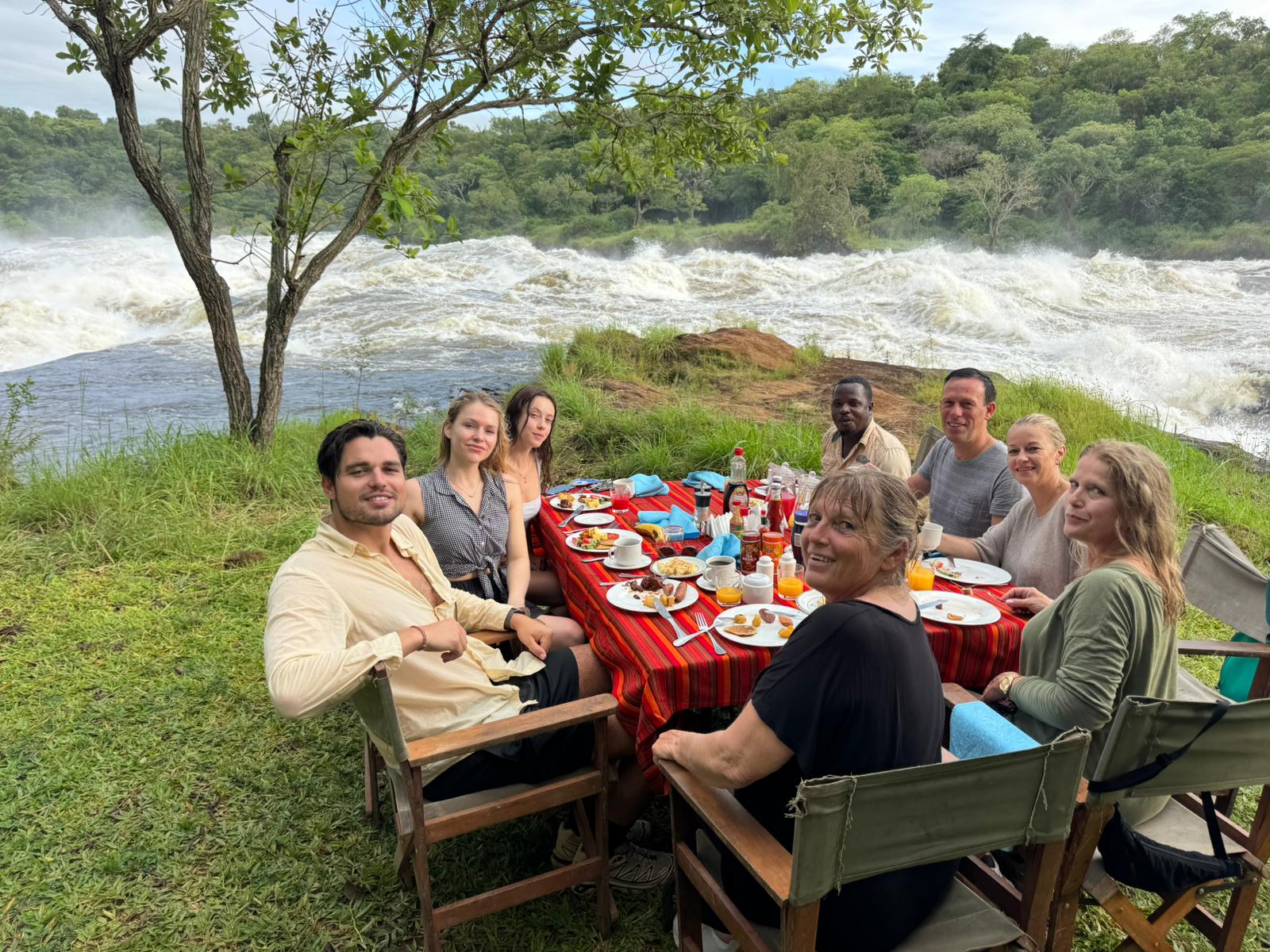
A breakfast at the top of Murchison Falls transforms an ordinary morning meal into an unforgettable wilderness experience, combining the flavours of a carefully prepared breakfast with the spectacular power and beauty of the Nile. Perched near the dramatic gorge within Murchison Falls National Park, you begin the day surrounded by roaring water, refreshing mist and breathtaking scenery. Arriving in the early morning, the atmosphere is peaceful and invigorating. The first light spreads across the surrounding landscape as the mighty Nile approaches the falls, its waters gathering momentum before being squeezed through the narrow rocky gorge. As you settle into your breakfast setting, the sound of the falls becomes your natural soundtrack. The continuous roar of rushing water is occasionally joined by birdsong from the surrounding vegetation, creating an extraordinary atmosphere that cannot be replicated in a conventional restaurant. The breakfast itself can be enjoyed at a carefully selected viewpoint, allowing you to appreciate the scenery while taking time to relax. Fresh coffee or tea, juices, pastries, fruit and other breakfast favourites provide a satisfying start to the day, while the surrounding wilderness makes every bite feel part of the adventure. The true highlight, however, is the view. From the top of the falls, you can watch the Nile transform from a broad, powerful river into a concentrated torrent as it forces its way through the narrow gorge. Enormous volumes of water rush through the rocky opening, producing clouds of fine spray that rise into the morning air. When sunlight catches the mist, rainbows can appear above the falls, creating spectacular moments for photography. The combination of golden morning light, rushing white water and lush vegetation creates a dramatic natural setting for your breakfast. Your guide can share stories about the Nile, the falls and the surrounding ecosystem, adding context to the landscape before you. Rather than simply stopping for food, you have time to pause and appreciate the significance of the place. The experience also encourages you to slow down. There is no rush to finish breakfast. You can sip your coffee while watching the water, listen to the roar of the falls, photograph the scenery or simply enjoy a quiet moment surrounded by nature. The surrounding environment adds subtle details to the encounter. Birds move through the trees, butterflies may drift through patches of sunlight and the cool spray from the falls creates a refreshing atmosphere. The combination of sound, movement and scenery makes this a distinctly sensory experience. For photographers, the setting provides exceptional opportunities to capture the power of the Nile from above, particularly during the softer morning light. Wide landscape photographs, detailed images of the rushing water and portraits against the falls can all become lasting memories of the journey. Once breakfast is complete, you can take a little time to explore the viewpoints around the top of the falls. Seeing the river from different angles reveals the dramatic geology of the gorge and the extraordinary force with which the Nile passes through it. Eventually, you leave the viewpoint and continue your safari, but the memory of having breakfast beside one of Uganda's most powerful natural spectacles remains. Breakfast at the top of Murchison Falls is more than a meal—it is a moment of connection with the Nile, combining good food, spectacular scenery and the unforgettable sounds of the wilderness. For JM Jungle Safaris, this experience embodies our “Rhythm of Nature” philosophy: slow-paced, intentional and immersive, turning breakfast into a memorable chapter of your Uganda safari.

Bush Breakfast in Murchison Falls National Park
wildlife
Murchison Falls National Park 4.0 Hours

Bush Breakfast in Murchison Falls National Park

Enjoy an unforgettable bush breakfast in the heart of Murchison Falls National Park, surrounded by golden savanna, birdsong and the sights and sounds of Uganda’s wilderness as you savour a freshly prepared meal in nature.

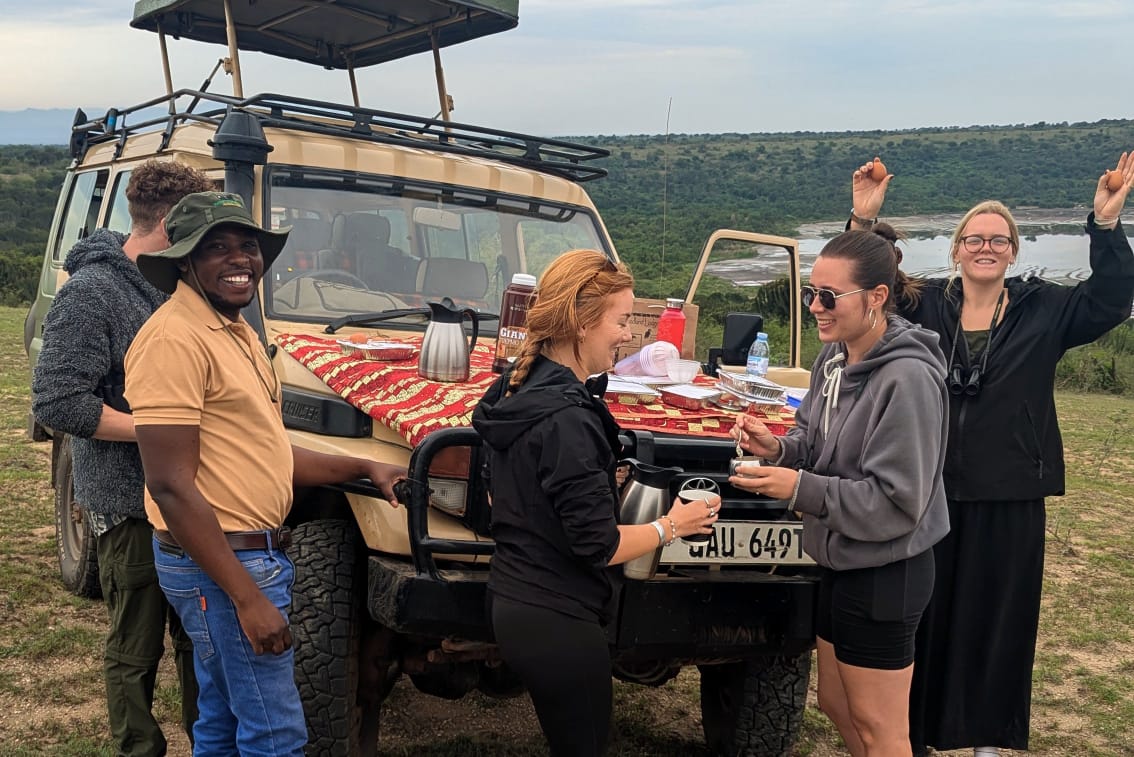
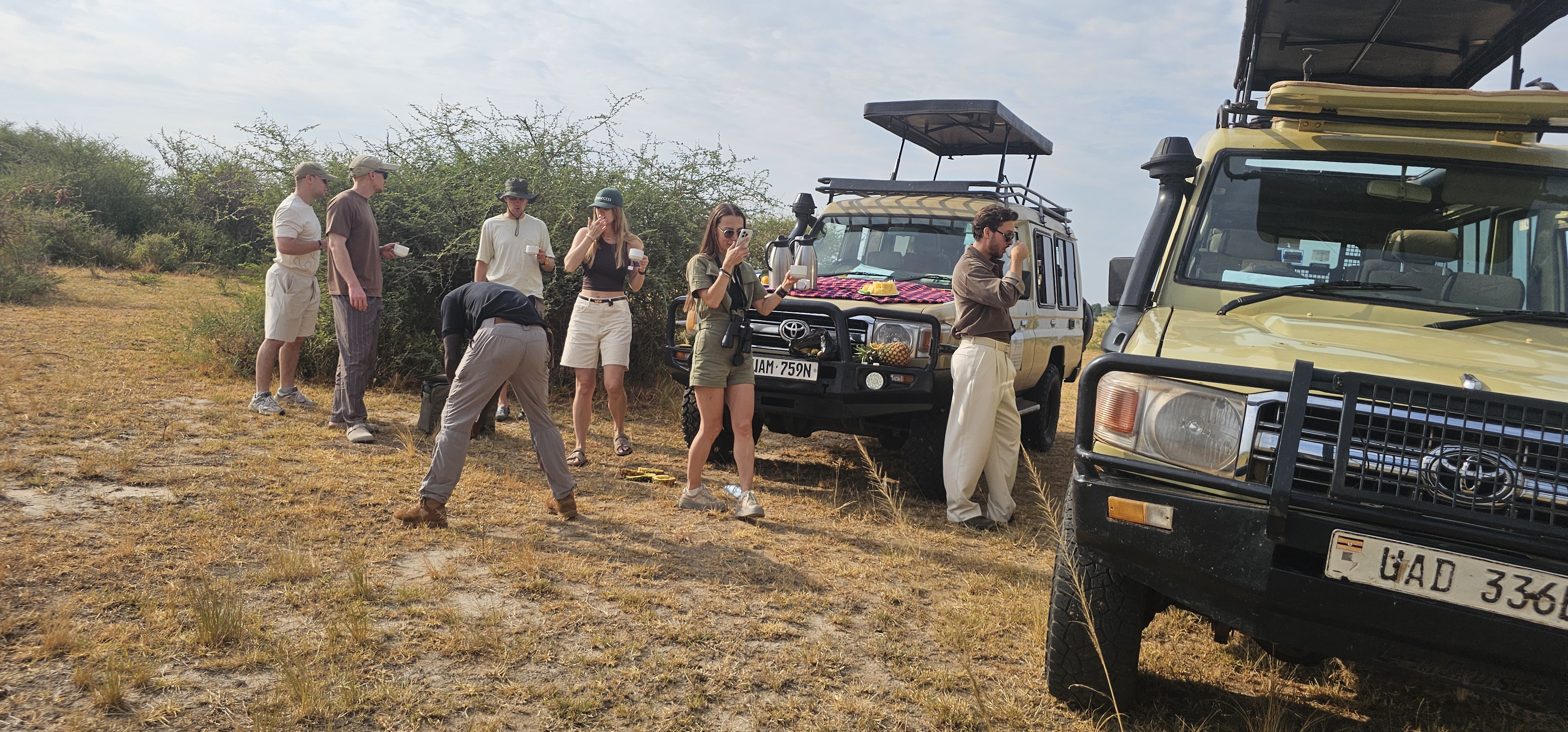
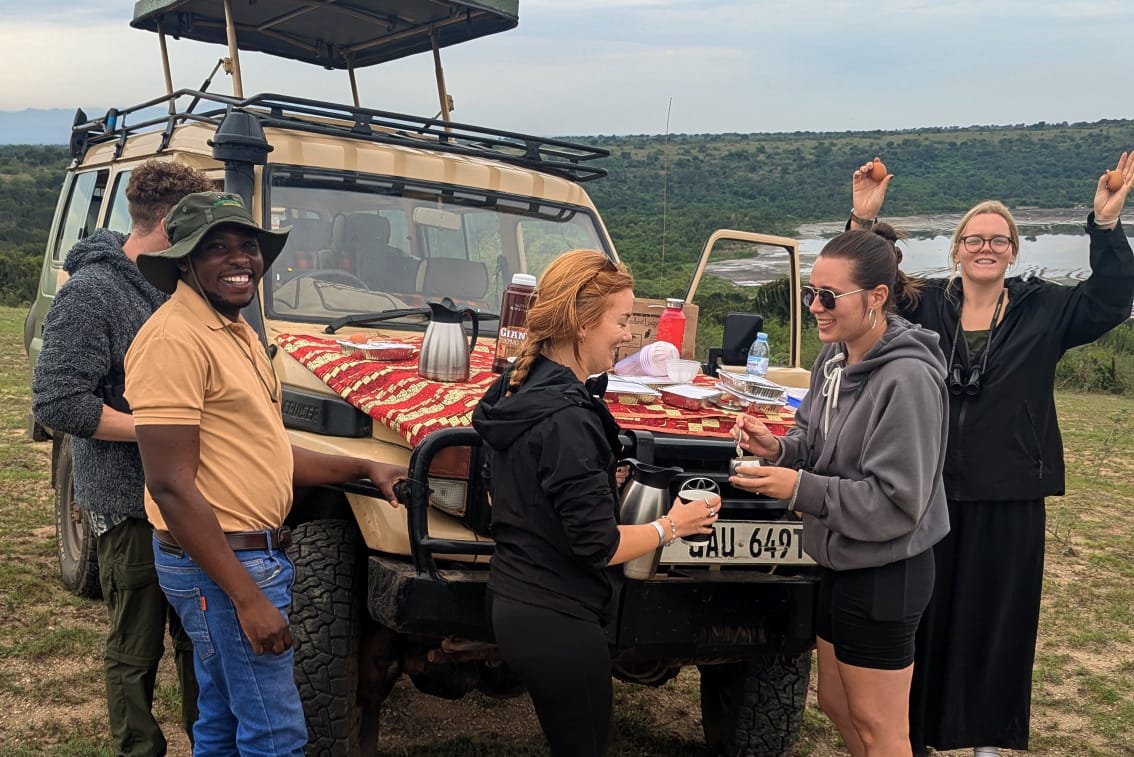
A bush breakfast in Murchison Falls National Park transforms a simple morning meal into an immersive wilderness experience, allowing you to enjoy freshly prepared food surrounded by the sights, sounds and atmosphere of the African savanna. Set in a carefully selected location within the park, the experience brings together exceptional cuisine, beautiful scenery and the untamed rhythm of nature. Your morning begins with an early game drive as the first light spreads across the savanna. The cool air, soft golden glow and awakening wildlife create the perfect setting for an adventurous start to the day. Along the way, your guide may pause to observe elephants, giraffes, Uganda kob, buffaloes or other wildlife moving through the morning landscape. Eventually, you arrive at a secluded bush breakfast setting selected for its scenic beauty and sense of wilderness. A beautifully arranged table awaits beneath the open African sky, surrounded by grasslands and scattered trees, with your experienced safari team ensuring that everything is prepared safely and comfortably. As you take your seat, the sounds of the wilderness become your natural soundtrack. Birds call from nearby trees, insects hum gently through the grass and the breeze moves across the savanna. In the distance, wildlife may continue grazing or moving between feeding grounds, creating the feeling that the entire landscape is your breakfast room. A freshly prepared selection of breakfast favourites, seasonal fruit, pastries, tea, coffee and refreshing juices can be served, giving you time to relax and enjoy the morning at an unhurried pace. The emphasis is not simply on the food, but on the setting and the experience of dining outdoors in the heart of the wilderness. Your guide can share stories about the surrounding ecosystem, pointing out animal tracks, bird calls and distant wildlife while explaining how the different species interact with their environment. Every detail becomes part of the experience—from the aroma of freshly brewed coffee to the distant call of an African fish eagle. One of the most exciting aspects of a bush breakfast is its sense of spontaneity. Wildlife sightings are never guaranteed, and the surrounding wilderness continues to operate naturally while you dine. An elephant may appear in the distance, a herd of antelope may cross the plains, or giraffes may emerge between the trees. The experience offers a refreshing contrast to dining indoors. There are no walls or windows separating you from nature. Instead, you are surrounded by open skies, golden grasslands and the living sounds of the park, while your safari team maintains a safe and comfortable environment. For photographers, the morning light provides beautiful opportunities to capture both the breakfast setting and the surrounding landscape. A steaming cup of coffee against the savanna, wildlife silhouetted in the distance or the warm sunlight illuminating the breakfast table can create memorable images. The slower pace also gives you an opportunity to simply pause. After the excitement of an early game drive, sitting beneath the open sky and enjoying breakfast allows you to appreciate the wilderness without rushing to the next activity. As the morning advances and the sun climbs higher, the savanna gradually becomes warmer. Wildlife begins seeking shade or moving toward water, while the breakfast setting slowly returns to its natural surroundings. Eventually, you pack away the breakfast and continue your safari, carrying with you the memory of eating in the wild while the African landscape unfolded around you. A bush breakfast at Murchison Falls is more than a meal—it is a sensory journey that combines fine food, wilderness, wildlife and the freedom of dining beneath the African sky. For JM Jungle Safaris, it perfectly expresses our “Rhythm of Nature” philosophy: slow-paced, intentional and immersive, turning breakfast into an unforgettable safari moment.

Chimpanzee Trekking in Budongo
primate
Murchison Falls National Park 4.0 Hours

Chimpanzee Trekking in Budongo

Experience an immersive chimpanzee trekking adventure in Budongo Forest, following experienced trackers through ancient rainforest as you search for wild chimpanzees, listen to their distinctive calls and observe their fascinating social behaviour among the towering trees.

A chimpanzee trekking experience in Budongo Forest is an immersive journey into one of Uganda's remarkable natural forests, where towering trees, tangled vines and dense undergrowth create a rich habitat for chimpanzees and an extraordinary diversity of forest life. Located within the greater Murchison Falls conservation landscape, Budongo offers an intimate opportunity to venture beyond the savanna and discover the fascinating world of Uganda's forest primates. Your encounter begins with a briefing from your experienced guide and trackers before entering the forest. As you follow the trails beneath the towering canopy, the atmosphere changes almost immediately. The sounds of the savanna gradually disappear, replaced by birdsong, rustling leaves, insects and the occasional distant call of a chimpanzee. The search itself becomes part of the adventure. Your trackers carefully interpret footprints, feeding remains, broken branches, fresh dung and vocalisations to determine where the chimpanzees have been moving. Every sound from the canopy creates anticipation, and the sudden movement of leaves high above may signal that a chimpanzee community is nearby. Then comes the moment you have been waiting for—a distinctive chimpanzee call echoes through the forest, followed by movement among the branches. Your first sighting may be high in the canopy, where chimpanzees move effortlessly between branches. They may be feeding on seasonal fruits, travelling through the trees, resting on branches or observing the forest below. Their agility and speed are remarkable, and watching them navigate the canopy provides a fascinating glimpse into their natural world. As you spend time with the community, you begin to appreciate their complex social behaviour. Chimpanzees communicate through a remarkable range of vocalisations, gestures and physical interactions. Adults may groom one another, youngsters chase and wrestle playfully, while mothers remain closely attentive to their infants. One of the most captivating moments can be witnessing a chimpanzee family interacting naturally. A youngster may suddenly launch into a playful chase, an adult may climb toward a fruiting tree, or several individuals may erupt into loud pant-hoots that reverberate beneath the canopy. Your guide helps interpret these behaviours, explaining the social relationships, feeding habits and communication patterns of the chimpanzees. Rather than simply observing an animal, you begin to understand the personalities and dynamics within the community. The forest itself is an important part of the encounter. Budongo's ancient trees form a multi-layered ecosystem, with tall canopy trees rising above vines, shrubs, ferns and fallen leaves. Sunlight filters through gaps in the canopy, creating shifting patterns across the forest floor. While searching for chimpanzees, you may encounter other fascinating forest inhabitants, including red-tailed monkeys, black-and-white colobus monkeys, blue monkeys and numerous bird species. Butterflies move through shafts of sunlight, while colourful birds call from hidden branches. The walking experience is as rewarding as the eventual sighting. You become increasingly aware of the smallest details—the texture of tree bark, fresh tracks in the soil, fruits scattered beneath trees and distant calls travelling through the forest. Each clue brings you closer to understanding the ecosystem. Photography can be particularly rewarding, although the dense forest and high canopy can make chimpanzees challenging subjects. Your guide can help identify good viewing positions and anticipate movements, giving you opportunities to capture natural moments without disturbing the animals. Perhaps the most memorable encounters are completely spontaneous: a chimpanzee staring curiously from a branch, an infant clinging to its mother, a group moving rapidly through the canopy or a sudden chorus of calls spreading through the forest. As the trek eventually comes to an end, you begin your walk back through the ancient woodland. The chimpanzees continue with their daily lives, disappearing deeper into the forest as their calls gradually fade into the surrounding sounds of nature. Chimpanzee trekking in Budongo Forest is more than a wildlife search—it is an intimate journey into the forest world of one of humanity's closest living relatives. For JM Jungle Safaris, the experience embodies our “Rhythm of Nature” philosophy: slow-paced, immersive and authentic, giving you the opportunity to follow the forest's natural rhythms while discovering the intelligence, energy and social complexity of Uganda's chimpanzees.

Birding Walk at Budongo Forest
birding
Murchison Falls National Park 4.0 Hours

Birding Walk at Budongo Forest

Enjoy an immersive birding walk through Budongo Forest, where ancient trees, lush vegetation, and tranquil forest trails create a haven for Uganda’s remarkable birdlife. Guided by experienced trackers, listen for distinctive calls and watch for colourful forest species, making every step a rewarding Rhythm of Nature experience.

Full Encounter Description of Birding Walk at Budongo Forest Step into the ancient wilderness of Budongo Forest and discover a quieter side of Uganda’s remarkable biodiversity on an immersive birding walk. As you leave the surrounding savannah behind and enter the cool, shaded forest, the atmosphere changes almost instantly. Towering trees rise overhead, vines weave through the understory, and the forest comes alive with a chorus of calls, whistles, and rustling leaves. Your birding experience begins with a briefing from an experienced local guide, who helps you understand the forest environment and introduces you to the sounds and signs that reveal its hidden inhabitants. Rather than simply walking in search of birds, you learn to slow down, listen carefully, and scan the canopy, branches, vines, and forest floor for movement. As you follow the forest trails, your guide listens for distinctive bird calls and points out movement high among the trees. Colourful forest birds, canopy dwellers, insect-eaters, fruit-eating species, and shy understorey birds may appear along the way, sometimes briefly crossing an opening before disappearing back into the foliage. With patience, even a quiet patch of forest can reveal an extraordinary amount of activity. The experience is as much about sound as sight. A distant call may lead you deeper along the trail, while the sudden flutter of wings can draw your attention to a nearby branch. Your guide helps identify species by their calls, plumage, behaviour, and preferred habitat, transforming the walk into an engaging exploration of Budongo’s intricate forest ecosystem. Keep your eyes trained on the canopy, where birds move between flowering and fruiting trees, but also look lower into the vegetation. Some species remain close to the forest floor or within dense shrubs, rewarding patient observers who take their time. Along the trail, you may also encounter monkeys and other forest wildlife, adding an unexpected dimension to the birding adventure. Budongo’s ancient trees provide more than scenery—they form the foundation of a complex ecosystem supporting insects, fruits, seeds, small mammals, primates, and an impressive diversity of birds. Your guide brings this interconnected world to life, explaining how different species depend on the forest and how their behaviour changes with the seasons. For photographers and bird enthusiasts, the walk offers countless opportunities to practise patience and observation. A fleeting movement through the foliage can become a memorable sighting, while a bird perched quietly in a shaft of forest light may provide the perfect photographic moment. The pace remains relaxed and intentional, allowing you to appreciate the forest rather than rushing from one sighting to another. As the walk continues, the sounds of Budongo gradually become familiar—the calls above, insects in the undergrowth, leaves shifting in the breeze, and occasional distant sounds of forest wildlife. Every turn of the trail brings the possibility of another discovery. A birding walk in Budongo Forest is more than a search for birds; it is an intimate journey into one of Uganda’s ancient forest ecosystems, where patience, silence, and curiosity reveal a world that is easily missed. With JM Jungle Safaris, the experience reflects our Rhythm of Nature philosophy—slow-paced, immersive, and thoughtfully designed to help you connect with Uganda’s wilderness through its sounds, landscapes, wildlife, and extraordinary birdlife.

Guided Forest walk at Murchison
birding
Murchison Falls National Park 4.0 Hours

Guided Forest walk at Murchison

Explore the quieter side of Murchison Falls National Park on a guided forest walk through lush woodland, where shaded trails, birds, butterflies, primates, and fascinating plant life create an intimate wilderness experience. Led by an experienced guide, the walk reveals the smaller details and hidden rhythms of the park often missed on a traditional game drive.

Full Encounter Description of Guided Forest Walk at Murchison Falls National Park Leave the safari vehicle behind and experience Murchison Falls National Park from a completely different perspective on a guided forest walk. Accompanied by an experienced guide, you step onto shaded trails where the pace becomes slower, the sounds of the wilderness more distinct, and the smaller details of the ecosystem begin to reveal themselves. The walk begins with a short briefing before you enter the woodland. As the trail winds beneath trees and through patches of dense vegetation, your guide introduces you to the plants, trees, insects, birds, and other signs of life that make up this fascinating habitat. Every step becomes an opportunity to look closer and understand the intricate relationships within the forest. Listen carefully and you may hear birds calling from the canopy, leaves rustling in the undergrowth, or the movement of small creatures hidden among the vegetation. Your guide helps interpret these sounds and signs, pointing out tracks, droppings, feeding marks, nests, fallen fruits, and other clues that reveal the presence of wildlife nearby. The forest walk offers opportunities to encounter monkeys and other small mammals, while colourful butterflies and a variety of bird species add movement and colour to the surroundings. Wildlife sightings are naturally unpredictable, making each walk unique. Sometimes the most memorable moment is not a major animal encounter, but the discovery of a tiny bird, unusual plant, delicate butterfly, or fresh animal track that would easily go unnoticed from a vehicle. As you continue deeper into the woodland, take time to appreciate the character of the forest itself. Sunlight filters through the canopy, creating shifting patterns across the trail, while vines, shrubs, fallen leaves, and towering trees form layers of vegetation around you. Your guide explains how these different elements contribute to the wider Murchison ecosystem and provide food, shelter, and breeding spaces for wildlife. The experience also offers a valuable opportunity to learn about traditional uses of plants and the ecological importance of the forest. Depending on the route and local interpretation available, your guide may explain medicinal plants, edible species, natural materials, and other ways surrounding communities have traditionally interacted with the forest landscape. Unlike a game drive, where the focus is often on larger wildlife and open landscapes, a guided forest walk encourages you to become part of the environment. You move quietly, stop frequently, observe patiently, and use your senses to discover what is happening around you. The forest gradually becomes less of a backdrop and more of a living world unfolding at your feet and above your head. For photographers and nature enthusiasts, the walk provides opportunities to capture intimate details—from butterflies resting on leaves and birds hidden among branches to unusual plants, tree textures, and shafts of sunlight penetrating the canopy. As the trail eventually brings you back toward your starting point, you leave with a deeper appreciation for the lesser-seen side of Murchison Falls National Park. The experience reminds you that a safari is not only about finding the biggest animals, but also about understanding the delicate web of life that sustains them. A guided forest walk at Murchison Falls National Park is more than a simple nature walk—it is a chance to slow down, listen, observe, and discover the intimate details of Uganda's wilderness that are often missed from a safari vehicle. With JM Jungle Safaris, the experience follows our Rhythm of Nature philosophy: unhurried, immersive, authentic, and designed to bring you closer to the living landscape of Uganda.

Chimpanzee Trekking at Kyambura
primate
Queen Elizabeth National Park 2.0 Hours

Chimpanzee Trekking at Kyambura

rack wild chimpanzees through Kyambura Gorge’s lush sunken forest for an unforgettable primate adventure in Queen Elizabeth National Park.

Descend into the remarkable green world of Kyambura Gorge, a dramatic forested valley hidden within the open savannah landscapes of Queen Elizabeth National Park. Often called the Valley of Apes, this extraordinary ecosystem offers an exciting opportunity to track wild chimpanzees in one of Uganda’s most captivating natural settings. Accompanied by experienced Uganda Wildlife Authority rangers and guides, you will venture beneath a dense canopy of tropical trees, following forest trails in search of chimpanzee calls, broken branches, fresh feeding signs and movement high in the treetops. The forest comes alive with birdsong, rustling leaves and the distant calls of primates as your guide interprets the signs of wildlife activity. The highlight comes when you encounter a community of wild chimpanzees. Watch as they forage for fruit, groom one another, communicate through expressive gestures and vocalisations, or move swiftly through the forest canopy. Their remarkable intelligence, social bonds and human-like behaviours make this an absorbing wildlife experience. Sightings are not guaranteed, however, as the chimpanzees roam freely through their natural habitat. Beyond the chimpanzees, the gorge reveals a fascinating contrast between the surrounding grasslands and the cooler, shaded forest below. Towering trees, tangled vines, rich vegetation and the steep valley walls create a sense of entering a secluded wilderness that feels worlds away from the savannah above. DETAILED ITINERARY OVERVIEW 1. Arrival and ranger briefing Arrive at the designated Uganda Wildlife Authority ranger station on the gorge rim, where your guides explain the trekking route, safety precautions, forest etiquette and responsible chimpanzee viewing. The ranger assesses the group and provides instructions before the descent. 2. Descending into the gorge Begin the descent from the open savannah into the shaded forest below. The transition is striking: grassland gives way to tangled vegetation, towering trees, vines and the sounds of a hidden riverine ecosystem. Expect uneven ground, exposed roots and potentially slippery slopes. 3. Tracking through the forest Follow your ranger and tracker along forest trails as they search for chimpanzee vocalisations, fresh feeding remains and signs of movement. The pace may vary according to the chimpanzees' location, and the group may need to negotiate thick undergrowth, muddy patches and sections near the river. 4. The chimpanzee encounter When the chimpanzees are located, spend up to one hour observing their natural behaviour, subject to current park rules and the animals' welfare. Watch for grooming, feeding, social calls, playful interactions and movement through the canopy. Follow the ranger's instructions and maintain the required viewing distance. 5. Return to the gorge rim Retrace the route through the forest and climb back towards the open grasslands. Your ranger guides the group through the terrain, allowing for appropriate breaks as needed. Once back at the starting point, continue with your Queen Elizabeth National Park safari, perhaps enjoying a game drive or a Kazinga Channel boat cruise. What travellers will encounter Wild chimpanzees: Opportunities to observe feeding, grooming, communication and social behaviour in their natural habitat. A dramatic sunken forest: A lush riverine ecosystem contrasting with the surrounding savannah plains. Other primates: Possible sightings of black-and-white colobus monkeys, red-tailed monkeys and olive baboons. Forest birdlife: Calls and sightings of colourful forest birds, alongside butterflies and other small wildlife. A changing soundscape: Chimpanzee calls, birdsong, rustling foliage and the sounds of the gorge's river. A conservation experience: Ranger interpretation of chimpanzee ecology, habitat protection and the importance of responsible wildlife tourism Walking terrain and physical demands Terrain at a glance Steep descent and ascent The gorge's slopes can be demanding, particularly on the return climb. Uneven forest trails Roots, loose earth, rocks and narrow footpaths may require careful footing. Mud and slippery sections Rain can make slopes and river-adjacent paths more challenging. Fitness level: Moderate to challenging, depending on weather and the route taken. Travellers should be comfortable walking on uneven ground and climbing steep slopes. The trek may be unsuitable for people with significant mobility limitations unless park staff confirm an appropriate alternative. Recommended equipment: Sturdy hiking boots with good grip, long trousers, a lightweight long-sleeved top, drinking water, insect repellent, a small daypack and a rain jacket. Walking poles may help some travellers, but should only be used where practical and safe on the trail. Ranger logistics and responsible trekking Ranger-led activity: Uganda Wildlife Authority rangers lead the trek, provide safety guidance and help locate the chimpanzees; trackers may assist with locating the community. Permit and briefing: Arrange the appropriate chimpanzee trekking permit in advance and arrive at the designated meeting point at the time confirmed by the park authorities. Group management: Visitors remain with their assigned ranger and follow instructions throughout the trek. Chimpanzee viewing: Keep the prescribed distance, speak quietly, avoid sudden movements and never feed or touch the animals. Wildlife health: Do not trek when ill with potentially infectious symptoms; follow the ranger's health and hygiene instructions. Variable sightings: Chimpanzees roam freely, and sightings are not guaranteed. Kyambura's community is relatively small, making the experience less predictable than trekking in Kibale Forest. The JM Jungle Safaris experience Chimpanzee trekking at Kyambura Gorge is more than a wildlife walk: it is an adventurous descent into a hidden forest where the rhythms of the savannah give way to the calls of wild primates. With experienced ranger guidance, dramatic scenery and the possibility of observing our closest living relatives in the wild, this encounter adds a memorable primate dimension to your Queen Elizabeth National Park safari.

Game Drives in Queen Elizabeth
wildlife
Queen Elizabeth National Park 4.0 Hours

Game Drives in Queen Elizabeth

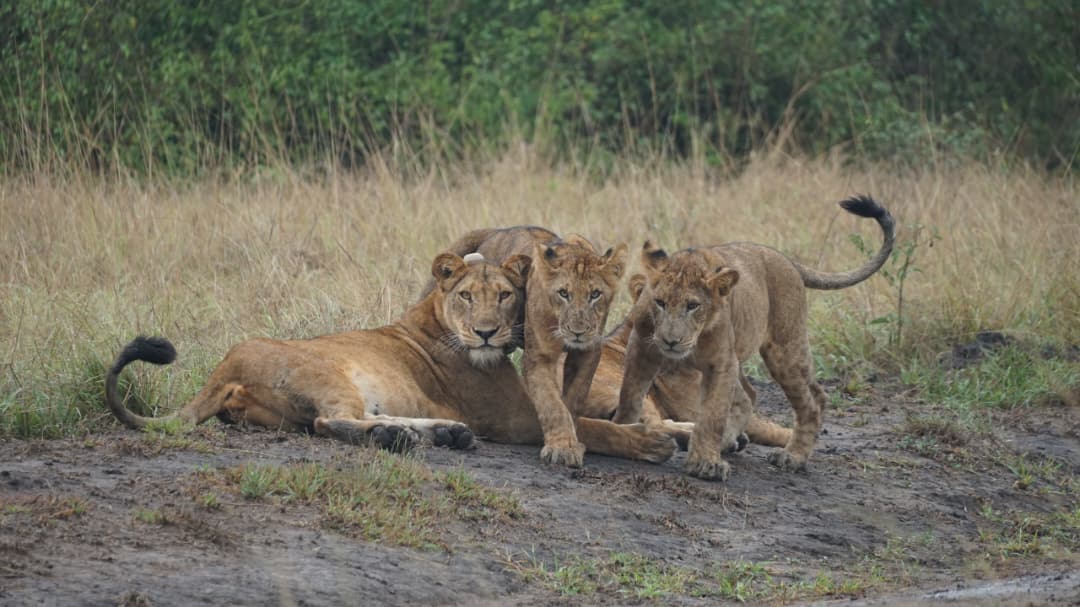
Track lions, elephants and buffalo across Queen Elizabeth National Park’s sweeping savannahs, with thrilling wildlife encounters and the chance to spot elusive leopards and Ishasha’s famous tree-climbing lions.

Game drive highlights by sector Kasenyi Plains — classic savannah safari Explore expansive grasslands dotted with Uganda kob, buffaloes and elephants, while scanning the plains for lions stalking their prey. This is one of the park’s best-known areas for classic big-game viewing. Uganda Wildlife Authority. Ishasha — the tree-climbing lions Venture into the park’s southern wilderness, where lions are famously known to rest in large fig trees. Search the branches, open plains and riverine areas for lions, topis, elephants and large buffalo herds. Uganda Wildlife Authority. Mweya and the Kazinga Channel plains Drive through bushland and open tracks around Mweya, watching for elephants moving towards water, warthogs, waterbucks, bushbucks and other wildlife. The landscape offers beautiful views towards the Kazinga Channel and surrounding rift valley terrain. Uganda Wildlife Authority Best time: Early morning and late afternoon are popular for game drives, when wildlife may be more active and the light is ideal for photography. Sightings vary with season, weather and animal movements, and no particular species is guaranteed. For JM Jungle Safaris, game drives can be tailored around the traveller’s lodge location, preferred pace and safari route, with the opportunity to combine savannah wildlife viewing with chimpanzee trekking in Kyambura Gorge or a boat cruise along the Kazinga Channel.

Kazinga Channel Boat Cruise
adventure
Queen Elizabeth National Park 3.0 Hours

Kazinga Channel Boat Cruise

Cruise the wildlife-rich Kazinga Channel, where hippos crowd the waters, crocodiles bask along the banks, and elephants, buffaloes, and spectacular birdlife gather for unforgettable close-up encounters.

Embark on an unforgettable boat cruise along the Kazinga Channel, one of the most wildlife-rich waterways in Uganda, flowing between Lake Edward and Lake George in the heart of Queen Elizabeth National Park. As your boat glides across the calm waters, the channel reveals a remarkable concentration of wildlife, offering an intimate perspective of the park that complements the excitement of a traditional savannah game drive. From the comfort of your vessel, watch pods of hippos resting in the shallows, their rounded backs breaking the surface as they grunt, snort and jostle for space. Along the muddy banks, enormous Nile crocodiles may be seen basking in the sunshine, their motionless forms blending into the shoreline as they wait patiently beside the water. The cruise becomes even more captivating when elephants emerge from the surrounding vegetation to drink, bathe or cool themselves at the water's edge. Large herds of African buffaloes gather along the banks, while waterbucks, warthogs and other wildlife may appear among the grasses and scattered shrubs. These natural gathering points create wonderful opportunities to observe animal behaviour, photograph wildlife and appreciate the intricate relationships between the park's animals and their aquatic environment. Kazinga Channel is also a paradise for bird enthusiasts. The shoreline and surrounding wetlands attract an extraordinary variety of resident and migratory birds. Watch for African fish eagles perched above the water, pied kingfishers hovering before diving for fish, colourful malachite kingfishers, pink-backed pelicans, African darters, cormorants and elegant herons. Depending on the season, you may also spot African jacanas stepping delicately across floating vegetation and other waterbirds feeding along the shallows. As your guide interprets the wildlife activity around you, the cruise offers fascinating insights into the channel's ecology, the behaviour of its hippos and crocodiles, and the importance of wetlands in sustaining the park's rich biodiversity. The open water provides excellent viewing opportunities, while the shifting reflections of the surrounding hills, distant savannah and papyrus-fringed banks create a beautiful backdrop for photography. Whether you are watching an elephant herd gather at the shoreline, listening to the territorial grunts of hippos or capturing the dramatic dive of a fish eagle, every stretch of the channel offers a different moment of discovery. The experience is generally relaxed and accessible, making it an excellent activity for couples, families, photographers, birdwatchers and travellers seeking a slower-paced wildlife encounter. What travellers will experience Hippo encounters: Observe pods of hippos resting, surfacing, yawning and interacting in the water. Elephants at the shoreline: Watch elephants drink, bathe and move between the water and surrounding bush. Nile crocodiles: Look for crocodiles basking on exposed banks or lying partially submerged. Large mammal concentrations: Spot buffaloes, waterbucks, warthogs and other wildlife near the channel. Exceptional birdwatching: Search for fish eagles, kingfishers, pelicans, herons, cormorants and other wetland species. Photography opportunities: Capture wildlife at close range from the boat, subject to safe distances and the animals' movements. Scenic landscapes: Enjoy views of the channel, papyrus-lined shorelines and the surrounding Queen Elizabeth National Park ecosystem. Typical encounter itinerary 1. Arrival at the boat landing Arrive at the designated launch point, commonly around the Mweya Peninsula area, and prepare for the cruise. Your crew provides a safety briefing and explains the route and wildlife-viewing arrangements. 2. Cruise through the hippo territories Set out across the channel, passing areas where hippos gather in large pods. Observe their behaviour and listen to their characteristic calls while your guide explains their aquatic lifestyle and role in the ecosystem. 3. Wildlife along the banks Continue along the shoreline, scanning for elephants, buffaloes and other animals coming to drink. Your guide identifies wildlife and points out interesting behaviour as opportunities arise. 4. Birdwatching and scenic exploration Enjoy the channel's rich birdlife, from fish eagles perched in riverside trees to kingfishers hunting along the water. Take time to photograph the scenery and observe the delicate balance of the wetland ecosystem. Return to shore After exploring the channel, return to the landing point with memorable wildlife photographs and a deeper appreciation of Queen Elizabeth National Park's aquatic habitats. Depending on your itinerary, continue with a game drive, a visit to Kyambura Gorge or a relaxing evening at your lodge. Practical details Typical duration: Approximately 2 hours, depending on the operator and cruise schedule. Best departure times: Morning and afternoon departures are commonly offered; confirm the current schedule when booking. Walking requirements: Minimal, generally limited to getting between the vehicle and the boat. What to bring: Camera, binoculars, sun hat, sunscreen, drinking water and a light jacket. Accessibility: Usually less physically demanding than forest trekking, although boarding arrangements and accessibility vary by boat. Wildlife sightings: Hippos and waterbirds are commonly encountered, but the number and variety of animals seen depend on seasonal conditions and wildlife movements. The JM Jungle Safaris experience: The Kazinga Channel boat cruise is a wonderful way to slow down and connect with Uganda's wilderness from the water. Combining abundant wildlife, exceptional birdwatching and beautiful scenery, it adds a memorable aquatic dimension to a Queen Elizabeth National Park safari—especially when paired with a morning game drive across the Kasenyi Plains.

Chimpanzee Trekking at Kalinzu
primate
Queen Elizabeth National Park 2.0 Hours

Chimpanzee Trekking at Kalinzu

Trek through Kalinzu Forest’s lush tropical wilderness in search of wild chimpanzees, enjoying captivating primate encounters, rich birdlife, and the sights and sounds of Uganda’s vibrant rainforest.

Step into the lush tropical wilderness of Kalinzu Forest Reserve, one of Uganda’s rewarding destinations for chimpanzee tracking, where towering trees, tangled vines and a dense green canopy create a fascinating habitat for wild primates. Located near Queen Elizabeth National Park in western Uganda, this beautiful forest offers an immersive experience that combines wildlife discovery, guided rainforest exploration and an intimate encounter with one of our closest living relatives. Your adventure begins at the forest’s designated visitor centre, where experienced local guides introduce you to the forest environment, explain the trekking guidelines and share insights into chimpanzee behaviour. After the briefing, follow your guide along forest trails beneath the canopy, listening for distant chimpanzee calls and watching for signs of activity among the trees. As you venture deeper into the forest, the atmosphere becomes increasingly captivating. Sunlight filters through layers of foliage, birds call from hidden branches, and the forest floor reveals a mosaic of roots, fallen leaves, mosses and wild plants. Your guide interprets the natural clues along the way, from fruit remains and broken branches to vocalisations that may indicate the presence of chimpanzees nearby. The highlight arrives when your tracking team locates a chimpanzee community. Observe these intelligent primates as they forage for seasonal fruits, groom one another, communicate through expressive gestures and calls, or move between trees in search of food. You may witness playful interactions among younger chimpanzees, close social bonds between adults or the impressive agility with which they navigate the forest canopy. Every encounter is different. Sometimes chimpanzees remain relatively close to the forest floor, offering excellent opportunities to observe their behaviour; at other times, they move rapidly through the canopy, requiring patience and careful observation. Their expressive faces, complex social relationships and striking vocalisations make the experience both exciting and educational. Sightings are not guaranteed, as these are wild animals moving freely through their natural habitat. Beyond chimpanzees, Kalinzu’s rich biodiversity adds depth to the experience. The forest supports other primates, including red-tailed monkeys, black-and-white colobus monkeys and L’Hoest’s monkeys, as well as a variety of forest birds, butterflies and other small wildlife. Towering hardwood trees, ferns, climbers and dense undergrowth reveal the ecological complexity of this tropical forest. Throughout the trek, your guide helps you understand the importance of forest conservation and the role protected habitats play in safeguarding Uganda’s primates. By the time you return to the starting point, you will have experienced more than a wildlife walk: you will have explored a living rainforest, discovered the signs of its inhabitants and gained a deeper appreciation for the remarkable world of wild chimpanzees. Detailed encounter itinerary 1. Arrival and forest briefing Arrive at the designated Kalinzu Forest visitor centre, meet your local guide and receive a briefing on the trekking route, chimpanzee behaviour, forest conditions and responsible wildlife-viewing practices. Your guide will explain the importance of following instructions throughout the trek. 2. Entering the rainforest Begin walking along forest paths beneath the towering canopy. The transition into the forest brings cooler shade, earthy aromas, birdsong and the rustling of leaves. Your guide points out distinctive trees, plants and signs of wildlife along the way. 3. Tracking the chimpanzees Follow your guide through the forest in search of chimpanzee calls, feeding remains, nests and movement in the canopy. The walking pace and route depend on where the chimpanzees are located, and the search may involve quiet observation and changes in direction. 4. The chimpanzee encounter Spend the permitted viewing period observing the chimpanzees in their natural habitat. Watch their feeding habits, social interactions, grooming and communication while your guide explains their behaviour. Keep the required distance and avoid disturbing the animals. 5. Forest exploration and return Continue observing the forest's plant life, birds and other primates as you make your way back to the starting point. After the trek, continue your western Uganda safari, perhaps with a game drive in Queen Elizabeth National Park or a boat cruise along the Kazinga Channel. What travellers may encounter Wild chimpanzees: Observe feeding, grooming, vocalisations, social interactions and movement through the forest. Other primates: Possible sightings of black-and-white colobus monkeys, red-tailed monkeys and L’Hoest’s monkeys. Forest birdlife: Listen for and look out for colourful forest birds and species moving through the canopy. Rainforest flora: Discover towering indigenous trees, vines, ferns and a variety of forest plants. Wildlife tracking: Learn how guides interpret calls, feeding remains, nests and other signs of animal activity. Conservation insights: Understand the importance of protecting tropical forests and the wildlife that depends on them. Walking terrain and physical demands Forest terrain Expect natural forest trails with exposed roots, fallen leaves, uneven ground, occasional muddy sections and gentle to steeper inclines. Conditions vary with rainfall and the route taken to locate the chimpanzees. Fitness level: Moderate. A reasonable level of fitness and the ability to walk for several hours are recommended. Trek duration and difficulty depend on the chimpanzees' movements and the condition of the trails. Recommended equipment: Sturdy hiking boots with good grip, long trousers, a lightweight long-sleeved shirt, insect repellent, drinking water, a rain jacket, a small daypack and a camera or binoculars if desired. Walking poles may be useful on slippery sections. Practical information for safari planning Location: Kalinzu Central Forest Reserve, western Uganda, near Queen Elizabeth National Park and the Ishaka–Kasese road. Typical duration: Approximately 3–4 hours, although the trek may be shorter or longer depending on the chimpanzees' location and walking conditions. Guide arrangements: Treks are led by authorised local forest guides, subject to the reserve's current operating arrangements. Permit: Book through the responsible forest authority or an authorised booking channel and reconfirm the applicable permit rate. Best preparation: Follow all briefing instructions, maintain the required distance from chimpanzees, avoid touching wildlife and do not trek when experiencing potentially infectious illness. Sightings: Chimpanzees are wild and free-ranging; encounters cannot be guaranteed. The JM Jungle Safaris experience Chimpanzee trekking in Kalinzu Forest offers a rewarding opportunity to discover Uganda's tropical wilderness beyond the savannah. With expert local guidance, the excitement of tracking wild primates and the tranquillity of a thriving rainforest, this experience is a memorable addition to a Queen Elizabeth National Park safari. It can be incorporated into a tailor-made JM Jungle Safaris itinerary for travellers seeking wildlife, nature and meaningful encounters with Uganda's remarkable biodiversity.

Katwe Salt Mines
wildlife
Queen Elizabeth National Park 2.0 Hours

Katwe Salt Mines

Explore Katwe Salt Lake, where local communities harvest salt using traditional methods, offering a fascinating insight into Uganda’s heritage, livelihoods, and enduring cultural traditions.

Full encounter description Discover the fascinating world of traditional salt mining at Lake Katwe, a historic salt-producing lake nestled within the volcanic landscapes of Queen Elizabeth National Park in western Uganda. This cultural excursion offers a rare opportunity to witness a livelihood shaped by nature, generations of local knowledge and the remarkable mineral-rich waters of a crater lake. As you approach the Katwe salt-mining area, the landscape reveals a striking contrast to the park’s wildlife-rich savannahs. The shallow lake, surrounded by rugged crater rims and open terrain, displays a patchwork of salt-encrusted surfaces, shallow evaporation ponds and mineral deposits. In the warm sunlight, the lake’s pale colours and geometric salt pans create a distinctive scene that reflects the area's long-standing relationship with salt production. Accompanied by a local guide, explore the salt-mining community and learn how residents have harvested salt from Lake Katwe for generations. Your guide explains the different methods used to extract and process salt, the seasonal changes that influence production and the challenges miners face while working in a demanding environment. The experience offers insight into the traditional techniques used to collect salt from the lake's saline waters and mineral deposits. Depending on current mining activity, you may observe workers tending salt pans, collecting salt, sorting the harvested material or preparing it for processing and sale. Different salt products may be produced through distinct methods, reflecting variations in the lake's mineral composition and the local mining process. As you watch the work unfold, you gain a deeper appreciation of the patience, physical effort and practical knowledge required to sustain this livelihood. Salt production is closely connected to the area's economy, with local households depending on the lake for income, trade and community identity. Your guide also introduces the geological story behind Lake Katwe. The lake lies within a volcanic crater, and its saline waters result from mineral accumulation in a basin with limited natural drainage. Strong evaporation under the region's warm conditions concentrates dissolved salts, creating the unusual environment that has supported traditional salt extraction for generations. Beyond the mining process itself, the visit provides an opportunity to engage with the people whose lives are connected to the lake. Through local interpretation and respectful observation, you can learn about working conditions, the economic importance of salt production, traditional knowledge and the balance between livelihoods and environmental sustainability. The Katwe Salt Lake excursion offers a meaningful cultural complement to Queen Elizabeth National Park's wildlife experiences. After game drives across the savannah or a boat cruise along the Kazinga Channel, this visit reveals another dimension of the region: the enduring relationship between people, geology and natural resources. What travellers will experience Traditional salt extraction: Learn how salt is collected and processed using locally established methods. Salt pans and mineral landscapes: Observe the distinctive patterns and colours created by salt deposits and evaporation. Local community interaction: Gain insight into the livelihoods and experiences of the people who depend on salt production. Volcanic geology: Discover how Lake Katwe's crater formation and saline waters contribute to salt accumulation. Cultural heritage: Understand how traditional knowledge and mining practices have been passed between generations. Photography opportunities: Capture the striking salt-mining landscape and working environment, with permission from local people. Community livelihoods: Learn about the economic opportunities and challenges associated with small-scale salt production. Typical excursion itinerary 1. Arrival at Lake Katwe Travel to the Katwe salt-mining area and take in the distinctive landscape surrounding the crater lake. Your local guide introduces the area's history and explains why salt production became an important part of community life. 2. Exploring the salt-mining landscape Walk through designated areas around the lake to observe salt pans, mineral deposits and the different locations used for harvesting. Learn how evaporation and mineral concentration contribute to salt production. 3. Witnessing traditional mining methods Observe salt workers and learn about the techniques used to collect, separate and prepare salt. Activities visible on the day depend on the season, water levels and current mining operations. 4. Community stories and local livelihoods Hear about the economic and cultural significance of the lake, the realities of salt mining and how the industry supports local families. Where appropriate, interact with community members through your guide. 5. Final views and onward journey Take time to appreciate the crater lake's unusual scenery and reflect on the connection between natural resources and community life before returning to your lodge or continuing your Queen Elizabeth National Park safari. Practical information Location: Lake Katwe, near Katwe village in Queen Elizabeth National Park, southwestern Uganda. Typical duration: Approximately 1–2 hours, depending on the activities available and the depth of the community visit. Physical demands: Generally light walking over uneven, exposed and potentially muddy ground. Recommended clothing: Comfortable walking shoes, a hat, sunscreen and lightweight clothing suitable for warm conditions. Photography: Ask permission before photographing miners or community members. Safety: Follow your guide's instructions and avoid entering active mining areas or handling concentrated brine and mineral deposits without permission. Seasonal variation: Salt production and the appearance of the lake vary with rainfall, evaporation and water levels. The JM Jungle Safaris experience The Katwe Salt Mining Experience offers a fascinating cultural journey into the lives of the communities surrounding Queen Elizabeth National Park. Beyond wildlife, it reveals the ingenuity, resilience and traditional knowledge that connect people to Uganda's natural landscapes, making it a meaningful addition to a safari focused on nature, culture and authentic local encounters.

Lion Tracking in Queen Elizabeth National Park
wildlife
Queen Elizabeth National Park 2.0 Hours

Lion Tracking in Queen Elizabeth National Park

Join wildlife researchers on the Kasenyi Plains to track radio-collared lions, observe their fascinating behavior, and discover the science behind protecting Uganda’s iconic predators.

Step beyond a conventional game drive and discover the fascinating world of lion conservation through an exclusive lion-tracking experience in Queen Elizabeth National Park. Set against the sweeping grasslands of the Kasenyi Plains, this activity offers an opportunity to learn how researchers and conservation teams monitor one of Africa's most iconic predators while gaining deeper insight into the behaviour, movements and survival of lions in the wild. Accompanied by authorised researchers or trained conservation personnel, where the programme is available, you venture into the savannah in search of radio-collared lions. Using tracking equipment and information about the animals' recent movements, the team works to locate the lions while explaining how scientific research supports wildlife monitoring and conservation. As the vehicle moves across the open plains, the landscape unfolds in a mosaic of golden grasses, scattered acacia trees and distant woodland. Uganda kob graze in the open, buffaloes gather in the grasslands, and elephants may appear along the edges of the savannah. These herbivores form part of the wider ecosystem that sustains predators such as lions. The tracking process builds anticipation. Researchers may interpret radio signals, discuss the lions' known movements and explain how data helps them understand territories, pride dynamics and habitat use. The exact route and duration depend on the signals received, the lions' location and the conditions in the park. When lions are located, the encounter becomes a remarkable opportunity to observe their natural behaviour without disturbing them. You may see a pride resting in the shade, adults grooming one another, cubs interacting, or lions moving through the grass in search of suitable resting places or prey. Sometimes they remain hidden in tall vegetation, making patience and the research team's knowledge particularly valuable. Beyond the excitement of seeing lions, the experience reveals the science behind wildlife conservation. Learn why researchers monitor individual animals, how tracking contributes to understanding movement patterns and human–wildlife interactions, and why protecting prey populations and habitats is essential to maintaining healthy lion populations. The experience also highlights the challenges facing lions, including habitat pressure, conflict with communities and changes in prey availability. Through the researchers' explanations, visitors gain a greater appreciation of the work required to protect predators while supporting the long-term coexistence of wildlife and local communities. Lion tracking offers a more educational and conservation-focused perspective than a conventional game drive. Rather than simply searching for wildlife, you gain insight into how individual animals are studied and protected, leaving with a deeper understanding of Queen Elizabeth National Park's ecological richness and the importance of safeguarding its lions for future generations. Detailed encounter itinerary 1. Meet the research team Begin at the designated meeting point, where the research team introduces the tracking activity, explains lion conservation work and outlines the safety procedures. Learn how radio telemetry helps researchers monitor selected lions and study their movements. Advance booking is recommended 2. Drive into the Kasenyi Plains Travel across open grasslands in a safari vehicle while your researcher explains the landscape and the role of prey species in supporting lion populations. Uganda kob, buffaloes, elephants and other wildlife may be encountered along the way. 3. Follow the radio signals Watch the researcher use a receiver and directional antenna to detect signals from a collared lion. As the vehicle moves across the plains, the team interprets the signals and combines them with field knowledge to narrow down the animal's location. This scientific process is what makes lion tracking different from an ordinary game drive. 4. Observe the lions in the wild Once the lions are located, observe them from the vehicle under the research team's guidance. Depending on the encounter, you may see lionesses resting, cubs playing, adults grooming or members of a pride moving through the grassland. Your researcher explains their social structure and behaviour while allowing the animals to remain undisturbed. 5. Discover the conservation story Learn how tracking data contributes to understanding lion territories, population dynamics and potential threats. Researchers also work to understand human–wildlife conflict and the challenges of protecting predators beyond the park's boundaries. What travellers may encounter Radio-collared lions: An opportunity to locate selected lions being monitored by conservation researchers. Lion pride dynamics: Learn about social bonds, territorial behaviour and the roles of different pride members. Lion cubs: Depending on the pride located, you may observe young lions playing or interacting with adults. Savannah wildlife: Uganda kob, buffaloes, elephants and other species that share the plains. Research techniques: Discover how radio telemetry, field observations and movement records support wildlife monitoring. Conservation education: Understand the threats facing lions and the work being done to protect Uganda's large carnivores. Walking terrain and physical demands Terrain: Open savannah, dirt tracks, grasslands and occasional uneven sections. Physical level: Easy for most travellers. This is primarily a vehicle-based experience, not a walking safari. Accessibility: Guests generally remain in the safari vehicle during tracking and observation. Confirm boarding arrangements and any mobility requirements in advance. Ranger and research logistics Location: The main lion-tracking experience is associated with the Kasenyi Plains in the northern sector of Queen Elizabeth National Park. Personnel: The experience is arranged through the relevant park and conservation programme, with researchers and authorised park personnel. Equipment: Radio receivers and directional antennas are used to help locate collared lions. Duration: Allow approximately 2–3 hours, although the actual time depends on tracking conditions and the lions' movements. Departure: Early morning or late afternoon sessions are commonly described; confirm the current departure schedule when booking. Reservations: Arrange the experience in advance through the Uganda Wildlife Authority or the authorised programme, and reconfirm the current fee and inclusions. Wildlife viewing: Tracking improves the ability to locate selected collared lions, but a sighting is not guaranteed. The team determines the appropriate approach and viewing distance. The experience is conducted as a conservation-oriented activity rather than a guaranteed close-contact encounter. Visitors should follow the research team's instructions, avoid disturbing the lions and respect any restrictions on photography or vehicle positioning. Recommended equipment Binoculars for observing behaviour at a distance. Camera with a suitable zoom lens. Hat, sunscreen and sunglasses. Drinking water. Lightweight neutral-coloured clothing. A light jacket for cool early-morning departures. The JM Jungle Safaris experience Lion tracking offers an extraordinary opportunity to explore Queen Elizabeth National Park through the eyes of wildlife researchers. From following radio signals across the Kasenyi Plains to observing lions in their natural habitat, the experience combines the excitement of predator viewing with meaningful conservation insights. For travellers seeking more than a conventional game drive, JM Jungle Safaris can incorporate this specialist activity into a tailor-made Uganda safari, alongside savannah game drives, chimpanzee trekking in Kyambura Gorge and a wildlife-rich boat cruise on the Kazinga Channel.

Ishasha Community Visit
cultural
Queen Elizabeth National Park 4.0 Hours

Ishasha Community Visit

Discover the heart of Ishasha through authentic community encounters, where local traditions, rural livelihoods, and cultural storytelling reveal the human side of Queen Elizabeth National Park.

Step beyond the wildlife trails of Queen Elizabeth National Park and discover the welcoming communities of Ishasha, a rural landscape in southwestern Uganda where traditional livelihoods, cultural heritage and everyday life are closely connected to the surrounding wilderness. An Ishasha community visit offers a meaningful opportunity to meet local residents, learn about their customs and explore how families sustain their livelihoods alongside one of Uganda’s most celebrated wildlife destinations. As you leave the savannah and travel towards the surrounding villages, the scenery gradually reveals cultivated fields, homesteads, small trading centres and stretches of countryside framed by green hills and open grasslands. The atmosphere is peaceful and distinctly rural, offering a different perspective on the Ishasha region beyond its famous tree-climbing lions. Accompanied by a local community guide, you are welcomed into the daily rhythm of village life. Depending on the community programme and activities available on the day, you may visit local households, learn about traditional farming practices, observe food preparation or discover how families grow and process crops for domestic use and local markets. The experience provides an opportunity to understand the importance of agriculture, livestock keeping and small-scale enterprise in the local economy. Your guide may explain how households adapt to seasonal changes, manage their land and maintain family traditions while responding to modern economic and environmental challenges. Cultural exchange is at the heart of the visit. Through conversations with community members, you may learn about local customs, traditional foods, music, storytelling and the values that shape village life. Where arranged, demonstrations of crafts, traditional cooking or other cultural practices can offer a closer look at skills and knowledge passed from one generation to the next. The encounter also explores the relationship between the community and Queen Elizabeth National Park. Living near a protected area can bring opportunities through tourism, guiding, craft sales and hospitality, but it can also present challenges when wildlife moves beyond park boundaries. Your local guide may discuss conservation awareness, human–wildlife conflict and the importance of creating sustainable benefits for communities living alongside wildlife. Throughout the visit, the emphasis is on respectful interaction rather than simply observing village life. You have the opportunity to listen to local perspectives, ask questions and appreciate the resilience, creativity and hospitality of the people who call Ishasha home. For travellers, this experience adds a human dimension to a safari. After searching for tree-climbing lions among the fig trees and exploring the open plains of Ishasha, a community visit offers a deeper understanding of the people, traditions and livelihoods that form part of the wider landscape. What travellers may experience Village life and local hospitality Explore the rural surroundings with a community guide and learn about family life, local customs and the traditions that shape everyday experiences. Traditional farming and livelihoods Discover how local households grow food, keep livestock and use agricultural knowledge to support their families and communities. Food, culture and storytelling Depending on the activities arranged, learn about local dishes, traditional food preparation, oral storytelling, music or cultural practices shared by community members. Local crafts and community enterprise Where available, meet local artisans, discover handmade products and learn how traditional skills and small businesses contribute to household incomes. People and conservation Explore how local communities live alongside wildlife and learn about the opportunities and challenges associated with conservation and tourism. Typical community visit itinerary 1. Welcome and introduction Meet your local guide or community host, learn about the village and receive an introduction to the people, activities and traditions you may encounter. 2. Guided village walk Explore selected parts of the community, observing rural surroundings and learning about homes, gardens, farming practices and local livelihoods. 3. Cultural exchange Engage with community members through conversation and, where arranged, demonstrations of cooking, crafts, music or other local traditions. 4. Conservation and livelihoods Learn about the relationship between local livelihoods, tourism and the neighbouring protected area, including the benefits and challenges of living alongside wildlife. 5. Farewell and community support Conclude the visit with an opportunity to thank your hosts and, where suitable, purchase locally made crafts or contribute to a community activity through an agreed arrangement. Practical information Location: Ishasha area, southern Queen Elizabeth National Park region, southwestern Uganda. Typical duration: Approximately 1–3 hours, depending on the community programme and activities arranged. Physical demands: Generally easy, involving light walking on village paths and uneven rural ground. Recommended clothing: Comfortable walking shoes, lightweight clothing, sun protection and a light rain jacket when needed. Photography: Always ask permission before photographing residents, homes, children or cultural activities. Responsible tourism: Respect local customs, follow your guide’s advice and support community initiatives through transparent, locally agreed arrangements. Please note: The specific activities available depend on the participating community and arrangements made before arrival. Household visits, cultural demonstrations and craft activities should be confirmed in advance rather than assumed to be part of every visit. The JM Jungle Safaris experience The Ishasha Community Visit brings a valuable cultural dimension to a wildlife safari, connecting travellers with the people whose lives and livelihoods are intertwined with southwestern Uganda’s remarkable landscapes. Through local storytelling, everyday traditions and meaningful human interaction, JM Jungle Safaris can help create a more complete journey—one that celebrates not only Uganda’s wildlife, but also its communities, heritage and spirit of hospitality.

Birding in Queen Elizabeth National Park
birding
Queen Elizabeth National Park 3.0 Hours

Birding in Queen Elizabeth National Park

Discover exceptional birdwatching in Queen Elizabeth National Park, home to over 600 bird species, from colourful kingfishers and majestic African fish eagles to the iconic shoebill in nearby wetlands.

Discover the extraordinary birdlife of Queen Elizabeth National Park, one of Uganda's most rewarding birdwatching destinations, where diverse habitats support an impressive variety of resident and migratory birds. From open savannah and acacia woodland to crater lakes, papyrus swamps and the wildlife-rich Kazinga Channel, the park offers a remarkable opportunity to explore the country's avian diversity against a backdrop of spectacular landscapes. Your birdwatching adventure begins as you enter this diverse ecosystem with an experienced safari guide or specialist bird guide. Whether travelling through the grasslands on a game drive, exploring the shores of the Kazinga Channel or walking along designated trails, each habitat presents a different collection of species, calls and behaviours to discover. As the morning light spreads across the savannah, listen for birds calling from the acacia trees and scan the grasslands for species perched on exposed branches or feeding among the vegetation. African grey hornbills, crowned lapwings, weavers, shrikes and other savannah birds may be encountered, while larger species such as the African fish eagle can often be recognised by its distinctive call and striking plumage. The experience becomes particularly rewarding around the Kazinga Channel, where the water attracts an abundance of birdlife. From the comfort of a boat, watch pied kingfishers hovering before diving for fish, malachite kingfishers flashing brilliant colours along the banks, and African darters and cormorants drying their wings after fishing. Pink-backed pelicans may gather in groups, while herons, egrets and other wading birds search the shallows for food. Along the channel's muddy banks, bird activity unfolds alongside some of the park's most impressive wildlife. Hippos surface in the water, buffaloes gather near the shoreline and elephants may approach to drink, creating wonderful opportunities to photograph birds within a broader wildlife setting. For birdwatchers, the channel offers a combination of accessible viewing, diverse species and excellent photographic possibilities. Away from the main waterway, the park's wetlands and papyrus-fringed habitats offer a different dimension to the experience. The Mabamba wetlands near Lake Victoria are particularly famous for shoebill sightings, although they are outside Queen Elizabeth National Park and are best arranged as a separate excursion when included in a wider Uganda itinerary. Within the Queen Elizabeth ecosystem, wetland margins and crater lakes provide opportunities to look for waterbirds, including jacanas, herons, egrets and other species adapted to aquatic habitats. The park's varied environments also support woodland and forest-edge birds. Around the Maramagambo Forest and other wooded areas, your guide may help you identify forest-associated species through their calls, feeding habits and distinctive markings. For keen birders, these habitats add depth to the experience, extending the search beyond the more conspicuous waterbirds and savannah species. Throughout the excursion, your guide helps interpret bird behaviour, distinguish similar species and explain the ecological roles birds play in the wider landscape. You may learn how raptors hunt, how waterbirds exploit seasonal food sources and how migratory species use Uganda's wetlands and grasslands during different periods of the year. Birdwatching in Queen Elizabeth National Park is rewarding for both beginners and experienced enthusiasts. Casual travellers can enjoy the colour, movement and calls of the birds encountered along the route, while dedicated birders can focus on identifying species, recording sightings and photographing unusual behaviours. Every outing is different, shaped by the season, weather, habitat and time spent in the field. Detailed birdwatching itinerary 1. Early-morning savannah birding Begin with a drive through open grasslands and acacia woodland as the park comes alive. Scan trees, fence posts and open ground for hornbills, lapwings, weavers, shrikes and birds of prey. Early morning is particularly pleasant for listening to calls and observing active birds. 2. Kazinga Channel boat birdwatching Board a boat for a closer look at the channel's aquatic birdlife. Search the banks for kingfishers, fish eagles, pelicans, cormorants, darters, herons and egrets, while enjoying the surrounding scenery and wildlife. 3. Wetland and crater-lake exploration Explore suitable wetland margins and crater-lake viewpoints, where waterbirds gather to feed and rest. Your guide helps identify species by their calls, flight patterns, colours and feeding behaviour. 4. Woodland and forest-edge birding Where time and access permit, explore wooded habitats and forest edges for species that favour denser vegetation. Move slowly and listen carefully, as some forest birds are easier to detect by sound than by sight. 5. Final sightings and species review Conclude by reviewing the birds recorded during the excursion, comparing photographs and discussing interesting sightings with your guide. Depending on the route, you can continue with a wildlife game drive or return to your lodge. What travellers may encounter Raptors: African fish eagles, bateleurs and other birds of prey, depending on location and conditions. Waterbirds: Pelicans, herons, egrets, cormorants, darters and jacanas. Kingfishers: Pied kingfishers and malachite kingfishers around waterways. Savannah birds: Hornbills, weavers, lapwings, shrikes and other grassland species. Forest-associated birds: A range of species inhabiting wooded areas and forest edges. Seasonal migrants: Additional species may be present during migration periods. Bird photography: Opportunities to capture birds feeding, fishing, flying and interacting with their habitats. Queen Elizabeth National Park is widely recognised for its exceptionally rich birdlife, with published checklists reporting more than 600 species. Actual sightings depend on the habitat visited, season, weather and the time available. Terrain and physical demands Savannah and woodland: Mostly vehicle-based birdwatching along park tracks, with occasional stops at suitable viewing points. Wetlands and waterways: Boat-based viewing is available on the Kazinga Channel, while some other wetland sites require short walks. Physical level: Easy to moderate, depending on the route and whether walking is included. Specialist birding outings can involve longer periods outdoors and patient observation. Practical information Location: Queen Elizabeth National Park, western Uganda. Best time of day: Early morning is often rewarding for bird activity; boat cruises and afternoon excursions provide additional opportunities. Duration: Approximately 2–4 hours for a focused outing, or a full day for dedicated birdwatching across several habitats. Recommended equipment: Binoculars, a camera with a zoom lens, a bird field guide or identification app, a hat, sunscreen, drinking water and a light rain jacket. Guide: A specialist bird guide is recommended for travellers seeking detailed identification or a targeted species list. Seasonality: Resident birds can be observed year-round, while the presence of migratory species varies by season. The JM Jungle Safaris experience Birdwatching in Queen Elizabeth National Park reveals a quieter, richly detailed side of Uganda's wilderness. From the calls of fish eagles above the Kazinga Channel to colourful kingfishers along the water and distinctive birds across the savannah, each excursion brings new discoveries. JM Jungle Safaris can tailor the experience to casual nature lovers, wildlife photographers and dedicated birders, combining exceptional birdlife with the park's landscapes and broader safari adventures.

Bush Breakfast at Queen Elizabeth
wildlife
Queen Elizabeth National Park 2.0 Hours

Bush Breakfast at Queen Elizabeth

Savour a magical bush breakfast in Queen Elizabeth National Park, where freshly prepared delicacies, golden savannah views, and the sounds of the African wilderness create an unforgettable dining experience in the heart of nature.

A bush breakfast in Queen Elizabeth National Park is an unforgettable safari experience that transforms an ordinary morning meal into a special moment in the African wilderness. As the first rays of sunlight spill across the sweeping savannah, the landscape awakens with birdsong, rustling grasses, and the distant calls of wildlife. With JM Jungle Safaris, you can enjoy the simple luxury of dining outdoors amid the park's remarkable scenery, surrounded by the sights and sounds of nature. Your experience begins with an early-morning game drive through the park's wildlife-rich plains, where the cool air and soft golden light create excellent conditions for observing animals. As your safari vehicle follows the winding tracks, you may encounter elephants moving through the grasslands, Uganda kob grazing in open clearings, buffalo gathering in herds, or waterbirds feeding around seasonal pools. Lions and other predators may also be encountered, although wildlife sightings can never be guaranteed. At a carefully selected and permitted location, your bush breakfast is prepared and served in a natural setting, allowing you to pause and appreciate the beauty of the wilderness. Enjoy a freshly prepared breakfast with hot tea or coffee, accompanied by the gentle sounds of the African bush. The open landscape provides a beautiful backdrop for photographs, relaxed conversation, and quiet moments of connection with nature. Beyond the meal itself, the experience offers a different perspective on Queen Elizabeth National Park. Instead of simply passing through the landscape in search of wildlife, you have time to appreciate the changing morning light, the movement of birds across the sky, and the intricate details of the surrounding ecosystem. Your driver-guide may share insights into the park's wildlife, habitats, and conservation efforts, enriching your understanding of this extraordinary protected area. As breakfast concludes, your safari continues with further exploration of the park, offering additional opportunities to discover its diverse wildlife and landscapes. Whether enjoyed as part of a romantic getaway, a private luxury safari, or a memorable adventure with family and friends, a bush breakfast adds a distinctive touch to your Queen Elizabeth National Park journey. With JM Jungle Safaris, every moment is an invitation to slow down, savour the present, and experience Africa's wilderness in its most natural setting — a true celebration of our Rhythm of Nature. Practical note: The bush breakfast location, setup, menu, and timing depend on park regulations, access, weather, and advance arrangements. Meals should be served at an authorised, safe location, with wildlife observed from a suitable distance.

Sundowner in Queen Elizabeth
wildlife
Queen Elizabeth National Park 2.0 Hours

Sundowner in Queen Elizabeth

Toast to the magic of Africa with a spectacular sundowner in Queen Elizabeth National Park, sipping your favourite drink as the golden sun melts over the savannah and the wilderness comes alive with the sights and sounds of the African evening.

A sundowner in Queen Elizabeth National Park is a beautiful celebration of the African evening, where golden sunlight, sweeping wilderness views, and the gentle rhythm of nature create an unforgettable safari moment. As the afternoon fades, the landscape takes on warm shades of amber, bronze, and gold, inviting you to slow down, relax, and savour the magic of Uganda's wilderness with JM Jungle Safaris. Your experience may begin with an afternoon game drive across the park's expansive savannah plains, where the last hours of daylight offer wonderful opportunities to observe wildlife. Watch Uganda kob grazing in open grasslands, buffalo gathering near water sources, elephants moving through the vegetation, and birds returning to their evening roosts. With luck, you may even spot a lion resting in the grass or preparing for its nocturnal activities. As the sun begins its descent, your driver-guide takes you to a suitable, authorised sundowner location selected for its scenery and atmosphere. Settle into a comfortable chair, raise a refreshing drink, and watch the changing colours of the sky spread across the horizon. Depending on the location, the backdrop may feature open savannah, distant hills, or the shimmering waters of the Kazinga Channel area. Enjoy your favourite beverage alongside light refreshments as the evening unfolds. The experience is about more than watching the sunset; it is an opportunity to appreciate the quieter details of the African bush. Listen to the calls of birds, observe silhouettes moving across the plains, and feel the evening breeze carrying the earthy scents of the grasslands. Your guide may share stories about the park's wildlife, local communities, and conservation efforts, adding meaning to this peaceful pause in your safari. For couples, a sundowner can become a romantic highlight of the journey, offering a memorable setting for photographs and shared moments. Families and friends can enjoy the relaxed atmosphere, while photographers can capture the changing light and dramatic silhouettes of the landscape. Whether incorporated into a private luxury safari or a more adventurous itinerary, this experience brings a touch of understated elegance to the day. As twilight deepens and the first stars emerge, your sundowner draws to a close. You may continue with an evening game drive, where permitted and arranged, or return to your lodge for dinner and relaxation. The transition from glowing sunset to the mysterious sounds of the night provides a fitting end to a day exploring one of Uganda's most diverse wildlife destinations. With JM Jungle Safaris, a sundowner is more than a drink at sunset — it is a moment to pause, connect with the wilderness, and embrace the Rhythm of Nature.

Chimpanzee Trekking at Kibale National Park
primate
Kibale National Park 3.0 Hours

Chimpanzee Trekking at Kibale National Park

Discover the magic of Kibale National Park with JM Jungle Safaris through thrilling chimpanzee encounters in Uganda’s enchanting tropical rainforest.

Your chimpanzee trekking adventure with JM Jungle Safaris begins as you enter the lush tropical rainforest of Kibale National Park, one of Uganda’s most remarkable destinations for encountering wild chimpanzees. Accompanied by experienced park rangers, you follow winding forest trails beneath towering trees, through tangled vines and dense undergrowth, listening to the enchanting calls of tropical birds and the distant cries of primates echoing through the canopy. As you venture deeper into the forest, the excitement builds with every rustle of leaves and sudden movement among the branches. Soon, the unmistakable calls of chimpanzees signal that you are approaching a troop. You may find them swinging effortlessly between trees, grooming one another, feeding on seasonal fruits, playing energetically, or moving across the forest floor in search of food. Watching these intelligent and highly social primates in their natural habitat offers a fascinating glimpse into their complex family bonds, expressive behaviours, and striking similarities to humans. Once the chimpanzees are located, you will spend a designated period observing and photographing their daily activities while maintaining a respectful distance and following the ranger’s guidance. Every encounter is unique, shaped by the chimpanzees’ movements and the natural rhythm of the forest, making each moment feel spontaneous and extraordinary. With JM Jungle Safaris, chimpanzee trekking in Kibale National Park becomes more than a wildlife activity; it is an immersive journey into the heart of Uganda’s biodiversity, leaving you with unforgettable memories of one of Africa’s most captivating primate encounters.

Nature walk in Kibale National Park
birding
Kibale National Park 4.0 Hours

Nature walk in Kibale National Park

Explore Kibale National Park’s enchanting rainforest with JM Jungle Safaris, discovering hidden wildlife, vibrant birdlife, ancient trees, and the captivating rhythms of Uganda’s wilderness on an unforgettable guided nature walk.

Your guided nature walk in Kibale National Park with JM Jungle Safaris invites you to experience the extraordinary beauty of Uganda’s tropical rainforest at a gentle, unhurried pace. Accompanied by a knowledgeable local guide, you venture along forest trails beneath towering trees, through tangled vines, lush ferns, and dense undergrowth, discovering the remarkable ecological richness of one of East Africa’s most captivating forest ecosystems. As you walk deeper into the forest, the atmosphere comes alive with the soothing sounds of nature. The melodic calls of forest birds echo through the canopy, leaves rustle overhead, and occasional movements among the branches reveal the presence of monkeys and other forest inhabitants. With a little patience and a keen eye, you may encounter red-tailed monkeys, L’Hoest’s monkeys, grey-cheeked mangabeys, and other fascinating primates that inhabit this remarkable wilderness. Kibale is also renowned for its exceptional birdlife, colourful butterflies, diverse plant species, and ancient trees that provide food and shelter for countless forest creatures. Your guide brings the rainforest to life by explaining the intricate relationships between plants, animals, and their environment. You discover how different tree species support wildlife, how medicinal plants have traditionally been used by local communities, and how the forest contributes to biodiversity conservation. Every turn along the trail offers an opportunity to appreciate the delicate balance of this living ecosystem and the importance of protecting Uganda’s natural heritage. Unlike the excitement of chimpanzee trekking, a nature walk allows you to slow down, observe subtle details, and connect more deeply with the surrounding environment. The soft forest light filtering through the canopy, the earthy fragrance of damp vegetation, and the chorus of birds create a peaceful atmosphere that encourages exploration and reflection. With JM Jungle Safaris, a nature walk in Kibale National Park becomes more than an ordinary forest stroll; it is an immersive journey into the sights, sounds, and hidden wonders of Uganda’s wilderness, offering a memorable experience for nature lovers, birdwatchers, photographers, and travellers seeking a deeper connection with the natural world.

Bigodi Swamp walk
cultural
Kibale National Park 4.0 Hours

Bigodi Swamp walk

Explore Bigodi Wetland Sanctuary with JM Jungle Safaris for an unforgettable encounter with vibrant birdlife, playful monkeys, and Uganda’s beautiful wetland wilderness.

Your Bigodi Wetland walk with JM Jungle Safaris takes you into one of Uganda’s most captivating community conservation areas, where lush papyrus swamps, winding nature trails, and thriving wildlife create an unforgettable encounter with nature. Located near Kibale National Park, the Bigodi Wetland Sanctuary is a remarkable haven for birdwatchers, nature enthusiasts, photographers, and travellers seeking to experience the rich biodiversity of Uganda beyond the rainforest. Accompanied by a knowledgeable local guide, you follow well-established trails and wooden boardwalks through a mosaic of wetlands, grasslands, and forest-edge vegetation. The walk unfolds at a relaxed pace, allowing you to absorb the sights and sounds of this vibrant ecosystem. The air carries the calls of tropical birds, the gentle rustling of papyrus reeds, and the occasional movement of wildlife hidden among the vegetation, creating a peaceful atmosphere that draws you closer to the natural world. Bigodi is particularly celebrated for its exceptional birdlife, with opportunities to spot colourful species such as the great blue turaco, papyrus gonolek, African jacana, and various kingfishers, depending on the season and local conditions. As you explore, your guide helps identify different bird calls, explain feeding behaviours, and reveal the ecological importance of the wetland as a habitat for numerous resident and migratory species. The sanctuary is also home to several primates, including red-tailed monkeys, black-and-white colobus monkeys, and grey-cheeked mangabeys. Watching these animals move through the trees or forage along the forest edges adds an exciting dimension to the walk. You may also encounter butterflies, unique wetland plants, and other small creatures that contribute to the sanctuary’s rich biodiversity. Beyond wildlife, the Bigodi Wetland walk offers a meaningful opportunity to discover the relationship between local communities and their natural environment. Through your guide’s explanations, you gain insights into community-led conservation, traditional plant uses, and the importance of protecting wetlands for wildlife, water resources, and local livelihoods. The experience highlights how responsible tourism can support conservation initiatives while creating opportunities for the surrounding communities. With JM Jungle Safaris, every step through Bigodi becomes an opportunity to discover something remarkable, whether it is the flash of a colourful bird, the movement of a monkey in the canopy, or the quiet beauty of papyrus reeds reflected in the wetlands. This enriching excursion perfectly complements chimpanzee trekking in Kibale National Park, offering a slower, more intimate exploration of Uganda’s extraordinary natural heritage.

Birding in Bigodi wetland
birding
Kibale National Park 4.0 Hours

Birding in Bigodi wetland

Discover the birding paradise of Bigodi Wetland with JM Jungle Safaris, spotting vibrant species such as the great blue turaco amid lush vegetation and breathtaking wetland scenery.

Your birding adventure in Bigodi Wetland Sanctuary with JM Jungle Safaris takes you into one of Uganda’s most rewarding birdwatching destinations, where rich wetland habitats, lush vegetation, and vibrant birdlife create an unforgettable experience for nature enthusiasts and photography lovers. Located near Kibale National Park, this remarkable community-managed sanctuary offers an excellent opportunity to discover the extraordinary diversity of Uganda’s birds while appreciating the delicate beauty of a thriving tropical wetland ecosystem. Accompanied by a knowledgeable local birding guide, you begin your exploration along winding nature trails and wooden boardwalks that pass through papyrus swamps, marshland, forest edges, and areas of dense vegetation. As the morning unfolds, the wetland gradually comes alive with melodious bird calls, fluttering wings, and colourful movements among the reeds and tree branches. Each stop presents an opportunity to listen carefully, observe patiently, and discover species that might otherwise remain hidden within the vegetation. One of the most memorable highlights is the opportunity to encounter the magnificent great blue turaco, renowned for its striking blue plumage, crimson flight feathers, and distinctive appearance. Depending on the season and prevailing conditions, you may also spot the papyrus gonolek, African jacana, malachite kingfisher, pied kingfisher, African paradise flycatcher, and numerous other wetland and woodland species. Bigodi is particularly rewarding for birders interested in observing how different species adapt to their habitats, from birds feeding along shallow waterways to those searching for insects and fruits within the surrounding vegetation. As you continue along the trails, your guide helps identify species by their calls, plumage, flight patterns, and feeding behaviours, transforming each sighting into an opportunity to learn. You discover how the wetland provides essential feeding, breeding, and sheltering grounds for birds while supporting an interconnected community of plants, insects, amphibians, and other wildlife. The experience is especially rewarding for photographers, with opportunities to capture birds perched among papyrus reeds, moving through sunlit branches, or flying across the wetland landscape whenever conditions allow. Beyond the excitement of spotting new species, birding in Bigodi offers a peaceful connection with nature. The gentle movement of the wetland grasses, the reflections across the water, and the continuous chorus of birds create a tranquil atmosphere in which every moment encourages patience, curiosity, and appreciation for Uganda’s natural heritage. With JM Jungle Safaris, birding in Bigodi Wetland Sanctuary becomes more than a checklist of sightings; it is an enriching journey into Uganda’s remarkable avian diversity, guided by local knowledge and a commitment to responsible tourism. Whether you are an experienced birder seeking special sightings or a first-time enthusiast discovering the joy of birdwatching, this experience provides a memorable complement to chimpanzee trekking and nature walks in Kibale National Park.

Village walk in Kibale National Park
cultural
Kibale National Park 4.0 Hours

Village walk in Kibale National Park

Discover Kibale’s authentic culture with JM Jungle Safaris through a memorable village walk filled with local traditions, warm hospitality, and community encounters.

Your village walk with JM Jungle Safaris offers a wonderful opportunity to discover the authentic cultural heritage of the communities surrounding Kibale National Park, where traditional Ugandan lifestyles, warm hospitality, and everyday village activities reveal a deeper side of life beyond the rainforest. This immersive experience brings you closer to the people whose lives, traditions, and livelihoods are closely connected to the surrounding natural environment. Accompanied by a knowledgeable local guide, you stroll along village pathways, passing family homesteads, small farms, local gardens, and community gathering places. Along the way, you witness the rhythm of everyday rural life, from farmers tending their crops to residents carrying out household activities and exchanging friendly greetings with neighbours. The welcoming atmosphere creates opportunities to interact with local people, learn about their customs, and appreciate the simplicity and richness of community life in western Uganda. As your walk continues, you gain insights into traditional farming practices, locally grown foods, medicinal plants, and the importance of agriculture to household livelihoods. Depending on the community and activities available during your visit, you may see banana plantations, coffee gardens, or other small-scale farms that support local families. Your guide explains how these agricultural activities contribute to the local economy and how communities balance their livelihoods with the need to protect the neighbouring forest and its wildlife. The experience may also introduce you to traditional food preparation, local crafts, cultural storytelling, and customs passed down through generations. Through conversations with residents, you discover the values, beliefs, and traditions that shape community life. These personal encounters provide a meaningful opportunity to learn directly from local people rather than simply observing their culture from a distance. One of the most rewarding aspects of the village walk is understanding the relationship between the communities and Kibale National Park. You learn how tourism can support local livelihoods, encourage conservation awareness, and create opportunities for residents to benefit from protecting the natural environment. This connection adds depth to your safari, showing how cultural heritage and environmental conservation can complement one another. With JM Jungle Safaris, your village walk becomes more than a sightseeing excursion; it is an opportunity to build genuine cultural connections, appreciate local traditions, and experience the welcoming spirit of Uganda. By the end of your visit, you leave with a richer understanding of the people who call this beautiful region home and a deeper appreciation of the human stories that make a Kibale safari truly memorable.

Strict Permit Allocation System

To protect wild gorilla, chimpanzee families, and fragile ecosystems, official conservation bodies (UWA, RDB, KWS, TANAPA) strictly cap daily permits and park access. JM Jungle Safaris directly secures official permits and conservancy passes on your behalf immediately upon itinerary confirmation.

Inquire Availability

Privacy & Cookie Preferences

We use essential cookies to keep JM Jungle Safaris secure and preserve your session preferences. With your consent, we use privacy-preserving analytical cookies to understand how visitors explore Uganda's national parks and improve our bespoke expedition design. Read our Cookie Policy and Privacy Policy.